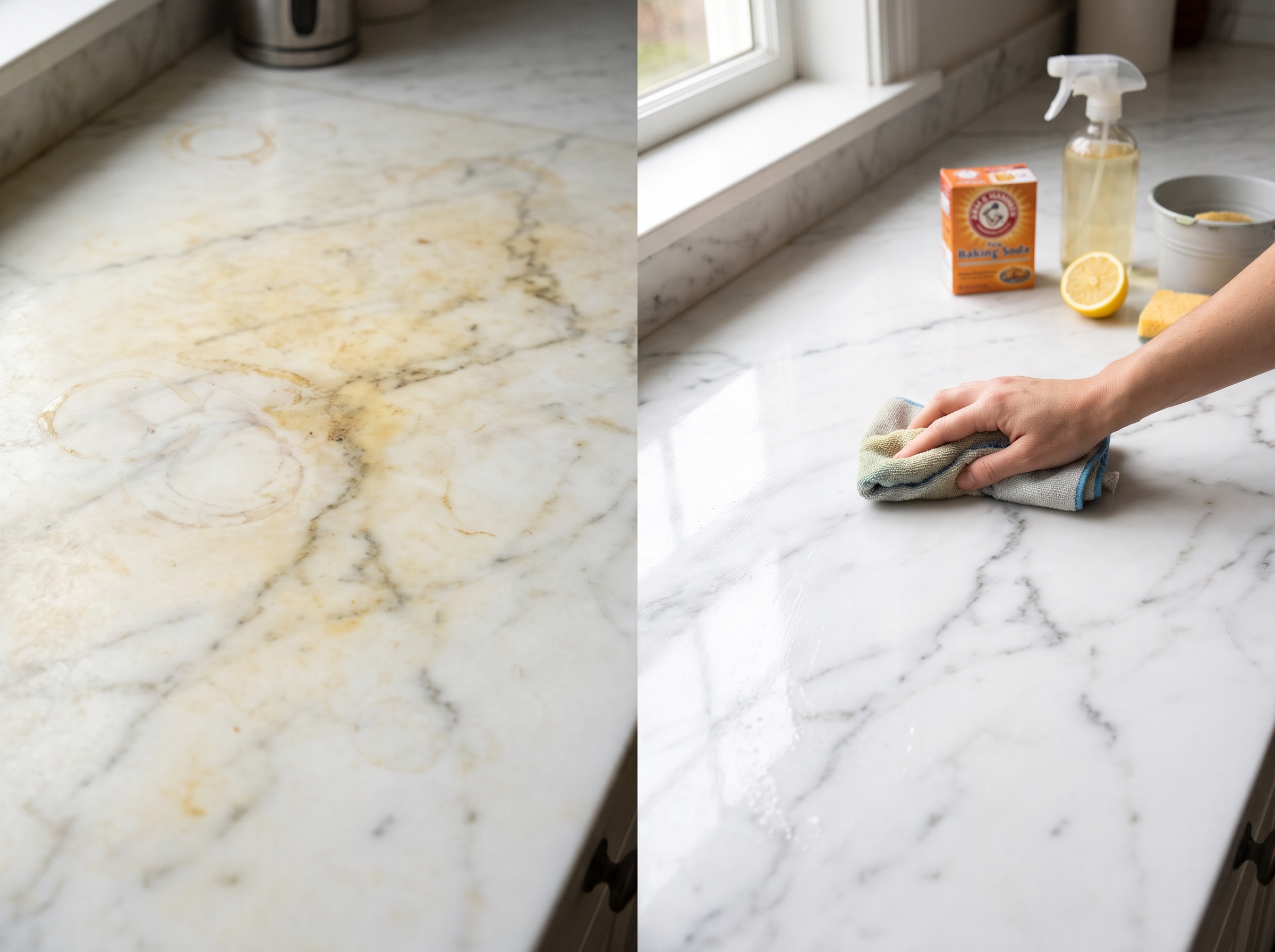
Why Does Marble Turn Yellow? How to Whiten Yellowed Marble
Marble is a natural stone known for its elegant appearance, distinctive veining, and timeless beauty. However, over time, marble surfaces may develop yellow stains or discoloration, particularly in white and light-colored varieties. This can affect the overall appearance of countertops, floors, bathroom surfaces, and other marble applications.
Why does marble turn yellow? Can yellowed marble be restored to its original appearance? What is the best way to clean and maintain discolored marble?
Marble yellowing does not always originate from the stone itself. Iron-bearing minerals, moisture, unsuitable cleaning products, accumulated dirt, and improper maintenance practices can all contribute to discoloration. Understanding the cause is essential for choosing the right cleaning or restoration method.
In this guide, we explain the main causes of marble yellowing, how to clean yellowed marble, and how to maintain the natural beauty of marble surfaces.
Why Does Marble Turn Yellow?
Marble is a natural stone primarily composed of calcite or dolomite minerals. During its formation, different minerals may become part of its structure, influencing its color, veining, and overall appearance.
Certain mineral components and environmental conditions can cause yellow or brown discoloration over time.
The most common causes of marble yellowing include the following:
1. Iron Minerals in Marble
One of the main causes of marble yellowing is the presence of iron-bearing minerals within the stone.
When these minerals come into contact with oxygen and moisture, oxidation may occur. This chemical reaction can create yellow, orange, or brown stains on the marble surface.
These discolorations are particularly noticeable on white marble because of the contrast between the light background and the affected areas.
Since the discoloration may originate within the stone itself, ordinary surface cleaning may not be sufficient to remove it.
2. Prolonged Exposure to Moisture and Water
Marble is a porous natural stone that can absorb a certain amount of water. When marble remains wet for extended periods, moisture may contribute to the oxidation of iron-bearing minerals.
Yellowing related to moisture can occur in areas such as:
-
Bathrooms and shower areas
-
Kitchen countertops
-
Areas around sinks and washbasins
-
Balcony and terrace flooring
-
Marble surfaces exposed to frequent water contact
Minerals and metal particles present in water may also accumulate on marble surfaces and contribute to discoloration.
3. Using the Wrong Cleaning Products
Cleaning products can have a significant impact on the appearance and condition of marble.
Acidic cleaning agents can react with the calcite in marble, causing etching, dullness, and surface damage. Products such as vinegar, lemon juice, hydrochloric acid, and certain limescale removers should not be used on marble.
Some aggressive chemical cleaners and unsuitable maintenance products may also leave residues that make marble appear yellow or dirty over time.
For this reason, marble should always be cleaned with products specifically formulated for natural stone.
4. Oil, Dirt, and Organic Residues
In frequently used areas such as kitchens, oil, food residues, and other organic substances can penetrate the pores of marble.
These materials may accumulate within the stone and create yellowish or dark stains, especially on white and light-colored marble.
Simply wiping the surface may not be enough to remove contaminants that have penetrated the stone. Specialized natural stone cleaning products may be required.
5. Incorrect Polishing and Sealing Products
Polishing compounds, sealers, and other maintenance products should be compatible with the type of marble being treated.
Using unsuitable products or leaving excessive product residue on the surface may cause yellowish discoloration over time.
Some older coatings and surface treatments can also change color as they age. In these cases, the discoloration may be related to the coating rather than the marble itself.
6. Sunlight and Environmental Factors
Prolonged exposure to direct sunlight may affect certain coatings, sealers, and resin-based treatments applied to marble surfaces.
Outdoor marble installations may also be affected by air pollution, dust, rainwater, and other environmental contaminants.
These factors can gradually change the appearance of marble, particularly when regular maintenance is neglected.
How to Whiten Yellowed Marble
The correct method for whitening yellowed marble depends on the underlying cause of the discoloration.
Not all yellow stains can be removed using the same cleaning technique. Before applying any treatment, it is important to determine whether the discoloration is caused by surface dirt, absorbed contaminants, oxidation, or surface damage.
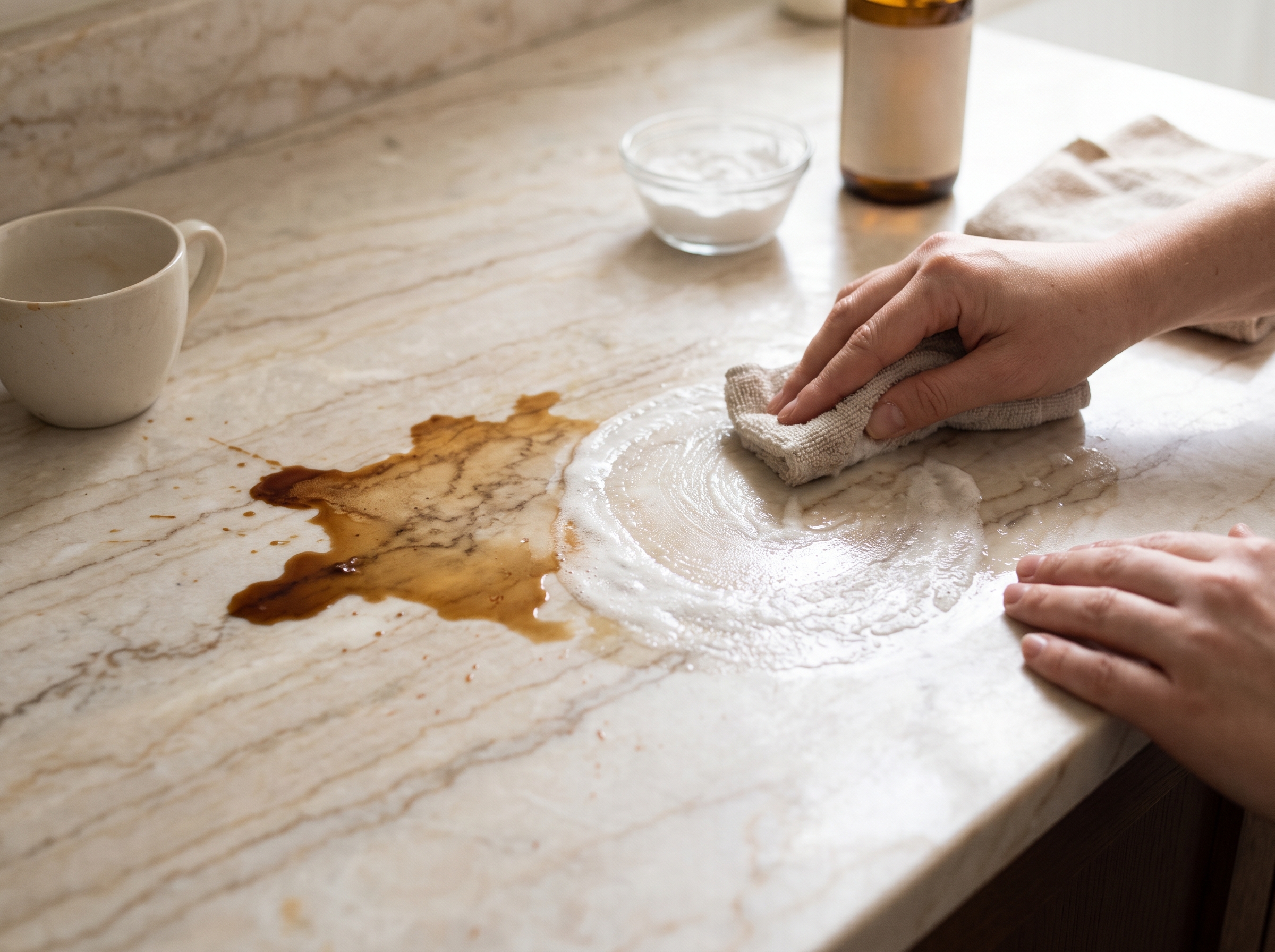
1. Use a pH-Neutral Marble Cleaner
For surface dirt, dust, and light stains, a pH-neutral cleaner specifically designed for natural stone is generally a suitable option.
Follow these steps:
-
Remove loose dust and dirt from the marble surface.
-
Apply the pH-neutral cleaner according to the manufacturer's instructions.
-
Gently wipe the surface using a soft cloth or microfiber mop.
-
Rinse with clean water if recommended by the product manufacturer.
-
Dry the surface with a clean, soft cloth.
This method can help remove surface contaminants and restore a cleaner appearance. However, it may not eliminate deep yellow stains caused by iron oxidation within the stone.
2. Use a Specialized Marble Stain Remover
For stains caused by oil, organic substances, or iron-bearing minerals, specialized natural stone stain removers may be necessary.
Some professional products are available as poultices or paste treatments designed to draw contaminants out of the stone's pores.
When using these products:
-
Choose a product compatible with the specific marble type.
-
Follow the manufacturer's application instructions.
-
Test the product on a small, inconspicuous area first.
-
Clean the surface properly after treatment.
For yellow stains caused by iron oxidation, ordinary surface cleaners are generally ineffective. Specialized iron stain removers formulated for natural stone may be more appropriate.
3. Professional Marble Cleaning and Restoration
When yellowing has penetrated deeply into the stone or the surface has suffered chemical damage, professional restoration may be required.
Depending on the condition of the marble, the following procedures may be considered:
-
Professional stain removal
-
Controlled surface cleaning
-
Diamond abrasive surface treatment
-
Honing
-
Re-polishing
-
Application of a suitable impregnating sealer
Honing is a mechanical process used to remove minor scratches, surface imperfections, and unevenness. Polishing helps restore the desired level of shine and smoothness.
However, not every yellow stain requires grinding or polishing. The cause of the discoloration should always be identified before selecting a restoration method.
How to Clean Yellowed White Marble
Yellow stains are particularly noticeable on white marble because of its light background. Different varieties of white marble, including Carrara and Calacatta, may develop discoloration for different reasons.
When cleaning white marble, consider the following recommendations:
-
Avoid acidic cleaning products.
-
Do not use aggressive chemicals or bleach indiscriminately.
-
Avoid abrasive brushes and rough cleaning materials.
-
Use pH-neutral cleaners formulated for natural stone.
-
Do not leave standing water on the surface.
-
Consider professional stone cleaning for persistent stains.
It is important to distinguish between overall yellowing and isolated yellow stains. These conditions may have different causes and require different treatment methods.
How to Prevent Marble from Turning Yellow
Regular maintenance is essential for preserving the natural color and appearance of marble.
The following practices can help reduce the risk of discoloration:
| Maintenance Practice | Benefit |
|---|---|
| Using pH-neutral cleaners | Helps prevent chemical surface damage |
| Cleaning spills immediately | Reduces the risk of stains penetrating the stone |
| Keeping surfaces dry | Limits prolonged moisture exposure |
| Applying a suitable impregnating sealer | Helps reduce water and stain absorption |
| Performing regular maintenance | Prevents the accumulation of dirt and residues |
| Using appropriate cleaning tools | Helps prevent scratches and surface damage |
Can Marble Sealer Prevent Yellowing?
Marble sealers are designed to penetrate the pores of natural stone and reduce the absorption of water and certain staining substances.
They can be particularly useful in kitchens, bathrooms, and other frequently used areas.
However, sealers do not make marble completely waterproof, nor can they guarantee protection against oxidation caused by the stone's natural mineral composition.
Selecting a compatible product and applying it according to the manufacturer's instructions are essential.
Common Mistakes to Avoid When Cleaning Marble
Certain cleaning habits can damage marble and negatively affect its natural appearance.
Using vinegar and lemon juice: Their acidic properties can cause etching, dullness, and surface damage.
Using hydrochloric acid and limescale removers: These products can react with the calcite structure of marble and cause permanent damage.
Applying bleach indiscriminately: Improper chemical use may lead to discoloration and other surface problems.
Scrubbing with abrasive brushes: Rough cleaning materials can scratch polished marble and reduce its shine.
Leaving water on the surface: Prolonged moisture exposure may contribute to the oxidation of iron-bearing minerals.
Using the same product for every stain: Oil, rust, organic stains, and mineral deposits have different chemical properties and may require different cleaning methods.
Does Marble Change Color Over Time?
Yes. As a natural material, marble may undergo changes in appearance depending on its mineral composition, environmental conditions, usage, and maintenance practices.
However, not every color change should be classified as yellowing.
For example:
-
Yellow and brown stains may be associated with iron oxidation.
-
Dark stains may result from moisture or oil absorption.
-
Dull areas may indicate chemical etching or surface wear.
-
Whitish deposits may be caused by water minerals or residues from unsuitable maintenance products.
Identifying the source of discoloration is essential for selecting an appropriate treatment without damaging the natural stone.
Frequently Asked Questions About Marble Yellowing
Why does marble turn yellow?
Marble may turn yellow due to oxidation of iron-bearing minerals, prolonged moisture exposure, unsuitable cleaning products, accumulated oil and dirt, or aging surface coatings.
Can yellowed marble be restored to its original white color?
If the discoloration is caused by surface dirt or a removable stain, marble may regain much of its original appearance. However, deeply embedded mineral stains and permanent surface damage may not be completely reversible.
Can bleach be used to whiten marble?
Bleach is not a general-purpose or recommended solution for whitening marble. Improper use may cause discoloration or other surface damage. Natural stone-specific cleaning products are a safer choice.
Can vinegar remove yellow stains from marble?
No. Vinegar is acidic and can react with the calcite structure of marble, resulting in etching, dullness, and loss of shine.
How can yellow rust stains be removed from marble?
Yellow and brown stains caused by iron oxidation may require specialized rust and iron stain removers formulated for natural stone. The product should be compatible with the marble type and tested on a small, inconspicuous area before use.
Does marble sealer prevent yellowing?
Suitable impregnating sealers help reduce water and stain absorption, supporting the long-term protection of marble. However, they cannot completely prevent oxidation caused by minerals naturally present within the stone.
Why does white marble turn yellow?
Yellowing in white marble is often associated with iron-bearing minerals, moisture, accumulated contaminants, or unsuitable maintenance products. The actual cause should be identified before applying any chemical treatment.
Conclusion: Proper Maintenance Preserves the Natural Beauty of Marble
Marble yellowing can result from the stone's natural mineral composition or external factors encountered during everyday use. The appropriate method for cleaning or whitening yellowed marble depends on the type of stain and the overall condition of the surface.
Regular cleaning, suitable product selection, moisture control, and professional maintenance when necessary can help preserve the natural appearance of marble for many years.
At Biser Marble, we believe that preserving the distinctive colors, veining, and textures of natural stone is an important part of its lasting architectural value. With the right stone selection and proper maintenance, marble can continue to enhance architectural spaces with its timeless elegance.