Why Are Crystal Structure and Mineral Composition Important in Natural Stones?
Natural stones are materials formed through geological processes that take place over millions of years. Each type of natural stone has its own physical, chemical and aesthetic characteristics. While colour, veining and surface texture are important factors in defining the appearance of a stone, its mineral composition and crystal structure also play a major role in determining its overall characteristics.
But what is crystal structure in natural stones? How do minerals affect hardness, durability, water absorption and potential applications? And why do natural stones such as marble, granite, travertine and quartzite have different mineralogical compositions?
In this article, we explore the crystal structures of natural stones, their mineral composition and why these characteristics matter in architectural and construction projects.
What Is Crystal Structure in Natural Stones?
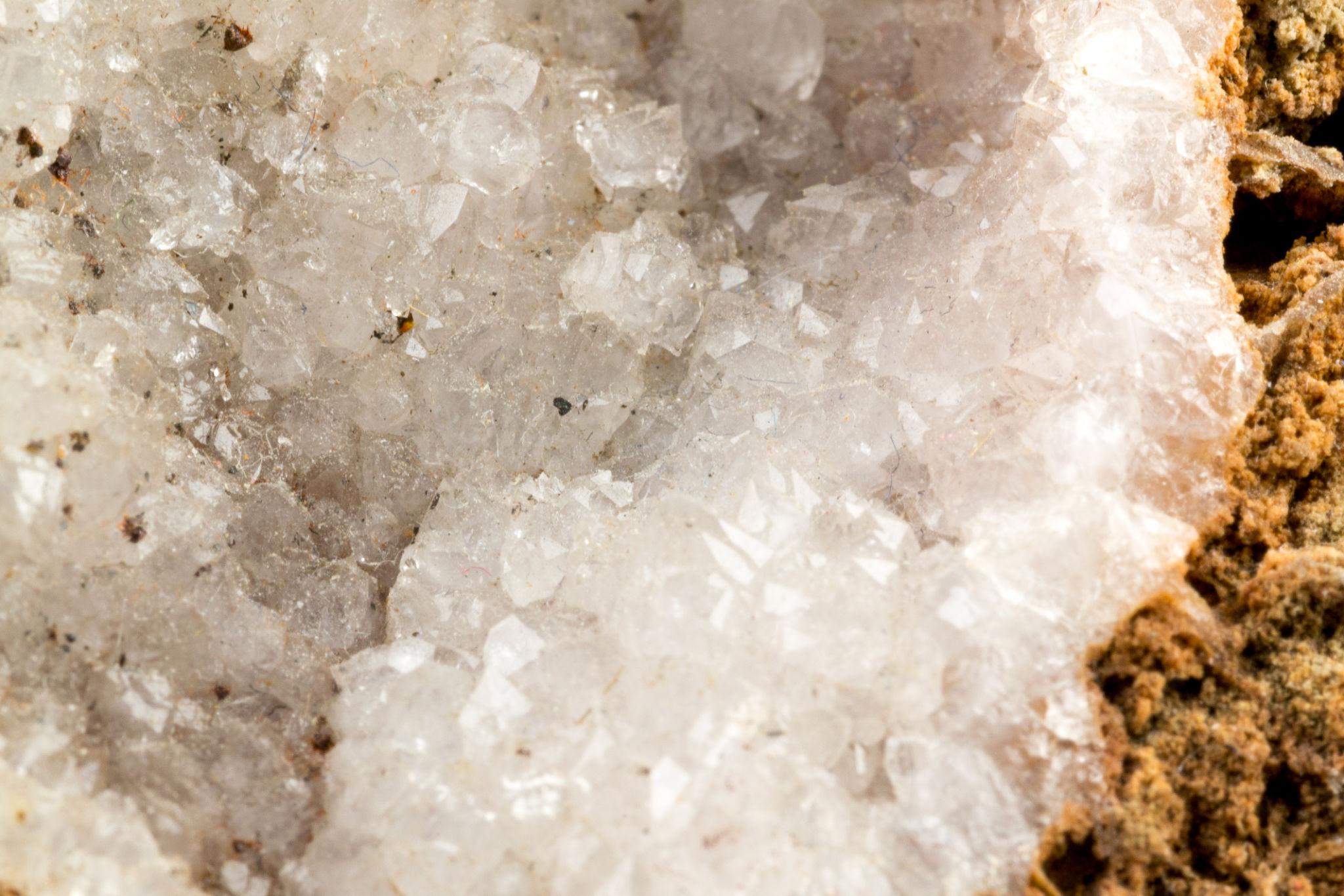
Crystal structure refers to the regular and repeating arrangement of atoms within a mineral. This atomic arrangement plays an important role in determining the physical and chemical properties of minerals.
Natural stones can consist of one or several different minerals. The crystal shapes, sizes, arrangements and relationships between these minerals determine the overall structure and characteristics of the rock.
For example, calcite, one of the main components of marble, belongs to the trigonal crystal system. Quartz, commonly found in granite, also has a trigonal crystal structure, while feldspar minerals develop in different crystal systems.
The crystal structure of a natural stone can influence several characteristics, including:
-
Hardness and scratch resistance
-
Fracture and cracking behaviour
-
The bonding between mineral grains
-
Polishability and surface quality
-
Light transmission and reflection
-
Resistance to chemical substances
-
Wear resistance and overall performance
For this reason, crystal structure is important not only from a scientific perspective but also in natural stone processing, manufacturing and installation.
What Is the Mineral Composition of Natural Stones?
Mineral composition refers to the types of minerals present in a natural stone and their relative proportions within the rock.
Each mineral has its own physical and chemical properties. Together, these properties determine the overall characteristics and performance of a natural stone.
Some of the most common minerals found in natural stones include:
1. Calcite
Calcite is a mineral with the chemical formula CaCO₃. It is commonly found in carbonate rocks such as marble and limestone.
It has a hardness of 3 on the Mohs scale, making it relatively susceptible to scratching compared with harder minerals such as quartz.
The main characteristics of calcite include:
-
It can be white or colourless.
-
It reacts with acidic substances.
-
It is one of the primary minerals in marble.
-
Its crystal structure and grain size influence the appearance of the stone.
-
It can be polished to achieve smooth and glossy surfaces.
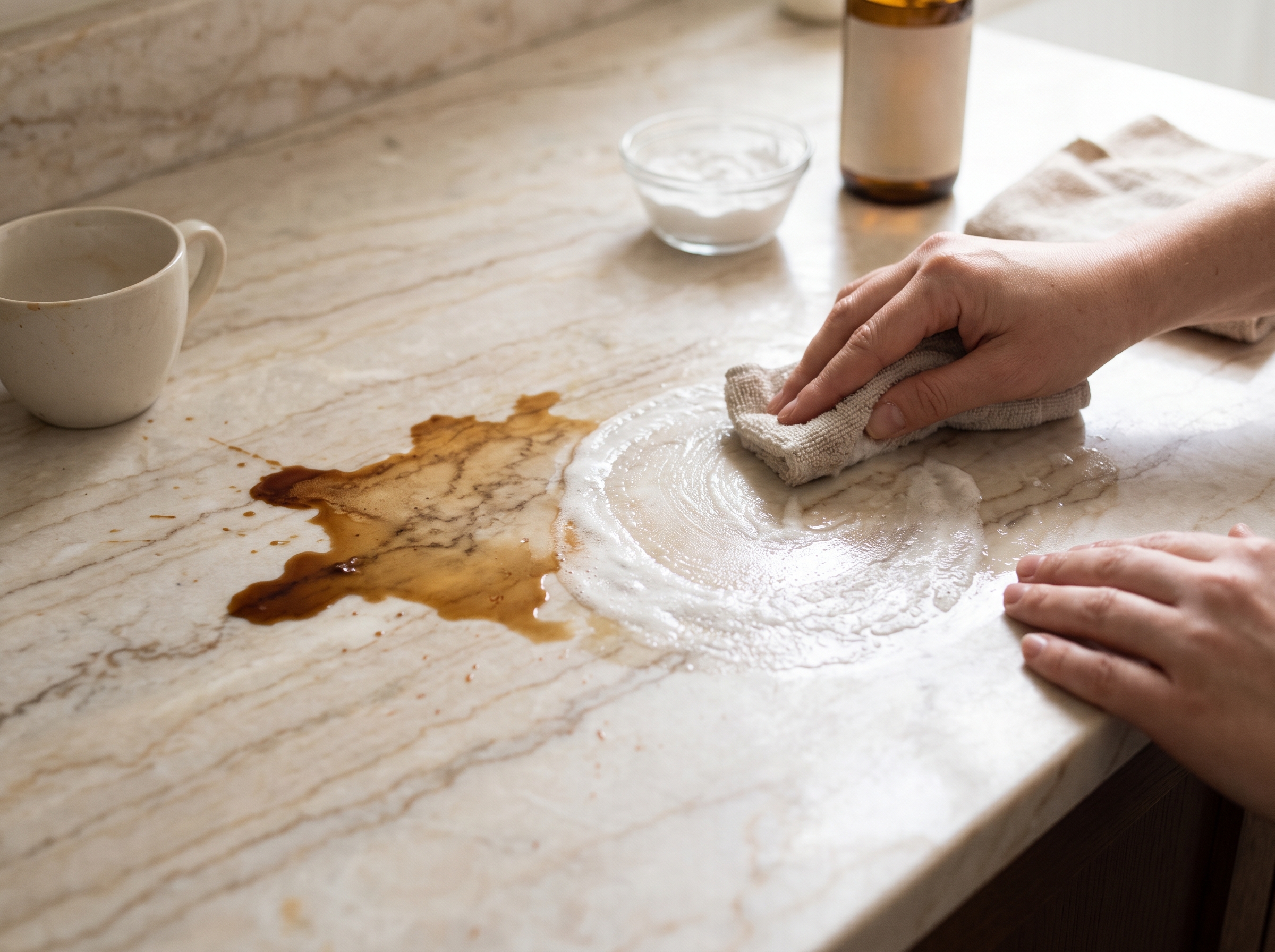
One of the main reasons marble surfaces can be affected by lemon juice, vinegar and other acidic substances is the chemical composition of calcite.
2. Dolomite
Dolomite is a carbonate mineral with the chemical formula CaMg(CO₃)₂. It is commonly found in dolostone and dolomitic marble.
With a Mohs hardness of approximately 3.5–4, dolomite is slightly harder than calcite.
The characteristics of natural stones containing dolomite vary depending on their mineral proportions and overall rock structure.
Dolomite is an important component in determining the mineralogical characteristics of certain decorative natural stones.
3. Quartz
Quartz is a widely distributed mineral with the chemical formula SiO₂.
It has a hardness of 7 on the Mohs scale, making it highly resistant to scratching and abrasion. Its presence contributes to the hardness of many natural rocks.
Quartzite and granite are among the natural stones that commonly contain quartz.
The main properties of quartz include:
-
High hardness
-
Strong chemical resistance to many acids
-
A wide range of colours, including colourless, white, pink and purple
-
Distinctive optical properties resulting from its crystalline structure
-
A contribution to the physical durability of quartz-rich rocks
Quartz-rich quartzite varieties are particularly recognised for their high hardness.
4. Feldspar
Feldspar is a group of minerals commonly found in the Earth's crust. It is one of the main mineral components of igneous rocks such as granite.
Potassium feldspar and plagioclase feldspar are among the most common members of this mineral group.
Feldspar minerals:
-
Form important components of granite.
-
Contribute to the colour and appearance of natural stones.
-
Create different surface textures depending on their grain size.
-
Help define the overall mineralogical characteristics of rocks.
5. Mica
Mica is a group of silicate minerals that can be separated into thin, flexible sheets.
Mica minerals found in rocks such as granite can create small reflective areas on the stone's surface, giving it a subtle sparkling appearance.
They also play a role in determining the textural characteristics and mineral distribution within rocks.
6. Serpentine
Serpentine refers to a group of minerals commonly found in rocks known as serpentinites.
Some decorative natural stones obtain their green colour from serpentine minerals.
The hardness, durability and chemical properties of serpentine-bearing stones vary depending on the specific mineral species and overall rock composition.
How Does Crystal Structure Affect the Properties of Natural Stones?
The crystal structure of natural stones is not simply a microscopic characteristic. It can influence many aspects of their performance, from everyday use to cutting, processing and installation.
1. Hardness and Scratch Resistance
The hardness of minerals is one of the important factors influencing the scratch resistance of natural stones.
The Mohs hardness scale ranks minerals according to their ability to scratch one another.
For example:
| Mineral | Mohs Hardness |
|---|---|
| Talc | 1 |
| Gypsum | 2 |
| Calcite | 3 |
| Fluorite | 4 |
| Apatite | 5 |
| Orthoclase (Feldspar) | 6 |
| Quartz | 7 |
| Topaz | 8 |
| Corundum | 9 |
| Diamond | 10 |
These values help explain the mineral characteristics of different natural stones.
However, since most rocks consist of several minerals, their scratch resistance cannot be determined solely by looking at their hardest mineral. Mineral proportions, grain boundaries, rock texture and surface finishing also influence performance.
2. Durability and Fracture Behaviour
Crystal structure influences the directions along which minerals may break and how mineral grains separate within a rock.
Some minerals split relatively easily along specific planes, while others tend to fracture in more irregular patterns.
However, the overall durability of a natural stone does not depend solely on its crystal structure. The interlocking of mineral grains, natural fissures, porosity and rock texture are also important factors.
These characteristics should be considered particularly during the cutting, transportation and installation of large-format stone slabs.
3. Gloss and Polishability
The gloss achieved through polishing is closely related to the mineral composition and crystalline texture of natural stones.
The size, distribution and surface characteristics of mineral grains influence how light is reflected from the stone.
For example, marble can achieve a smooth and glossy finish through appropriate cutting and surface treatment. Granite, on the other hand, can reveal its characteristic combination of mineral grains more clearly after polishing.
4. Colour and Vein Formation
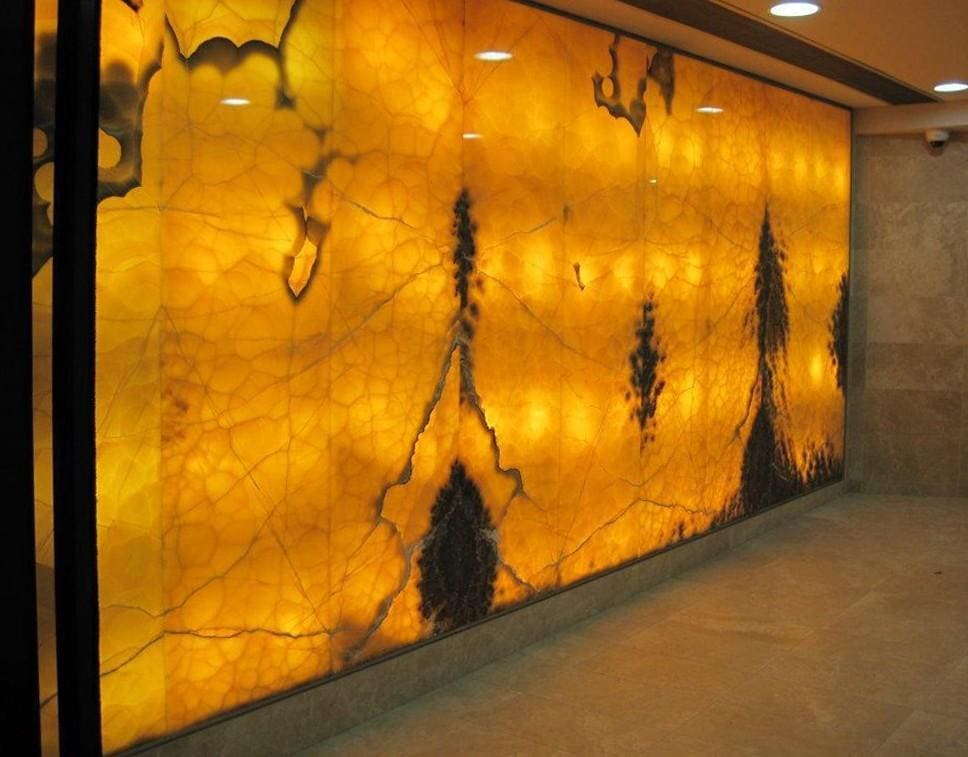
The colours and natural veining of stones are directly related to their mineral composition and geological formation processes.
For example:
-
White marble commonly contains high proportions of calcite or dolomite.
-
Potassium feldspar can contribute to the pink colour of certain granites.
-
Green natural stones may contain minerals such as serpentine or chlorite.
-
Iron- and manganese-bearing minerals can contribute to purple, pink and reddish tones in certain rocks.
-
Different mineral inclusions in quartzite can create colour transitions and natural vein patterns.
Therefore, colour variations in natural stones are not merely aesthetic characteristics; they can also provide information about their mineralogical composition.
5. Water Absorption and Porosity
Water absorption is one of the important physical properties determining where a natural stone can be used.
Voids between mineral grains, microfissures and pores within the rock can influence the amount of water absorbed by the stone.
For example, travertine can contain natural cavities and pores depending on its formation process. In marble and granite, porosity varies according to the specific stone type and texture.
For this reason, water absorption characteristics should be evaluated before selecting natural stones for kitchens, bathrooms, façades and outdoor applications.
6. Chemical Resistance
The resistance of natural stones to chemical substances is largely related to their mineral composition.
Calcite-rich marble can react with acidic substances. In contrast, quartz-rich rocks are generally more resistant to many acids.
This difference is important when selecting natural stones for kitchen countertops, laboratories, commercial spaces and other specialised applications.
Mineral Structures of Different Natural Stones
Each type of natural stone has its own characteristics based on its geological formation and mineral composition.
Marble
Marble forms when limestone or dolomite-rich rocks undergo metamorphism.
Its main minerals are calcite and dolomite. Some marble varieties may also contain quartz, mica, graphite and iron-bearing minerals.
The colour, veining and crystal grain size of marble vary depending on its mineral composition and geological history.
Granite
Granite is an igneous rock formed when magma slowly cools and solidifies beneath the Earth's surface.
Its primary minerals are quartz, feldspar and mica.
The combination of different mineral grains gives granite its characteristic granular and crystalline appearance.
Travertine
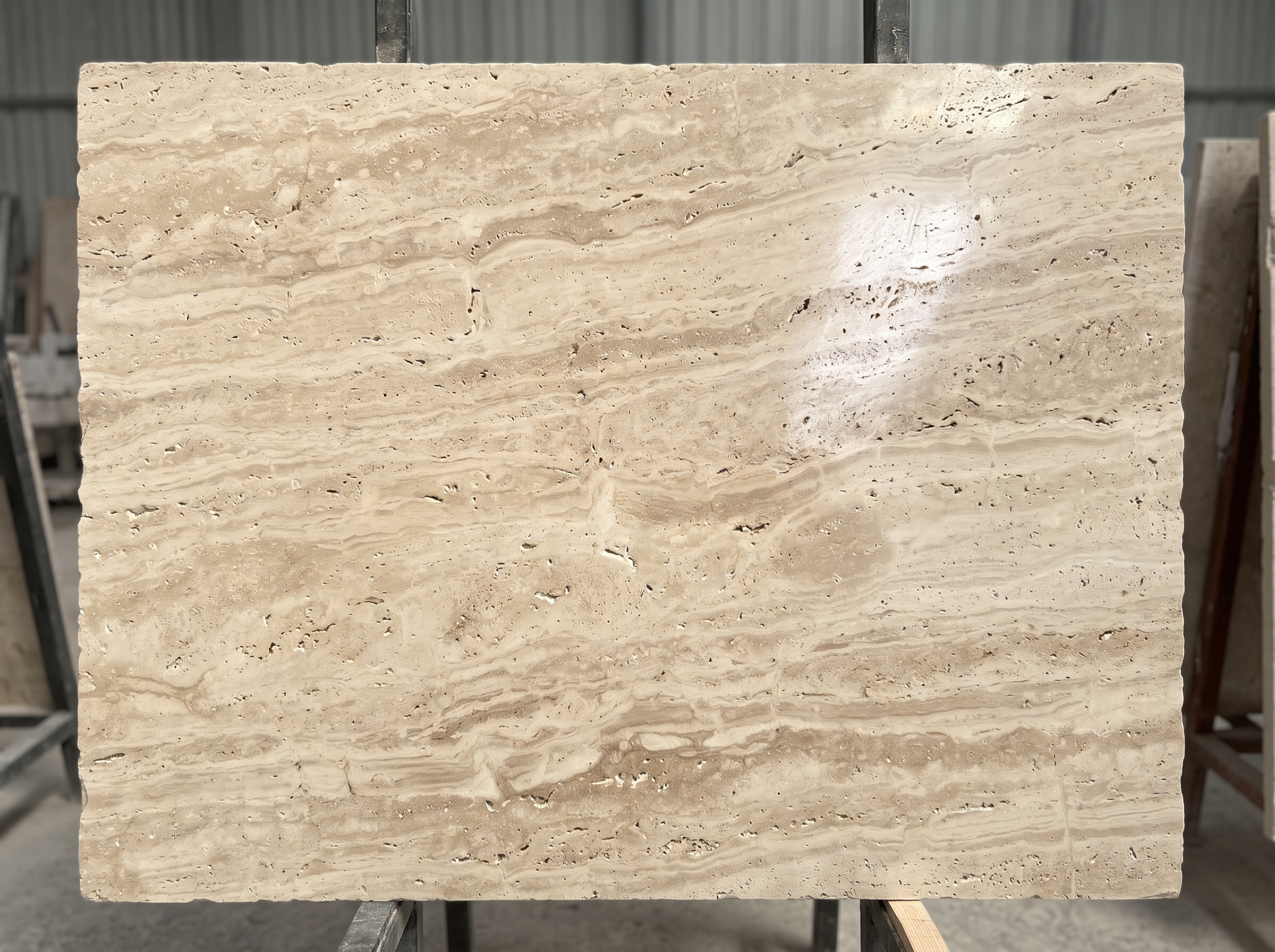
Travertine is a sedimentary rock that primarily forms through the precipitation of calcium carbonate from groundwater and spring water.
Its main mineral component is calcite, although some travertine deposits may also contain aragonite.
Gas bubbles and other geological processes during formation create the characteristic pores and cavities found in travertine.
Quartzite
Quartzite is formed when quartz-rich sandstone undergoes metamorphism.
Its primary mineral component is quartz. Other minerals present in the rock can influence its colour, patterns and physical characteristics.
High hardness and crystalline texture are among the most distinctive properties of quartzite.
Why Are Crystal Structure and Mineral Composition Important When Selecting Natural Stone?
Choosing a natural stone based solely on its appearance may not always deliver the expected performance in a particular project.
The correct selection requires evaluating the intended application, environmental conditions and technical requirements together.
The following applications particularly benefit from considering mineral composition and crystal structure:
Kitchen countertops: Hardness, scratch resistance, acid resistance and water absorption should be evaluated.
Bathrooms and wet areas: Porosity, water absorption and surface protection requirements should be considered.
Flooring: Abrasion resistance, surface texture and slip resistance are important factors.
Exterior cladding: Water absorption, freeze-thaw resistance, mechanical properties and installation systems should be evaluated together.
Decorative applications: Colour, natural veining, crystal grain size and polishability are particularly important.
Therefore, natural stone selection should not be based solely on commercial names and visual characteristics. Technical data sheets and laboratory test results should also be reviewed whenever available.
How Is Mineral Analysis Performed on Natural Stones?
Different scientific methods can be used to identify the mineral composition and crystal structure of natural stones.
1. X-Ray Diffraction (XRD)
X-Ray Diffraction is an important analytical method used to identify crystalline minerals in natural stones.
It helps determine the crystalline phases present in a sample and provides valuable information about its mineralogical composition.
2. Polarizing Microscope Analysis
Thin sections of natural stone samples can be examined under a polarizing microscope.
This method helps identify mineral types, crystal shapes, grain sizes and the overall texture of the rock.
3. X-Ray Fluorescence (XRF) Analysis
XRF analysis is used to determine the chemical elemental composition of natural stones.
It can provide information about elements such as calcium, magnesium, silicon, iron and other components present in the stone.
However, XRF does not directly identify mineral phases. For more accurate mineralogical identification, it is best interpreted alongside methods such as XRD.
4. Physical and Mechanical Tests
In addition to mineral composition, various physical and mechanical tests are carried out to evaluate the performance of natural stones in practical applications.
These include:
-
Water absorption testing
-
Apparent density and open porosity testing
-
Uniaxial compressive strength testing
-
Flexural strength testing
-
Abrasion resistance testing
-
Freeze-thaw resistance testing
These tests help determine whether a natural stone is suitable for a specific architectural or construction application.
The Importance of Mineralogical Knowledge in the Future of Natural Stone
Quality in the natural stone industry is not limited to visual appearance. Geological origin, mineral composition, crystal structure and physical performance are also important factors that determine the value and suitability of a stone.
For architects, designers, manufacturers and natural stone suppliers, mineralogical knowledge is an essential resource for making informed material selections.
Understanding which minerals make up a stone and how they behave helps improve planning throughout cutting, surface treatment, installation and maintenance processes.
Combining the aesthetic diversity of natural stones with an understanding of their technical characteristics is fundamental to creating successful and long-lasting architectural projects.
Frequently Asked Questions About Crystal Structure and Mineral Composition
What does crystal structure mean in natural stones?
Crystal structure refers to the regular geometric arrangement of atoms within minerals. It influences their hardness, fracture behaviour, optical properties and chemical characteristics.
Why is mineral composition important in natural stones?
Mineral composition affects the hardness, scratch resistance, chemical durability, colour, veining and certain physical properties of natural stones. It is therefore an important factor in selecting the right material.
Which minerals make up marble?
The main minerals in marble are calcite and/or dolomite. Some marble varieties may also contain quartz, mica, graphite and iron-bearing minerals.
What is the mineral composition of granite?
Granite primarily consists of quartz, feldspar and mica. These minerals create its characteristic crystalline and granular appearance.
Why is quartzite harder than marble?
Quartz, the primary mineral in quartzite, has a Mohs hardness of 7, while calcite, one of the main minerals in marble, has a hardness of approximately 3. As a result, quartzite is generally more resistant to scratching than marble.
Does crystal grain size affect the appearance of natural stones?
Yes. The size, distribution and arrangement of crystals and mineral grains influence the texture, light reflection and overall appearance of natural stones.
How is mineral analysis performed on natural stones?
Mineral composition can be investigated using analytical methods such as X-Ray Diffraction (XRD), polarizing microscopy and X-Ray Fluorescence (XRF). Physical performance can also be evaluated through water absorption, density, compressive strength and flexural strength tests.
Is the colour of natural stone related to its mineral composition?
Yes. The colours of natural stones are largely associated with their mineral composition. Minerals containing iron, manganese and other elements can contribute to the formation of different colour variations.
Conclusion
The crystal structure and mineral composition of natural stones are fundamental factors that determine both their aesthetic and technical characteristics. Properties such as hardness, durability, water absorption, chemical resistance, colour and veining are closely related to their mineralogical composition.
Each natural stone, including marble, granite, travertine and quartzite, has its own distinctive mineral structure and performance characteristics. Understanding these differences helps architects, designers and construction professionals select the right materials and make the most of their natural properties.
At Biser Marble, we bring the natural beauty and distinctive character of natural stones into a variety of architectural projects. Explore our products and contact our team to discover natural stone solutions for your next project.