What Is Travertine? Properties, Types and Applications
Travertine is a natural stone widely used in architecture and interior design thanks to its distinctive porous texture, natural patterns and warm colour variations. Available in shades ranging from beige and ivory to silver, grey and brown, travertine offers versatile design possibilities for both traditional and contemporary spaces.
From flooring and wall cladding to staircases, bathrooms, terraces and decorative furniture, travertine is valued for its natural appearance and timeless character. Its unique surface texture and variety of finishes make it a popular choice for residential, commercial and hospitality projects.
But what exactly is travertine? How does it form, what are its main properties, and where can it be used? In this guide, we explore everything you need to know about travertine stone, including its types, colours, surface finishes, advantages, disadvantages and maintenance requirements.
What Is Travertine?
Travertine is a sedimentary natural stone formed through the precipitation and accumulation of calcium carbonate from mineral-rich water. It commonly develops around natural springs, hot springs, limestone formations and other environments where groundwater reaches the Earth's surface.
As groundwater passes through carbonate-rich rocks, it dissolves minerals and carries calcium carbonate. When this mineral-rich water reaches the surface, changes in pressure, temperature and carbon dioxide concentration cause calcium carbonate to precipitate and gradually accumulate.
Over geological periods, these mineral deposits form layers of travertine.
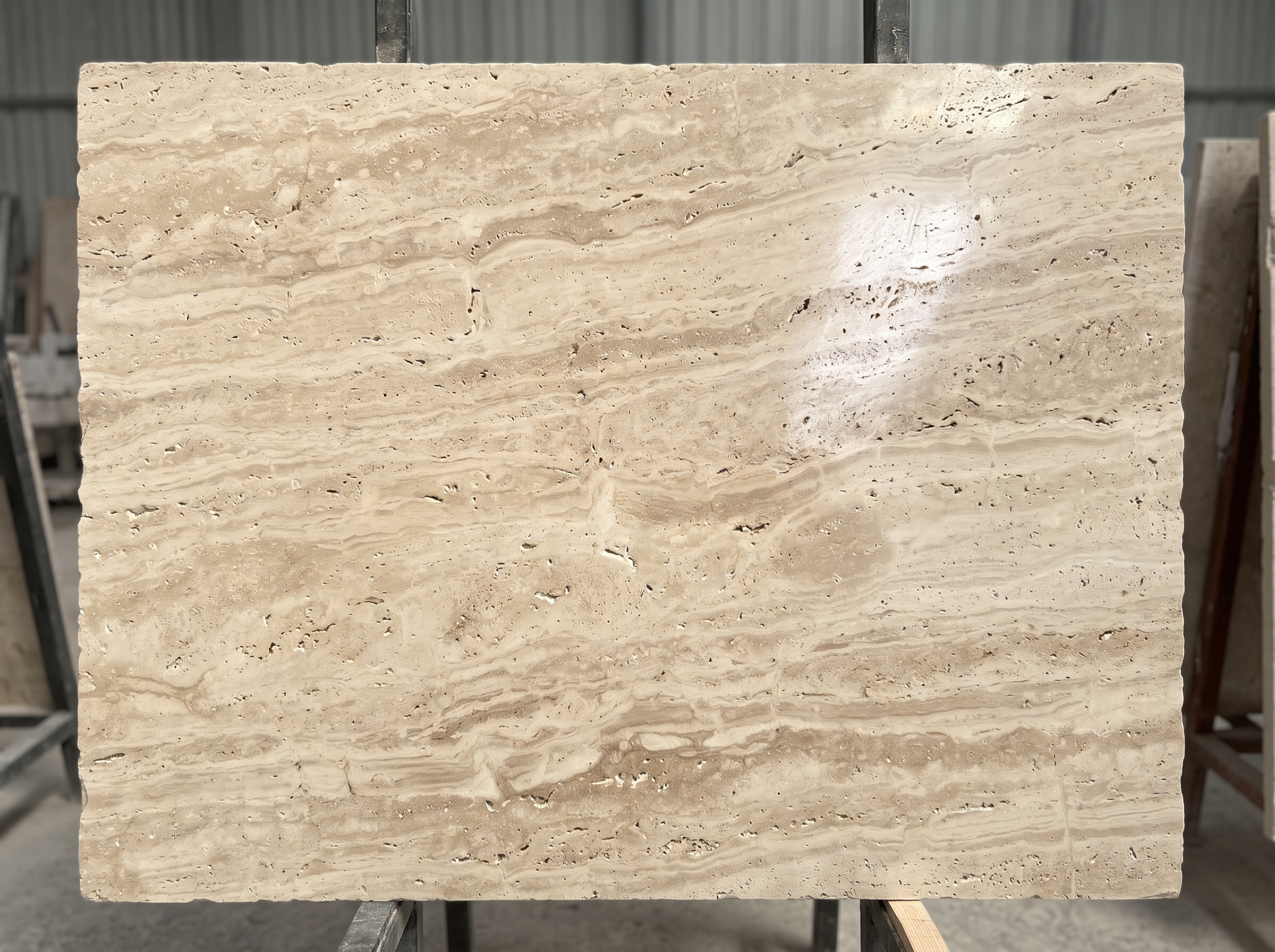
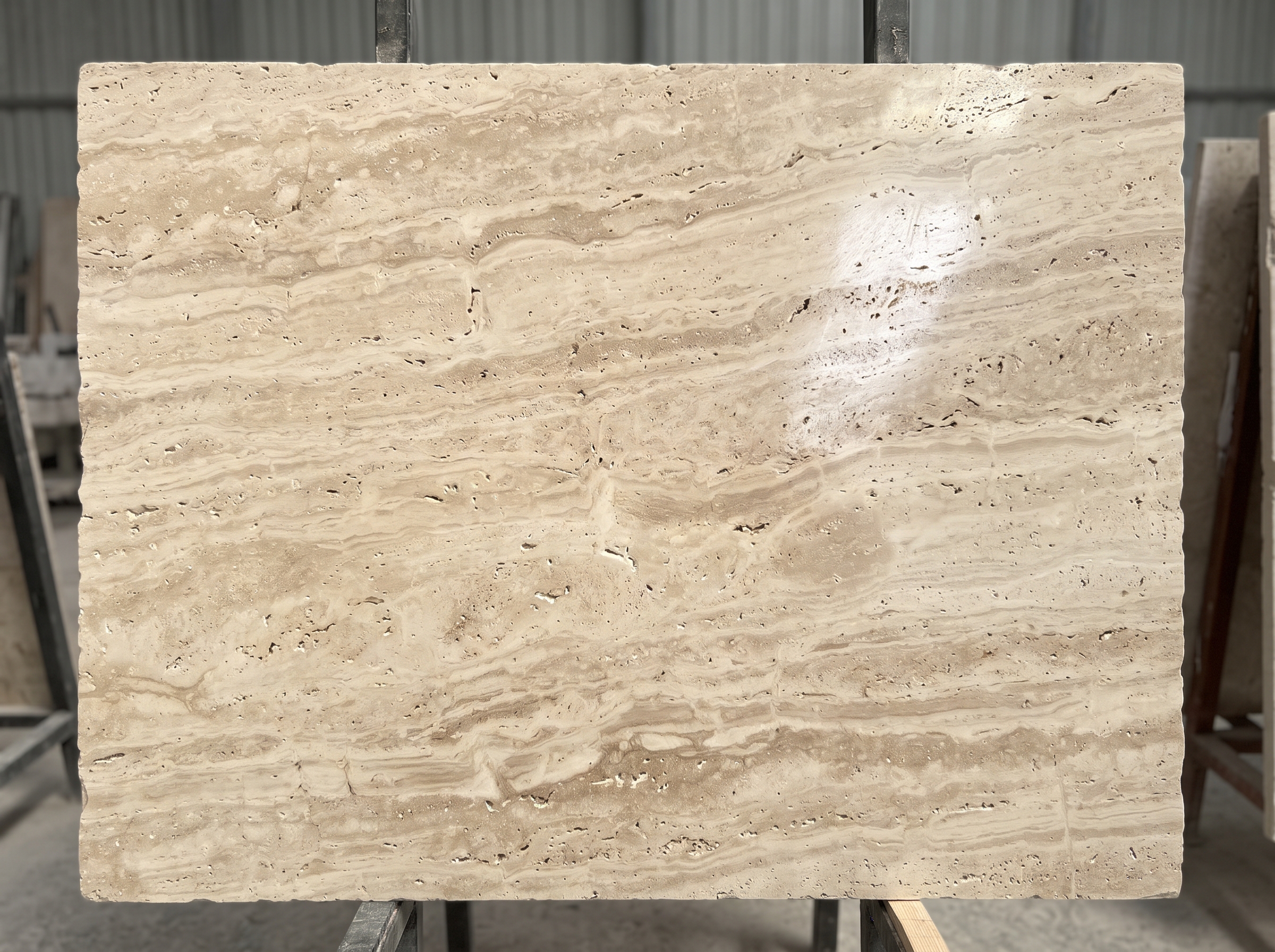
One of the most recognisable characteristics of travertine is its naturally porous structure. Small cavities, irregular openings, veins and layered patterns give each stone its distinctive appearance.
Travertine is available in various colours and finishes, making it suitable for a wide range of architectural and decorative applications. Depending on the intended use, its natural pores can be left open or filled to create a smoother and more uniform surface.
How Is Travertine Formed?
Travertine formation is a natural geological process involving the precipitation of dissolved minerals from water. The process generally consists of several stages:
-
Mineral dissolution: Groundwater passes through limestone and other carbonate-rich rocks, dissolving calcium carbonate.
-
Water reaches the surface: Mineral-rich water emerges through natural springs, cracks and geological openings.
-
Carbon dioxide release: As the water reaches the surface, changes in pressure and environmental conditions cause carbon dioxide to escape.
-
Mineral precipitation: The chemical balance of the water changes, allowing calcium carbonate to precipitate.
-
Layer accumulation: Over time, successive mineral deposits accumulate and gradually form travertine.
Factors such as water temperature, mineral composition, flow rate and environmental conditions influence the final colour, texture and pore structure of the stone.
Pamukkale Travertines in Türkiye are among the world's best-known examples of this natural geological process.
What Are the Main Properties of Travertine?
Travertine has several distinctive physical and visual characteristics that make it an important material in the natural stone industry.
1. Naturally Porous Structure
The most recognisable feature of travertine is its porous surface. These natural cavities develop during the formation process as a result of mineral precipitation and gas release.
The size, density and distribution of pores vary depending on the type and geological characteristics of the stone.
Depending on the intended application, these pores can be filled with cement-based or resin-based materials to achieve a smoother finish. Alternatively, they can be left open to preserve the stone's natural texture.
2. Natural Colour Variations
Travertine is available in a wide range of natural colours. Its appearance is influenced by the geological environment and mineral composition in which it forms.
Common travertine colours include:
-
Beige and light beige
-
Cream and ivory
-
Silver and grey
-
Light brown
-
Walnut and dark brown
-
Yellow and golden tones
-
Reddish and earthy tones
Beige and ivory travertine are particularly popular in architectural projects where a warm, bright and natural atmosphere is desired.
3. Layered Patterns and Natural Veining
Travertine develops distinctive layers and linear patterns during its formation. Depending on the direction of cutting, these patterns can appear as parallel veins or softer, cloud-like formations.
This natural variation makes travertine suitable for projects that require unique and visually distinctive surfaces.
4. Workability
Travertine can be processed using specialised stone-cutting and finishing equipment. It can be manufactured into different sizes and shapes for architectural and decorative applications.
Common products include slabs, tiles, stair treads, window sills, countertops, washbasins and decorative objects.
5. Natural Texture and Appearance
Travertine offers a distinctive natural texture that can be enhanced through different surface treatments. Honed and brushed finishes, for example, provide a softer, more understated appearance, while polished surfaces create a smoother and more reflective effect.
6. Water Absorption
Due to its porous structure, travertine can absorb water. Its water absorption rate depends on pore density, mineral composition and surface treatment.
For applications involving frequent water exposure, such as bathrooms, showers and pool surroundings, technical performance and suitable protective treatments should be carefully evaluated.
What Are the Different Types of Travertine?
Travertine can be classified according to colour, pattern, pore structure, cutting direction and surface finish.
Types of Travertine by Colour
Beige Travertine
Beige travertine is characterised by its warm beige and cream tones. Its understated appearance makes it suitable for flooring, wall cladding, bathrooms and other interior applications.
Silver Travertine
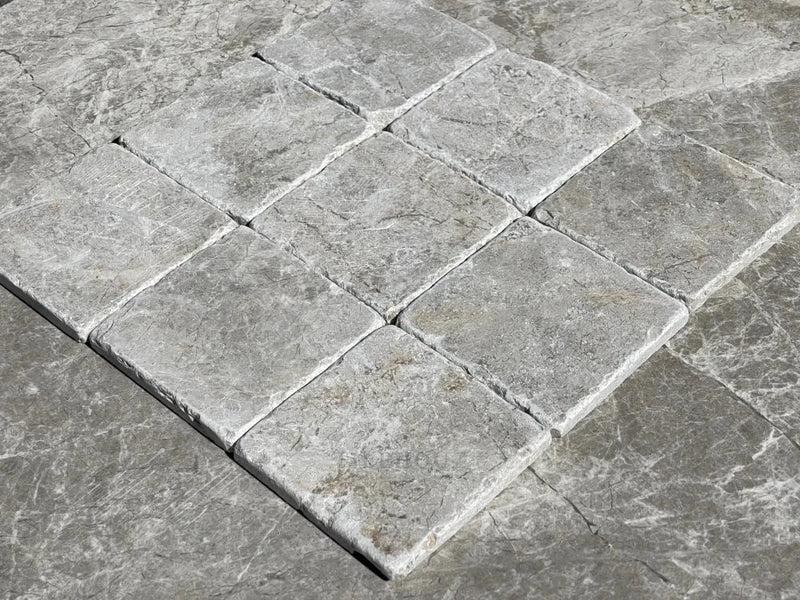
Silver travertine features a combination of grey, silver and sometimes light brown tones. It is often selected for contemporary architectural projects and modern interior designs.
Noce Travertine
Noce travertine is recognised by its walnut and dark brown colour variations. Its rich tones and natural patterns create a distinctive appearance in decorative and architectural applications.
Ivory Travertine
Ivory travertine features light cream and off-white shades. It is commonly used in spaces where a bright, elegant and spacious atmosphere is desired.
Gold Travertine
Gold travertine contains warm yellow, honey and golden-brown tones. Its distinctive colour variations make it suitable for decorative wall cladding and special architectural projects.
Types of Travertine by Cutting Direction
The direction in which a travertine block is cut has a significant impact on its final appearance.
Vein Cut Travertine
In vein-cut travertine, the stone is cut perpendicular to its natural sedimentary layers. This cutting direction reveals prominent, parallel and linear veins across the surface.
The result is a more structured and directional appearance, making vein-cut travertine suitable for contemporary interiors, feature walls and decorative architectural surfaces.
Cross Cut Travertine
In cross-cut travertine, the stone is cut parallel to its natural layers. Instead of prominent linear veins, this method reveals softer, cloud-like and irregular patterns.
Cross-cut travertine provides a more uniform and flowing appearance, making it a popular choice for large flooring and wall applications.
Types of Travertine by Surface Treatment
Travertine can also be classified according to whether its natural pores are filled or left open.
Filled Travertine
Filled travertine is processed by filling its natural cavities with cement-based or resin-based materials.
This process creates a smoother and more uniform surface, making it suitable for flooring, countertops and applications where a more consistent appearance is preferred.
Unfilled Travertine
Unfilled travertine retains its natural pores and cavities. This finish highlights the stone's original texture and provides a more rustic and organic appearance.
It is particularly popular in Mediterranean-inspired interiors, traditional architecture and natural landscape designs.
What Are the Different Travertine Surface Finishes?
Surface finishing plays an important role in determining the appearance, texture and suitability of travertine for different applications.
| Surface finish | Main characteristics |
|---|---|
| Polished | Smooth, glossy and reflective surface |
| Honed | Smooth, matte or satin-like appearance |
| Brushed | Textured finish that highlights natural details |
| Tumbled | Aged appearance with softened edges |
| Sandblasted | Textured and rough surface |
| Sawn | Raw appearance resulting from the cutting process |
The choice of surface finish should depend on the intended application, traffic intensity, moisture exposure, cleaning requirements and slip resistance.
For wet areas, in particular, aesthetic considerations should be balanced with appropriate slip-resistance performance.
Where Is Travertine Used?
Travertine is a versatile natural stone suitable for a wide range of interior and exterior applications. Its different colours, patterns, sizes and surface finishes allow it to complement various architectural styles.
1. Travertine Flooring
One of the most common applications of travertine is flooring. It is used in residential buildings, hotels, restaurants, commercial spaces and public areas.
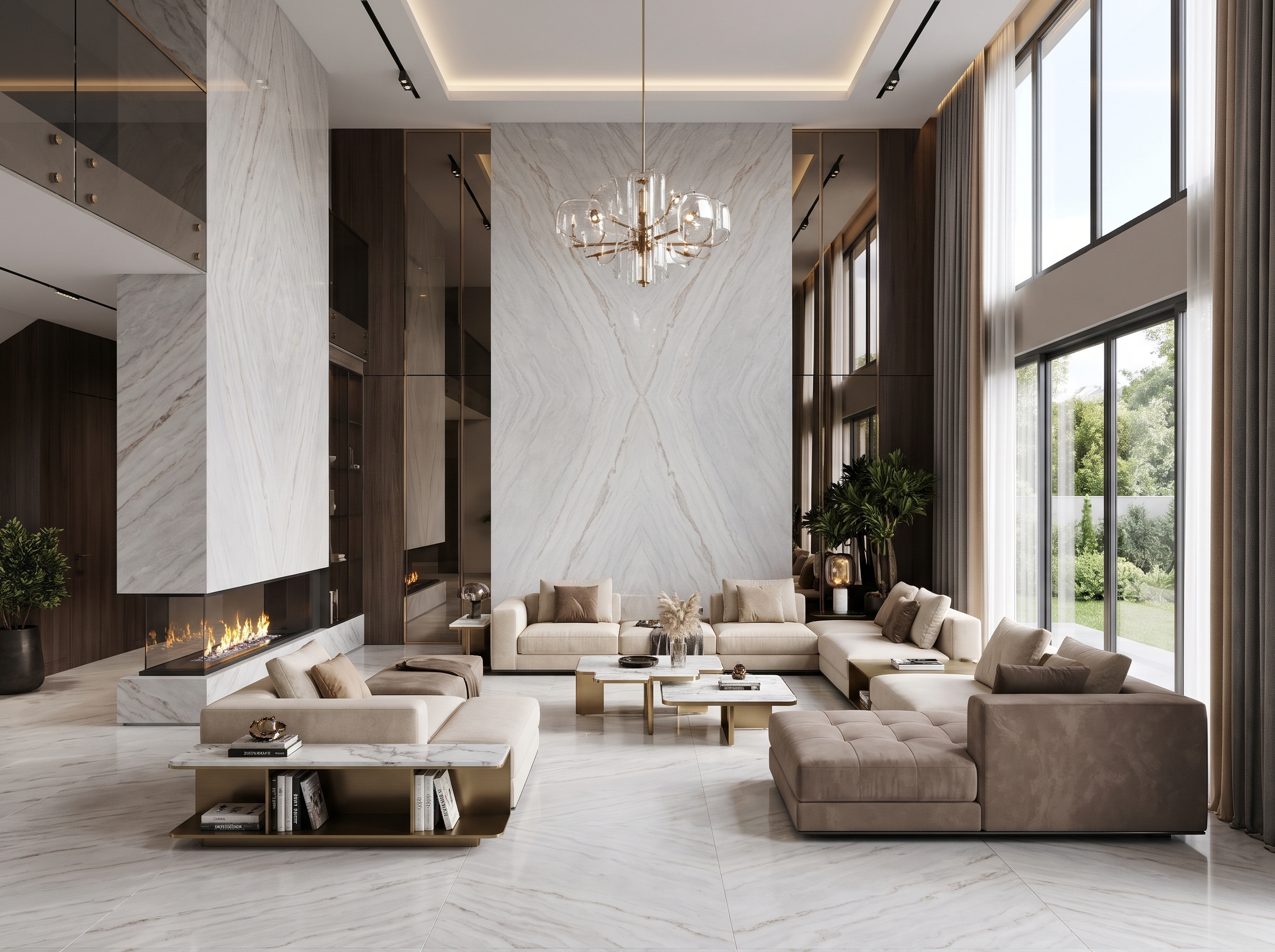
Large-format travertine slabs can create a seamless and spacious appearance, while smaller tiles allow for different flooring patterns and layouts.
2. Travertine Wall Cladding
Travertine is frequently used for interior and exterior wall cladding thanks to its natural veining and distinctive textures.
It can be applied to living room feature walls, fireplace surrounds, hotel lobbies, entrance areas and decorative architectural surfaces.
3. Bathrooms and Shower Areas
Travertine is often incorporated into bathroom designs to create a natural, spa-inspired atmosphere.
Typical applications include:
-
Bathroom wall cladding
-
Bathroom flooring
-
Vanity tops
-
Washbasin surrounds
-
Shower walls
When used in bathrooms and shower areas, water absorption, surface treatment and appropriate sealing products should be considered.
4. Kitchen Countertops and Surfaces
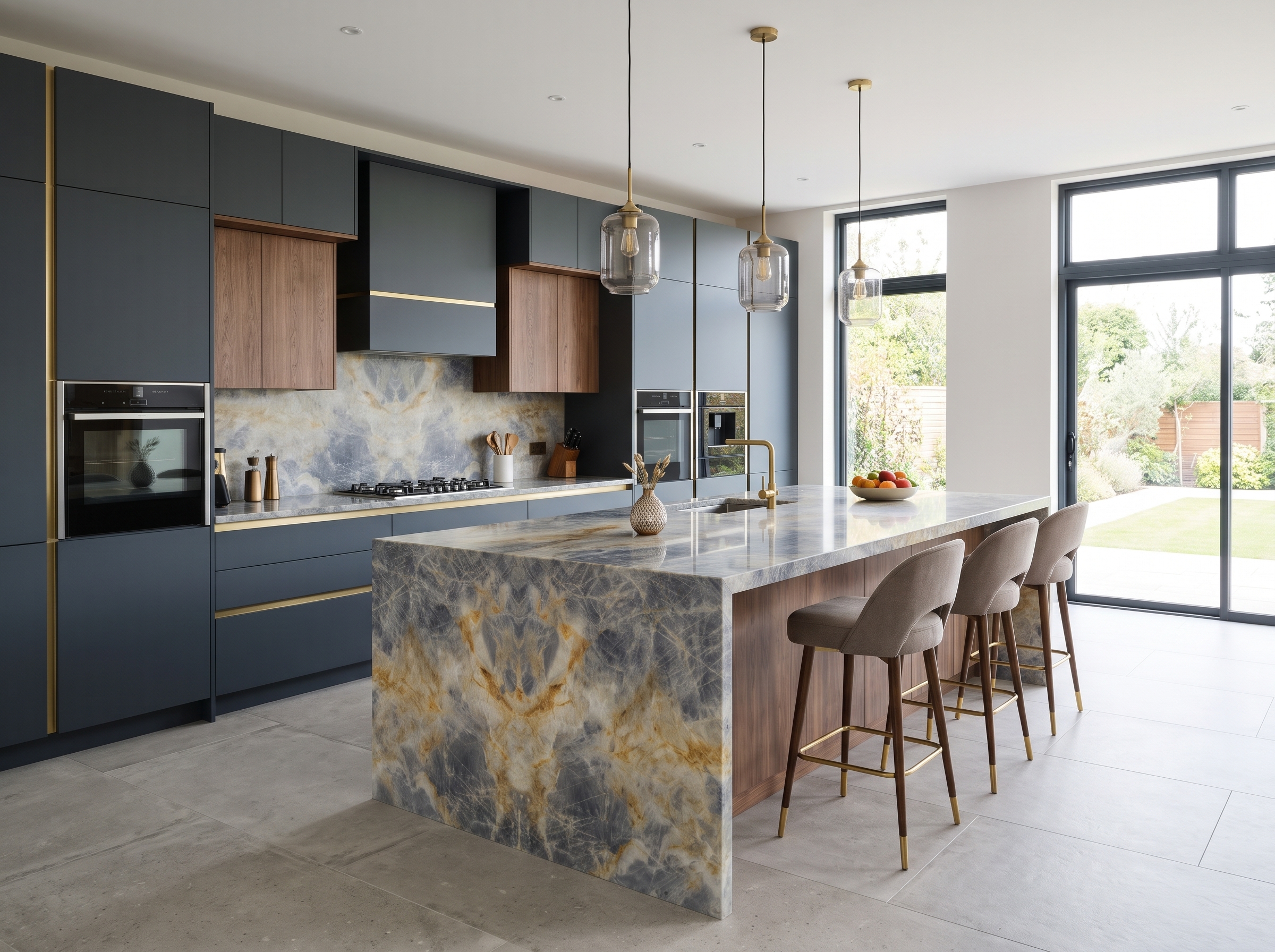
Travertine can be used for kitchen countertops, kitchen islands, backsplashes and decorative surfaces.
However, because of its porous structure and sensitivity to acidic substances, it requires appropriate protection and regular maintenance when used in kitchens.
Contact with substances such as lemon juice, vinegar and acidic cleaning products should be avoided.
5. Staircases and Stair Treads
Travertine can be processed into stair treads and risers for both interior and exterior staircases.
When selecting travertine for stairs, factors such as thickness, mechanical strength, edge details and slip resistance should be evaluated.
6. Swimming Pool Surroundings and Landscaping
Travertine is also used in outdoor architectural and landscaping projects, including:
-
Swimming pool surrounds
-
Garden pathways
-
Outdoor terraces
-
Patio flooring
-
Landscape steps
-
Exterior seating areas
For outdoor applications, frost resistance, water absorption, surface temperature and slip resistance are important technical considerations.
7. Furniture and Decorative Products
Travertine is not limited to conventional construction applications. It has also become increasingly popular in furniture and interior decoration.
Common decorative applications include:
-
Coffee tables
-
Side tables
-
Dining tables
-
Console tables
-
Decorative accessories
-
Vases
-
Lighting fixtures
-
Stone washbasins
Travertine coffee tables and dining tables, in particular, have become popular design elements in contemporary interiors.
What Are the Advantages of Travertine?
Travertine offers several advantages that make it an attractive material for architectural and interior design projects.
Natural and unique appearance: Each travertine block has its own pattern, colour variations and pore distribution, creating distinctive surfaces.
Versatile design options: Different colours, cutting directions and surface finishes allow travertine to complement a wide range of architectural styles.
Wide range of applications: It can be used for flooring, wall cladding, staircases, bathrooms, furniture and decorative products.
Workability: Travertine can be processed into different dimensions and shapes, making it suitable for various architectural details.
Timeless aesthetic: Its natural colours and textures complement both traditional and contemporary design concepts.
Natural material: As a stone formed through geological processes, travertine is an option for projects that prioritise natural materials.
What Are the Disadvantages of Travertine?
Despite its aesthetic and practical advantages, travertine also has certain limitations that should be considered before selecting it for a project.
-
Porous structure: Open pores may absorb liquids and accumulate dirt.
-
Acid sensitivity: Acidic substances can cause surface etching, dullness and damage.
-
Maintenance requirements: Depending on the application, travertine may require regular cleaning and protective treatments.
-
Natural variations: Colour and pattern differences may occur even within the same stone selection.
-
Surface selection: An unsuitable finish in wet or high-traffic areas may create maintenance and safety issues.
For these reasons, travertine should be selected according to both aesthetic preferences and the technical requirements of the intended application.
Travertine vs Marble: What Is the Difference?
Travertine and marble are two popular natural stones frequently compared in the construction and interior design industries.
Although both are associated with calcium carbonate, they differ in their geological formation processes and physical characteristics.
Marble is a metamorphic rock formed when limestone undergoes recrystallisation under heat and pressure. Travertine, on the other hand, is a sedimentary rock formed through the precipitation of calcium carbonate from mineral-rich water.
| Comparison | Travertine | Marble |
|---|---|---|
| Geological classification | Sedimentary | Metamorphic |
| Main mineral | Calcite, sometimes aragonite | Mainly calcite |
| Pore structure | Generally porous | Generally denser |
| Appearance | Layered, porous and naturally textured | Veined and crystalline |
| Colour range | Beige, cream, brown, grey and other tones | White, grey, black, green and various colours |
| Surface finishes | Polished, honed, brushed and tumbled | Polished, honed, brushed and other finishes |
| Common applications | Flooring, walls, stairs and decorative elements | Flooring, walls, countertops, stairs and decorative elements |
Is travertine a type of marble?
No. Although travertine and marble are sometimes associated with one another in commercial natural stone terminology, they are geologically different types of rock. Travertine is sedimentary, whereas marble is metamorphic.
How to Clean and Maintain Travertine
Proper cleaning and maintenance are essential for preserving the natural appearance and service life of travertine.
Due to its porous structure, special attention should be paid to the cleaning products and methods used on travertine surfaces.
Regular Cleaning
For routine cleaning, use a soft cloth, microfibre mop and clean water. When necessary, choose pH-neutral cleaning products specifically formulated for natural stone.
Regularly removing dust and dirt helps prevent the accumulation of contaminants and reduces the risk of staining.
Avoid Acidic Cleaning Products
Travertine contains calcium carbonate, which makes it sensitive to acidic substances.
Avoid direct contact with:
-
Lemon juice
-
Vinegar
-
Limescale removers
-
Acidic surface cleaners
-
Harsh chemical cleaning products
These substances can cause surface etching, dullness and permanent damage.
Remove Stains Promptly
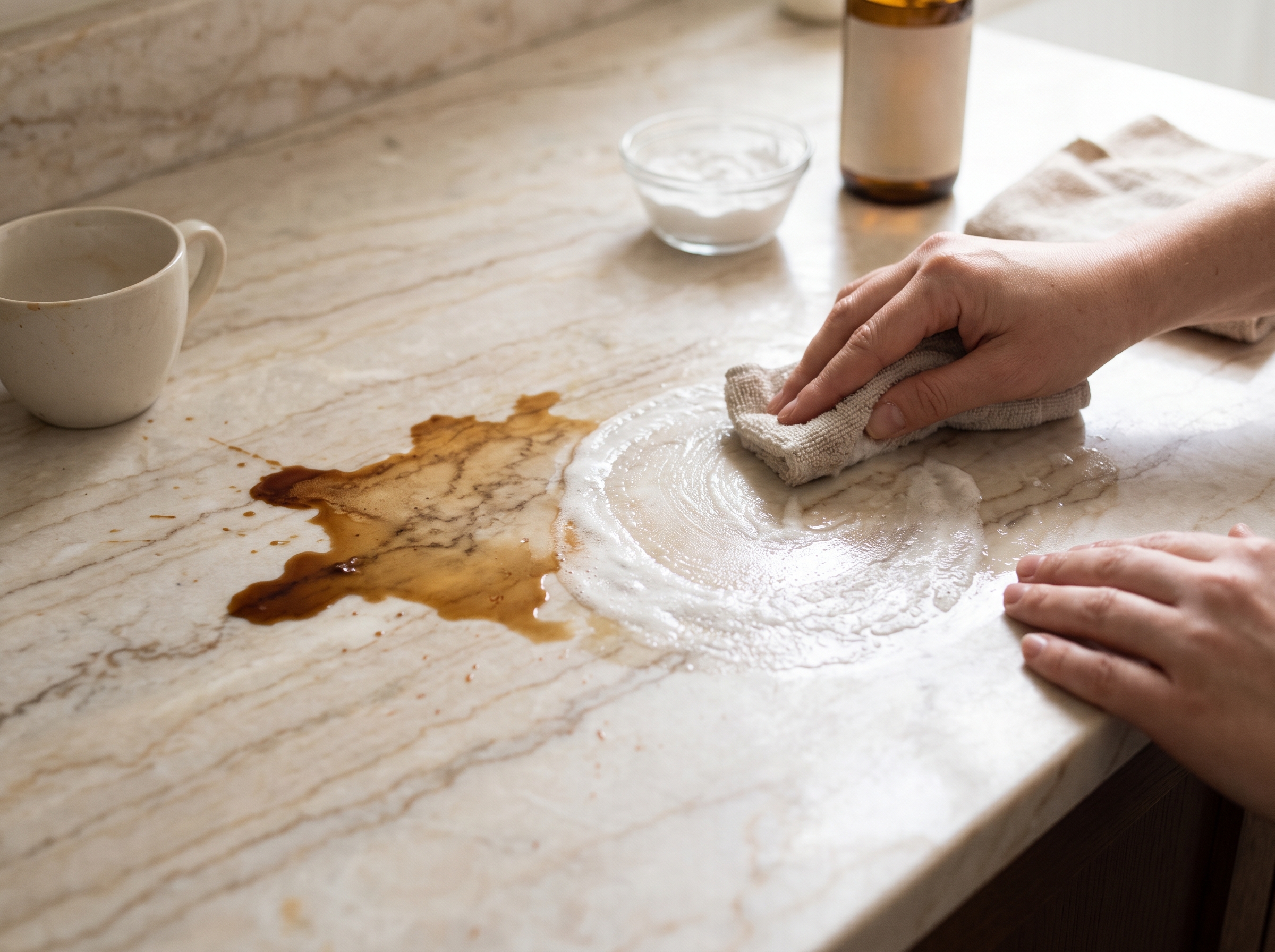
Liquids such as coffee, tea, oil and other staining substances should be removed as soon as possible.
Use an absorbent cloth to prevent the liquid from spreading across the surface. Avoid abrasive brushes and harsh cleaning materials.
Apply Suitable Stone Sealers
Impregnating sealers and protective treatments designed for natural stone can help reduce liquid absorption and protect travertine surfaces.
The frequency of application depends on the stone's characteristics, the selected product and the conditions in which it is used.
What Should You Consider When Choosing Travertine?
Selecting the right travertine is essential for achieving the desired appearance and long-term performance in an architectural project.
Before purchasing travertine, consider the following factors:
-
Colour and pattern: The stone's colour distribution and natural veining should complement the overall design.
-
Pore density: Examine the size, distribution and filling condition of the natural pores.
-
Cutting direction: Choose between vein cut and cross cut according to the desired visual effect.
-
Surface finish: Select polished, honed, brushed or tumbled finishes based on the application.
-
Thickness and dimensions: Ensure that the stone dimensions meet the project's installation and structural requirements.
-
Technical performance: Evaluate water absorption, compressive strength, flexural strength, abrasion resistance and freeze-thaw resistance.
-
Maintenance requirements: Consider the cleaning and sealing requirements before selecting the material.
For large-scale architectural projects, it is recommended to examine physical samples and, whenever possible, review the overall appearance of the actual slab or block selection.
Where Is Travertine Quarried in Türkiye?
Türkiye is one of the countries with significant natural stone resources. Travertine production is particularly associated with Denizli, which has an established position in the international natural stone industry.
Denizli: Denizli is one of Türkiye's most recognised travertine production centres. The famous Pamukkale Travertines are among the region's most important geological and natural heritage sites. Travertine deposits around Denizli offer a variety of natural stone colours and textures.
Afyonkarahisar: Afyonkarahisar is an important natural stone production region in Türkiye. In addition to its marble industry, the region is associated with a variety of carbonate rock formations.
Burdur: Located in southwestern Türkiye, Burdur is another region with notable geological formations and natural stone resources.
Travertine produced in Türkiye is exported to international markets in different colours, patterns and surface finishes. Denizli Travertine, in particular, is recognised in the global natural stone industry.
Frequently Asked Questions About Travertine
What is travertine stone?
Travertine is a sedimentary natural stone formed when calcium carbonate precipitates from mineral-rich water. It is recognised by its porous structure, layered appearance and natural colour variations.
Is travertine durable?
Travertine durability depends on its mineral composition, pore density, water absorption and physical properties. With appropriate material selection, installation and maintenance, it can provide long-term performance. Technical test results should be evaluated for each project.
Is travertine waterproof?
No natural travertine should automatically be considered waterproof. Due to its porous structure, it can absorb water. Its water absorption rate, surface treatment and protective sealing should be considered, especially in wet areas.
Can travertine be used outdoors?
Yes. Travertine with suitable technical properties can be used for exterior cladding, terraces, garden pathways, staircases and swimming pool surroundings. Freeze-thaw resistance and slip resistance are particularly important for outdoor applications.
Why are travertine pores filled?
Natural travertine pores can be filled with cement-based or resin-based materials to create a smoother and more uniform surface. Filling can also help reduce dirt accumulation and simplify maintenance.
Can travertine be polished?
Yes. Travertine can be polished using specialised stone-processing techniques. Polishing creates a smooth, glossy surface and can enhance the stone's natural colours and patterns.
Is travertine more affordable than marble?
There is no fixed price difference between travertine and marble. Prices depend on factors such as stone quality, colour, veining, pore structure, thickness, surface finish, processing and production costs.
Does travertine change colour over time?
Travertine may experience colour changes depending on environmental conditions, cleaning products, moisture exposure and mineral composition. Appropriate cleaning and protective treatments can help preserve its original appearance.
What colours does travertine come in?
Travertine is available in various colours, including beige, cream, ivory, white, grey, silver, yellow, walnut and brown. Its colour depends on the geological environment and mineral composition.
How is travertine installed?
Travertine installation begins with preparing the substrate and planning the layout according to the required dimensions. The stones are then installed using suitable adhesives or mounting systems. Joint spacing, surface levelling and stone thickness are important factors that influence installation quality.
Conclusion: Creating Timeless Spaces with Travertine
Travertine is a versatile natural stone that brings together distinctive textures, natural veining, warm colour variations and a wide range of surface finishes.
Its suitability for flooring, wall cladding, staircases, bathrooms, outdoor spaces and decorative furniture makes it an attractive material for architects, designers and construction professionals.
Selecting the right colour, cutting direction, surface finish and technical specifications is essential to achieving the best results from travertine in any architectural project.
When choosing natural stone, it is important to consider not only its visual characteristics but also its technical performance and suitability for the intended application.