What Is Marble Polishing? How Is Marble Polished? Marble Polishing Methods
Marble is one of the most popular natural stones used in architecture and interior design thanks to its elegant appearance, distinctive veining and natural characteristics. However, over time, factors such as daily use, cleaning, friction and environmental conditions can cause marble surfaces to lose their shine. This is where marble polishing and proper surface treatment methods play an important role in restoring the stone's natural appearance.
But what is marble polishing? How is marble polished? How can dullness and scratches on marble surfaces be removed? Which polishing products and techniques should be used?
In this article, we explore how marble polishing works, the materials used, professional polishing methods and the key points to consider when maintaining the shine of marble surfaces.
What Is Marble Polishing?
Marble polishing refers to the processes used to improve the appearance of marble surfaces, enhance their shine and highlight the natural characteristics of the stone.
The shine of marble is directly related to how smooth its surface is and how effectively it reflects light. During the polishing process, microscopic surface irregularities are reduced to achieve a smoother and more reflective finish.
Marble polishing generally involves two main approaches:
-
Mechanical polishing: A process in which diamond abrasive pads and specialised polishing equipment are used to gradually refine the marble surface.
-
Chemical polishing: A process that uses specialised products that react with the mineral composition of the marble to improve surface gloss.
These methods can be applied separately or in combination, depending on the marble type, surface condition and desired level of shine.
How Is Marble Polished?
The marble polishing process varies depending on the existing surface condition and the method selected. Basic maintenance may be sufficient for slightly dull surfaces, while marble with deep scratches or significant wear may require professional equipment and specialised treatment.
The main stages of marble polishing include:
1. Cleaning the Marble Surface
Before polishing begins, dust, dirt, grease and other residues must be removed from the marble surface.
It is recommended to use pH-neutral cleaners specifically designed for natural stone. Acidic cleaning products can damage marble because of its calcium carbonate content and may leave dull marks on the surface.
2. Removing Surface Scratches
If the marble has scratches, worn areas or surface irregularities, these should be addressed before polishing.
Diamond abrasive pads with different grit levels are used during this stage. The process generally starts with coarser abrasives and gradually moves towards finer ones.
The objective is to carefully reduce surface imperfections and create a smoother finish.
3. Gradual Marble Polishing
During mechanical marble polishing, diamond pads with different levels of abrasiveness are used to refine the surface progressively.
At each stage, the goal is to achieve a smoother surface with improved light reflection.
The sequence of polishing pads depends on the hardness of the marble, its existing condition and the desired final appearance.
4. Applying Chemical Polishing Treatments
Chemical polishing may be applied to certain marble types after mechanical treatment.
Specialised polishing products compatible with the mineral composition of the stone are used. In particular, suitable chemical products can enhance the surface shine of calcium carbonate-based marble.
However, it is essential to select products appropriate for the specific stone type and follow the manufacturer's application instructions.
5. Final Cleaning and Protection
Once polishing is complete, any remaining residues are removed from the surface.
Depending on the requirements, marble sealers or impregnating products may also be applied. These products can penetrate the pores of the stone and help reduce water and stain absorption.
However, protective sealers and polishing products do not serve the same purpose. Impregnating products primarily aim to reduce absorption, while polishing products may change the appearance and gloss of the surface.
What Are the Different Marble Polishing Methods?
Several methods can be used to improve the shine of marble. Choosing the right method depends on the structure of the stone and the level of surface damage.
1. Mechanical Polishing with Diamond Pads
Mechanical polishing with diamond pads is one of the most widely used methods in professional marble maintenance.
In this process, pads with different abrasive levels are used to gradually refine the marble surface.
Advantages include:
-
Helps remove surface scratches.
-
Restores worn and dull areas.
-
Provides a controlled surface refinement process.
-
Allows different levels of gloss to be achieved.
This method is particularly suitable for marble floors, staircases and large stone surfaces.
2. Marble Crystallisation
Marble crystallisation is a chemical-mechanical maintenance method commonly used on calcium carbonate-based marble surfaces.
Special crystallisation products and suitable machinery are used during the process. The treatment can create a brighter surface with improved light reflection.
Crystallisation may be suitable for maintaining slightly worn surfaces. However, it cannot independently remove deep scratches, fractures or serious surface imperfections.
3. Marble Polishing Products
Various polishing products are available on the market to improve the appearance of marble surfaces.
These products may come in liquid, cream or powder form. Their application methods vary depending on their composition and the type of marble.
When selecting a marble polishing product, consider the following factors:
-
Compatibility with the marble type
-
Clear application instructions
-
No unwanted residue or film formation
-
Suitability for the intended application area
Not every marble polishing product produces the same results on every natural stone. Therefore, testing the product on a small, inconspicuous area is recommended before applying it to larger surfaces.
4. Professional Stone Restoration and Polishing
Marble surfaces that have been used for many years, developed deep scratches or lost most of their original shine may require professional stone restoration.
Depending on the condition of the surface, these treatments may include grinding, filling, honing and polishing.
Professional equipment can provide more controlled results, particularly on large floors and commercial surfaces.
What Are the Benefits of Marble Polishing?
The primary purpose of marble polishing is to improve the aesthetic appearance of the surface. Depending on the type of product or treatment used, several additional benefits may be achieved.
The main benefits of marble polishing include:
-
Enhancing the shine of marble surfaces.
-
Highlighting the natural colours and veining of the stone.
-
Improving the overall appearance of the surface.
-
Certain polishing systems may create a thin protective layer.
-
Helping achieve a more uniform and well-maintained appearance.
One important distinction should be made: not every polishing product protects marble against water, oil or stains. For these types of protection, suitable impregnating and sealing products should be evaluated separately.
Can You Polish Marble at Home?
Minor dullness and surface dirt can often be addressed through appropriate marble care and cleaning methods at home.
However, deep scratches, surface wear and chemical damage may require professional treatment.
The following steps can be followed for basic marble maintenance at home:
-
Remove dust from the surface using a soft cloth.
-
Clean the surface with a pH-neutral marble cleaner.
-
Rinse with clean water.
-
Dry the surface using a clean, soft cloth to prevent water residue.
-
If necessary, apply a marble-compatible maintenance or polishing product according to the manufacturer's instructions.
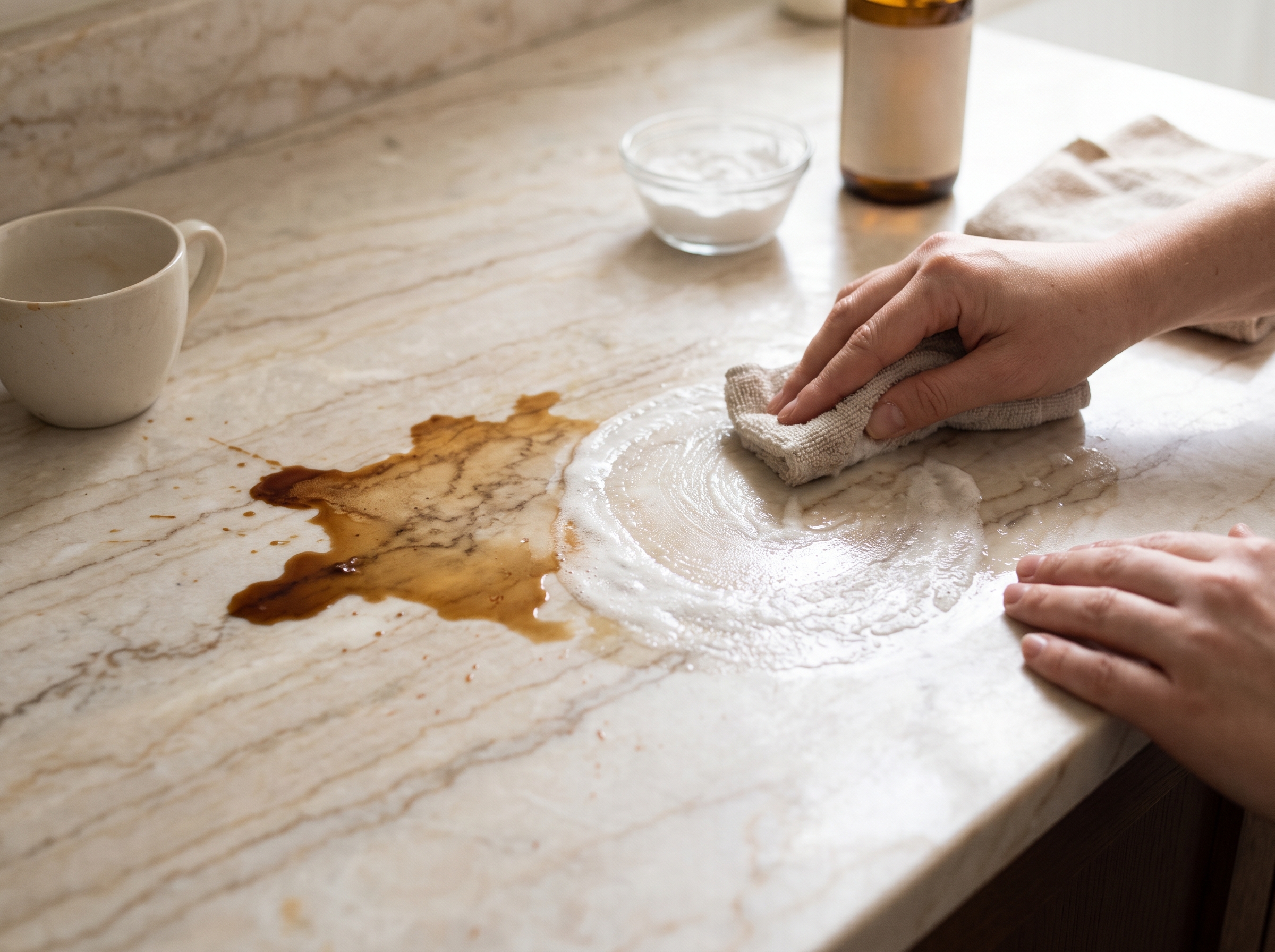
Avoid using vinegar, lemon juice, hydrochloric acid and strong acidic cleaning products during home maintenance. These substances can cause chemical damage to marble surfaces.
Abrasive scouring pads and harsh cleaning materials should also be avoided, as they can create scratches.
How Can You Maintain the Shine of Marble?
Proper and regular maintenance is essential for preserving the natural shine of marble over time.
The following practices can help protect marble surfaces:
-
Clean marble surfaces regularly using soft cloths.
-
Avoid acidic and abrasive cleaning products.
-
Remove coffee, fruit juice and other spilled substances promptly.
-
Protect floors against scratches caused by sand and hard particles.
-
Use suitable impregnating products according to the stone type and application area.
-
Arrange periodic professional maintenance for heavily used surfaces.
Kitchen countertops, bathroom surfaces and flooring are exposed to different conditions. Therefore, their maintenance requirements should be determined accordingly.
What Is the Difference Between Marble Polish and Marble Impregnation?
Marble polishing and marble impregnation are often confused with each other. However, these two treatments serve different purposes.
| Feature | Marble polishing | Marble impregnation |
|---|---|---|
| Main purpose | Improving appearance and shine | Reducing absorption |
| Application objective | Aesthetic surface treatment | Protective maintenance |
| Effect on water absorption | Depends on the product | Helps reduce water absorption |
| Stain protection | Depends on the product | Suitable products can reduce stain absorption |
| Appearance | Can create gloss or other surface effects | Generally aims to preserve the natural appearance |
Therefore, if the aim is to achieve both a polished appearance and easier maintenance, suitable products can be selected together according to the stone type and intended application.
Common Mistakes When Polishing Marble
Using incorrect products or unsuitable methods during marble maintenance can cause further damage to the surface.
Some of the most common mistakes include:
Using acidic cleaners: These products can damage the mineral structure of marble and create dull marks.
Choosing the wrong polishing product: Not every polishing product is suitable for every type of marble.
Trying to remove scratches with polish alone: Deep scratches generally require mechanical surface treatment.
Applying crystallisation to every type of marble: Crystallisation is not suitable for all natural stones. The mineral composition of the stone and the chemical compatibility of the product must be evaluated.
Neglecting regular maintenance: Dirt, sand and abrasive particles left on the surface can accelerate the loss of shine.
Frequently Asked Questions About Marble Polishing
How Is Marble Polished?
Marble can be polished using mechanical diamond pads, suitable chemical products, crystallisation or professional surface restoration techniques. The correct method depends on the marble type and the condition of the surface.
How Long Does Marble Polish Last?
The durability of marble polish depends on the type of product used, application quality and frequency of use. Shine may decrease more quickly on heavily used floors.
Can Dull Marble Be Polished Again?
Yes. Dullness may result from dirt, minor surface wear or chemical damage. Once the cause has been identified, suitable cleaning, mechanical polishing or professional restoration can be carried out.
Can Vinegar Be Used to Polish Marble?
No. Vinegar is acidic and can cause chemical etching and dullness on marble surfaces. pH-neutral cleaning products should be used for marble maintenance.
Does Marble Polish Make Marble Waterproof?
Not every marble polishing product provides waterproofing. To reduce water absorption, impregnating and protective products suitable for the specific marble type should be used.
Are Marble Polishing and Crystallisation the Same?
No. Crystallisation is a specialised surface treatment performed on certain marble surfaces using specific chemical products and machinery. Polishing is a broader term that can refer to different products and surface treatment methods.
Conclusion: Preserve the Natural Beauty of Marble with Proper Maintenance
Marble polishing and surface treatment play an important role in maintaining and improving the aesthetic appearance of natural stone. Mechanical polishing, crystallisation, suitable polishing products and professional restoration methods can help achieve the desired finish on different marble surfaces.
However, successful results depend on considering the mineral composition, surface condition and intended application of the marble. Incorrect cleaning products and unsuitable polishing methods can damage natural stone surfaces.
At Biser Marble, we value the distinctive character and aesthetic qualities of natural stone. Contact us to learn more about our marble blocks, slabs and cut-to-size products and discover natural stone solutions for your projects.