What Is Marble Backing Mesh? Properties and Applications of Mesh-Backed Marble
Marble backing mesh is a reinforcement process in which a special mesh is applied to the back of natural stone slabs using a suitable adhesive. It is commonly used for marble slabs with delicate veining, natural fractures or a higher risk of breakage during production, handling and transportation. The purpose of this process is to help preserve the integrity of the slabs and reduce the risk of damage during cutting, processing, transportation and installation.
Mesh-backed marble is natural stone with a mesh and adhesive layer applied to its back surface. This process does not change the natural structure of the marble. Instead, it provides additional support from the back, helping to make certain production and handling stages easier. However, mesh reinforcement does not make marble unbreakable or guarantee protection against every type of damage.
So, how is marble backing mesh applied? What are the properties of mesh-backed marble, and where is it used?
What Is Marble Backing Mesh?
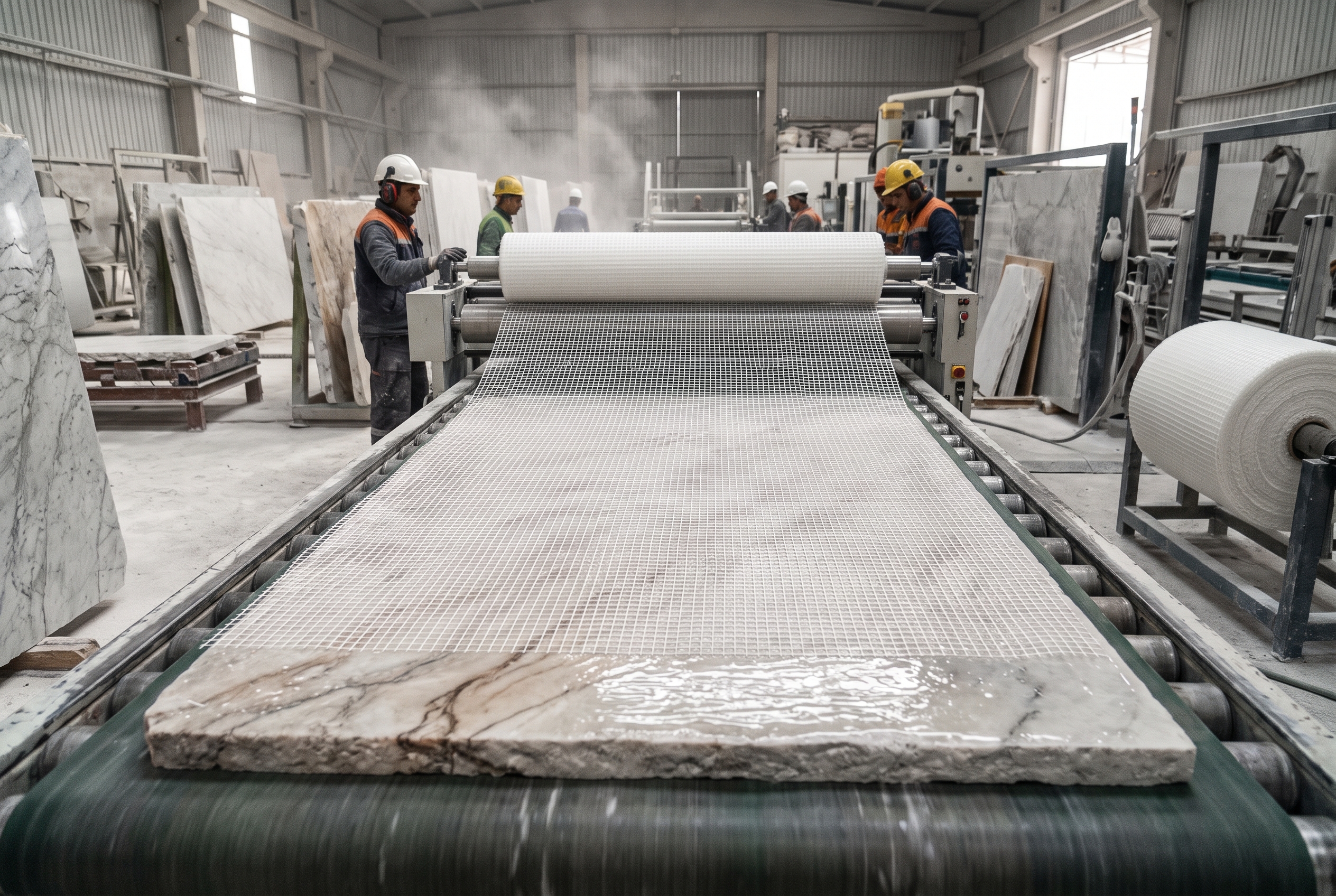
Marble backing mesh is the process of attaching a mesh, usually made from fibreglass, to the back of a marble slab using a suitable resin or adhesive.
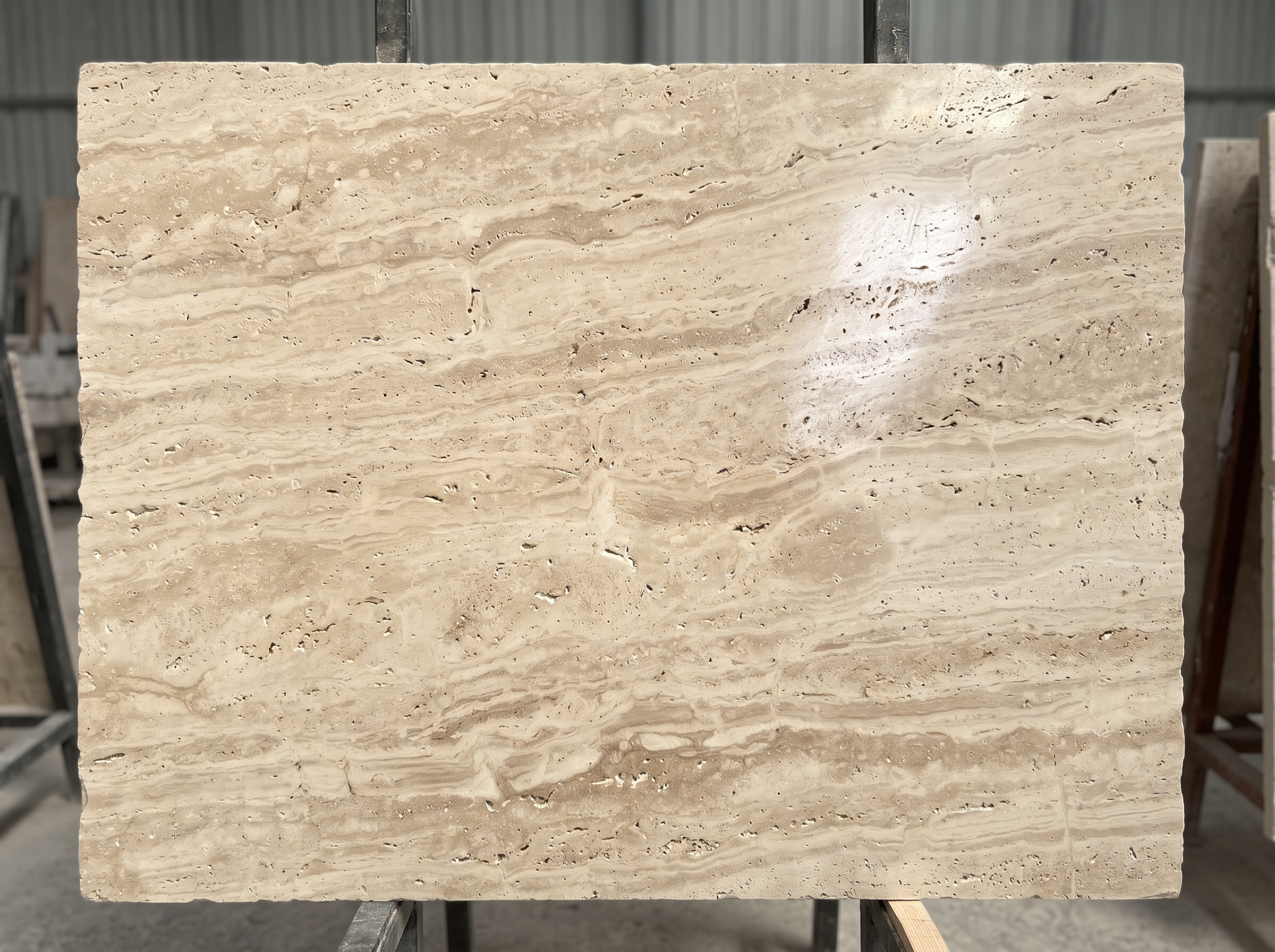
Natural marble can have different mineral distributions, vein structures, microcracks and porosity levels depending on its geological formation. In some types of marble, these natural characteristics may increase the risk of breakage, particularly during the cutting and handling of thin slabs.
Applying backing mesh creates a supporting layer on the rear surface of the slab. This can help reduce the risk of damage and make the marble easier to handle throughout production and transportation.
Mesh reinforcement may be preferred in the following situations:
-
Marble with delicate natural veins or existing microcracks
-
Thin marble slabs
-
Large-format marble slabs
-
Products requiring additional support during cutting and processing
-
Stone slabs that need extra reinforcement during handling and installation
How Is Marble Backing Mesh Applied?
The application process may vary depending on the characteristics of the stone and the type of reinforcement material used. In general, it involves preparing the back surface, applying adhesive, positioning the mesh and allowing the material to cure.
1. Preparing the Marble Surface
First, the back surface of the marble slab is inspected. Dust, dirt, loose particles and any residues that could affect adhesion are removed.
Proper surface preparation is important for achieving a reliable bond between the mesh and the marble.
2. Applying Adhesive or Resin
A suitable adhesive or resin is applied to the back of the marble slab. The material is selected according to the type of stone and the intended production process.
Epoxy-based and polyester-based resins are among the materials used in the natural stone industry. However, the appropriate product should be selected according to the marble type, production conditions and final application.
3. Positioning the Mesh
The mesh is cut to the required dimensions and carefully placed onto the surface coated with resin. Particular attention is paid to avoiding wrinkles, air pockets and areas where the mesh does not properly contact the surface.
The aim is to achieve an even and consistent bond across the back of the slab.
4. Curing and Quality Inspection
The adhesive or resin is allowed to cure under the conditions specified by its manufacturer. Once curing is complete, the bonding quality and overall integrity of the mesh-backed marble are inspected.
When properly applied, backing mesh can provide additional support during subsequent production, handling and transportation stages.
What Are the Properties of Mesh-Backed Marble?
The main characteristic of mesh-backed marble is the presence of a reinforcing mesh layer on the back of the natural stone slab. This layer can provide additional support during processing and handling.
Helps Reduce the Risk of Breakage
Mesh reinforcement can help preserve the integrity of marble slabs, particularly those with delicate vein structures or natural microcracks. It is intended to reduce the risk of damage during cutting, handling and processing.
However, mesh reinforcement does not guarantee that marble will never break. The natural structure of the stone, slab thickness, handling conditions and application quality also affect its performance.
Provides Support for Thin Marble Slabs
Thin marble slabs can be more delicate than thicker slabs during handling and installation. Applying backing mesh can provide additional support from the rear surface and help make these processes easier.
Can Facilitate Production and Transportation
Mesh reinforcement can be beneficial when moving, packaging and shipping large-format or delicate marble slabs. It helps manufacturers manage potential weaknesses arising from the natural structure of the stone.
Preserves the Natural Appearance of Marble
Since backing mesh is applied to the rear surface rather than the front, it does not directly alter the marble's visible appearance. The natural colour, veining and surface pattern remain visible.
Does Not Produce the Same Results on Every Marble Type
The effectiveness of mesh reinforcement depends on several factors, including the marble's mineral composition, crack density, thickness and the materials used. Therefore, the same mesh and resin system may not be suitable for every type of marble.
Mesh-Backed Marble vs. Unreinforced Marble
The main difference between mesh-backed and unreinforced marble is whether an additional supporting mesh layer is present on the back of the slab.
| Feature | Mesh-Backed Marble | Unreinforced Marble |
|---|---|---|
| Back surface | Contains mesh and adhesive | Generally has the natural stone surface |
| Additional support | Provides support from the back | No additional mesh reinforcement |
| Thin slabs | Can be preferred for delicate slabs | Depends on the stone's natural strength |
| Processing | May help reduce the risk of breakage | May require more careful handling depending on the stone |
| Appearance | Preserves the natural appearance of the front surface | Retains its natural stone appearance |
| Applications | Preferred when additional support is needed | Can be used where natural strength and thickness are suitable |
Mesh-backed marble is not necessarily of higher quality than unreinforced marble. Mesh reinforcement is a supporting production technique, not a classification system that determines the natural quality of the stone.
Where Is Mesh-Backed Marble Used?
Depending on the characteristics of the stone and the technical requirements of the project, mesh-backed marble can be used in various applications.
Wall Cladding
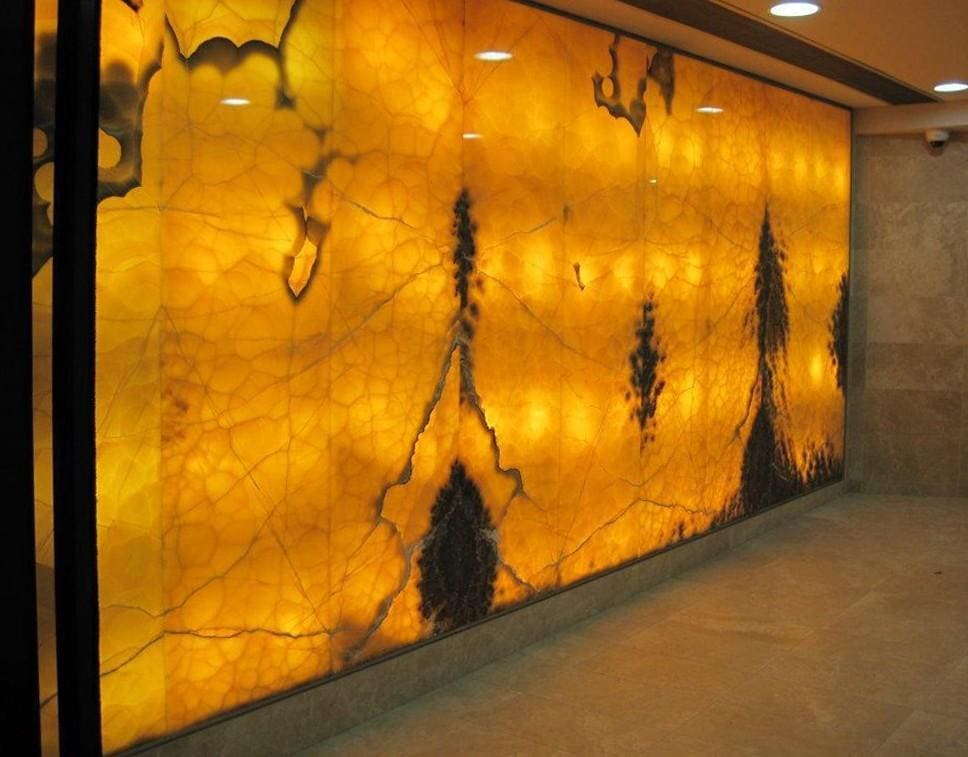
Mesh reinforcement may be preferred for thin marble slabs used in interior wall cladding. The additional support on the back can help preserve the integrity of the slabs during production and installation.
Decorative Marble Panels
Large-format decorative panels may require mesh reinforcement, particularly when the natural vein structure makes the marble more delicate during processing and handling.
Furniture and Interior Design
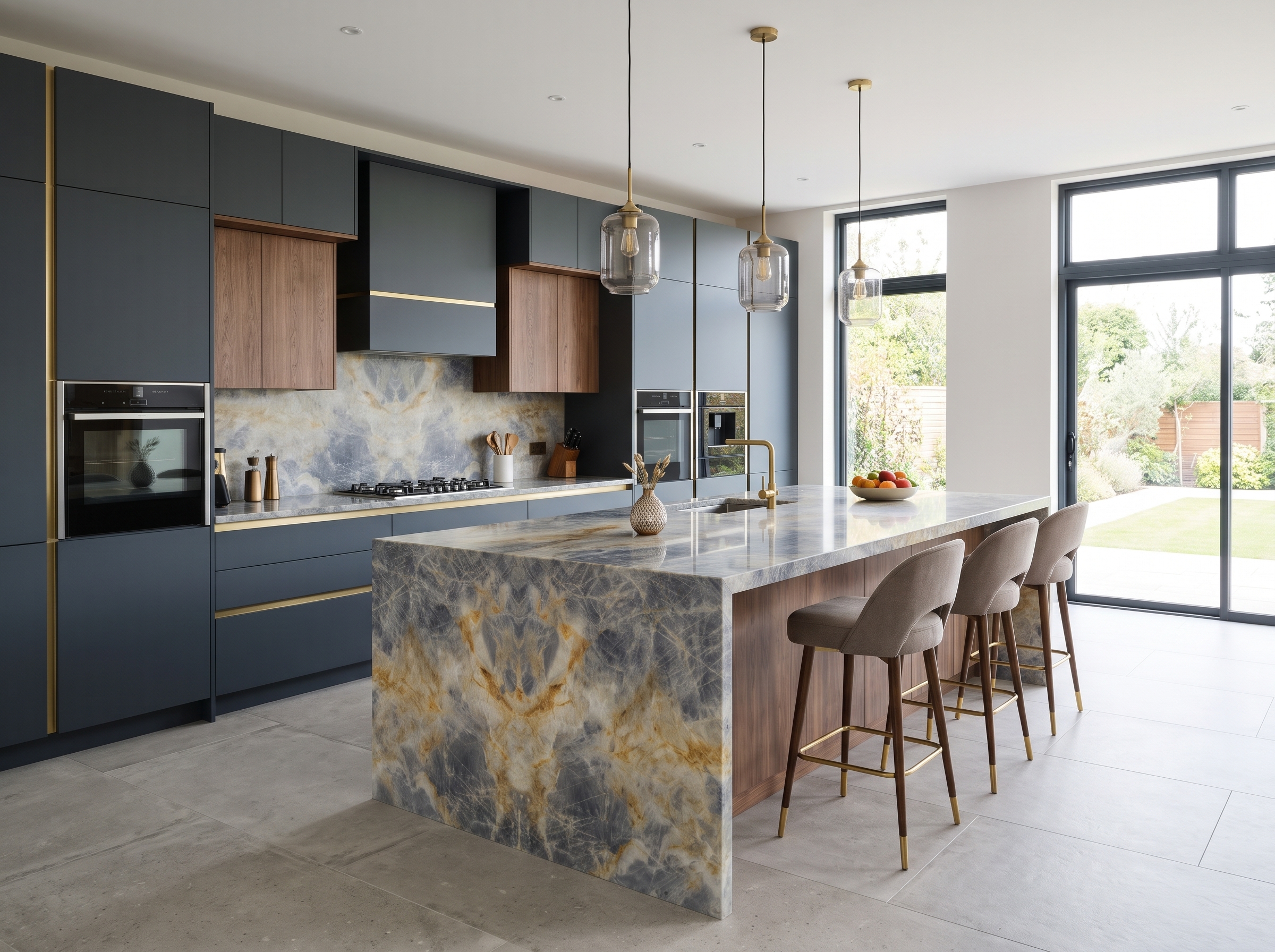
Thin marble pieces used for table tops, decorative furniture surfaces and bespoke interior design products may require backing mesh. The suitability of this application should be evaluated together with the product's support structure and installation method.
Custom-Cut and Special Design Applications
Mesh reinforcement can also be used as a supporting process for marble pieces with custom dimensions, complex shapes or specific production requirements.
However, mesh-backed marble should not automatically be considered suitable for every application. For flooring, countertops and surfaces exposed to significant mechanical loads, factors such as stone thickness, installation system, adhesive compatibility and technical properties must be evaluated separately.
Does Mesh Reinforcement Affect Marble's Water Absorption or Durability?
Mesh reinforcement does not directly change the natural water absorption rate or mineral composition of marble. Its primary purpose is to provide additional support to the back surface of the stone.
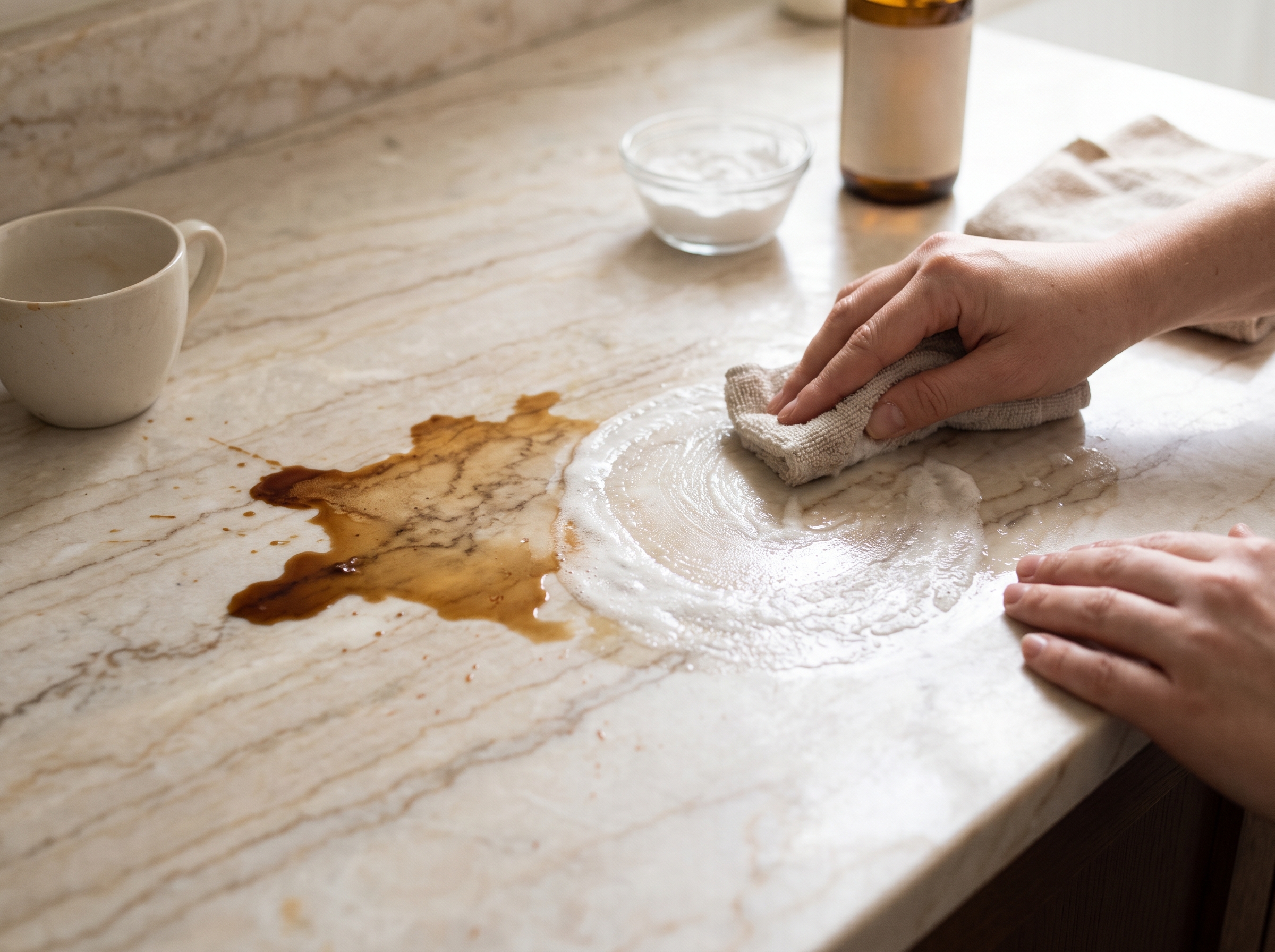
Marble's water absorption rate depends on its porosity, mineral composition and natural cracks. Applying backing mesh does not eliminate these characteristics. To reduce water absorption, suitable impregnating sealers or surface protection products should be considered according to the intended application.
Similarly, mesh reinforcement does not automatically increase marble's resistance to abrasion, scratching or chemical substances. These properties are primarily related to the stone's natural physical and chemical characteristics.
What Should You Consider When Buying Mesh-Backed Marble?
When purchasing mesh-backed marble, it is important to evaluate not only the presence of the mesh but also the overall quality of the stone and the details of the reinforcement process.
1. Natural stone characteristics: Examine the vein structure, cracks, colour distribution and surface quality.
2. Mesh application quality: The mesh should be evenly attached to the back surface, without visible air pockets, separation or bonding problems.
3. Resin or adhesive used: The selected resin or adhesive should be compatible with the natural stone and suitable for the intended application.
4. Slab thickness: The presence of backing mesh does not eliminate the need to select a slab thickness appropriate for the project.
5. Intended application: Determine whether the marble will be used for walls, flooring, furniture or another application.
6. Installation method: The adhesive, support system and installation method should be compatible with the mesh-backed marble.
7. Technical information and sample inspection: For large-scale projects, samples, technical specifications and application conditions should be evaluated before placing an order.
Frequently Asked Questions About Mesh-Backed Marble
What does mesh-backed marble mean?
Mesh-backed marble is a natural stone slab reinforced with mesh and adhesive or resin on its back surface. This process helps preserve the integrity of the stone during production, handling and processing.
Why is marble reinforced with mesh?
Marble can be delicate due to its natural veins, microcracks or thin slab thickness. Mesh reinforcement provides additional support from the back and aims to reduce the risk of breakage during cutting, handling and installation.
Is mesh-backed marble more durable?
Mesh reinforcement provides additional support to the back of the marble and may help reduce the risk of breakage under certain conditions. However, it does not completely change the stone's natural mechanical properties or prevent every type of damage.
Is the mesh visible on the front of the marble?
No. Mesh reinforcement is normally applied to the back surface of the marble. When properly applied, the natural appearance of the front surface remains unchanged.
Is mesh-backed marble waterproof?
No. Mesh reinforcement does not eliminate the natural porosity of marble. The stone's water absorption rate depends on its own physical characteristics. Suitable surface protection products can be used to help reduce water absorption.
Can every type of marble be reinforced with mesh?
No. The need for mesh reinforcement depends on the marble's natural structure, thickness, dimensions and intended application. Some marble types may require backing mesh, while others may not need it.
Can mesh-backed marble be used for flooring?
Mesh-backed marble may be suitable for certain flooring applications when the appropriate technical requirements are met. However, factors such as load, abrasion, installation and adhesive compatibility must be considered. Mesh reinforcement alone does not guarantee that a stone is suitable for flooring.
Conclusion: Mesh Reinforcement Supports Marble During Processing
Marble backing mesh is a supporting process in which mesh and a suitable adhesive are applied to the back surface of natural stone slabs. It can help make production, handling and installation more manageable, particularly for thin, delicate or naturally fractured marble.
However, the quality of mesh-backed marble does not depend solely on the reinforcement process. The natural structure of the stone, slab thickness, surface quality, resin used and application conditions should all be evaluated together.
Choosing the right stone and using appropriate production techniques help ensure that the aesthetic qualities of natural marble can be enjoyed for years to come. Biser Marble offers a range of natural stone options for architectural projects and bespoke designs.