What Is Marble and How Is It Formed?
Its Geological Formation, Types and Technical Properties
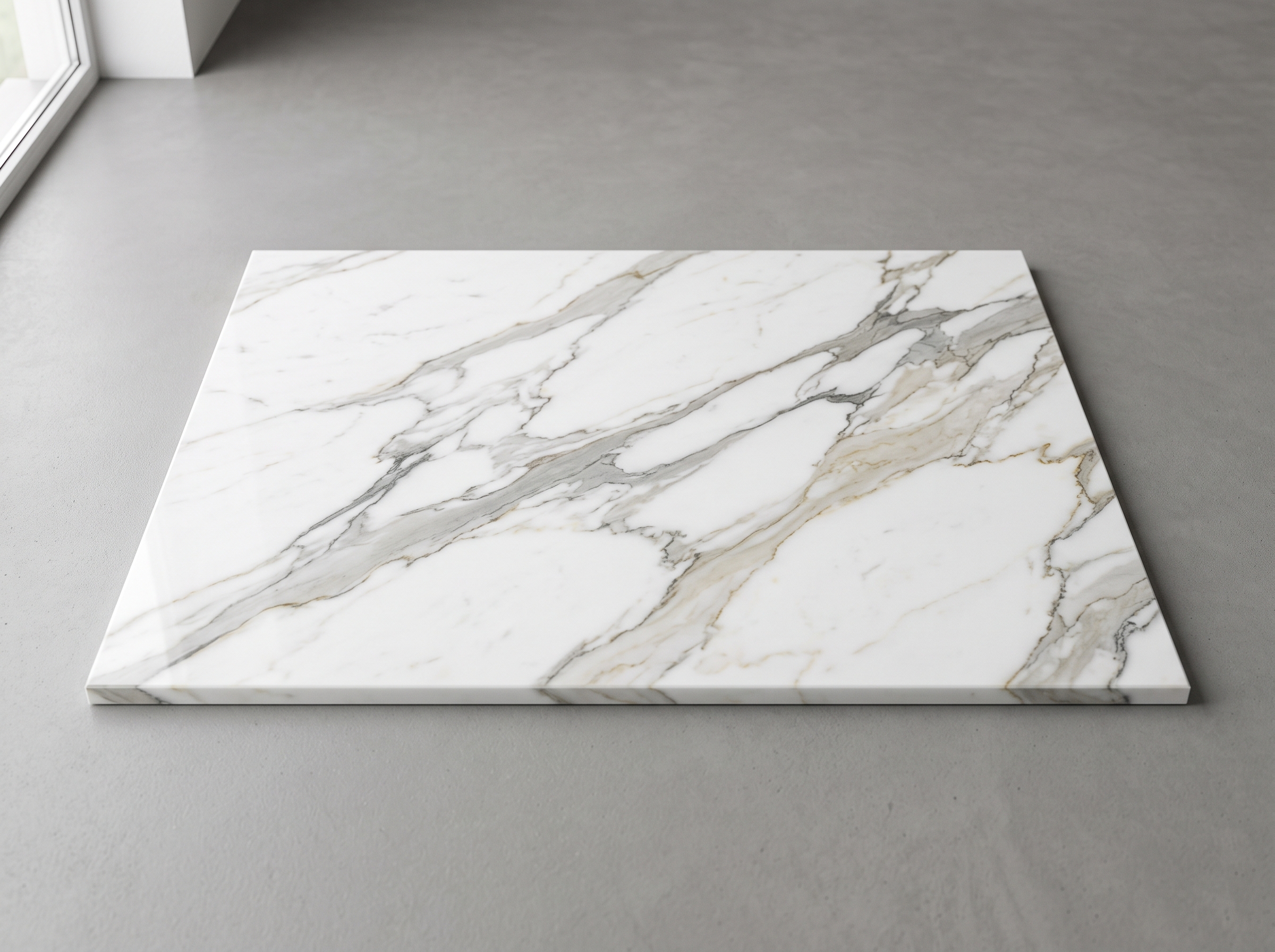
The vein on a marble slab is not the result of a design choice; it is the outcome of a geological story that began approximately 200 million years ago. That vein was once mud deposited on the floor of a shallow tropical sea. It was then buried kilometers beneath the Earth's surface, heated and compressed by mountain-building processes, its crystals were rearranged, and eventually it was brought back to the surface through erosion.
Marble is one of the oldest and most misunderstood building materials. A significant proportion of the stones sold under the name “marble” are not actually marble from a geological perspective. In this guide, we examine the scientific definition of marble, every stage of its formation, the mineralogical factors that determine its color and veining, why Türkiye is one of the world's richest marble-producing regions, and how all of these factors influence material selection for your projects.
What Is Marble?
Marble is a metamorphic rock formed when limestone or dolomitic limestone recrystallizes under high temperature and pressure. Its main component is calcite, a mineral composed of calcium carbonate (CaCO₃). In dolomitic marble, dolomite, composed of calcium magnesium carbonate (CaMg(CO₃)₂), is the dominant mineral.
Even its name reflects this transformation. The word derives from mármaros, which comes from the Greek root marmaírein, meaning “to shine” or “to sparkle.” During metamorphism, the pores within the rock close, crystals grow, and the surface begins to reflect light. The characteristic luster that distinguishes marble from limestone is a direct result of this crystalline structure.
Geological Definition vs. Commercial Definition
Much of the confusion surrounding natural stone terminology comes from the distinction between geological and commercial definitions.
| Criteria | Geological (Scientific) Definition | Commercial (Industry) Definition |
|---|---|---|
| Scope | Carbonate rocks that have undergone metamorphism | All carbonate-based natural stones that can be polished |
| Criterion | Recrystallization must have occurred | Appearance, hardness and polishability are sufficient |
| Includes | Calcitic and dolomitic marbles | Marble + limestone + travertine + onyx + some serpentinites |
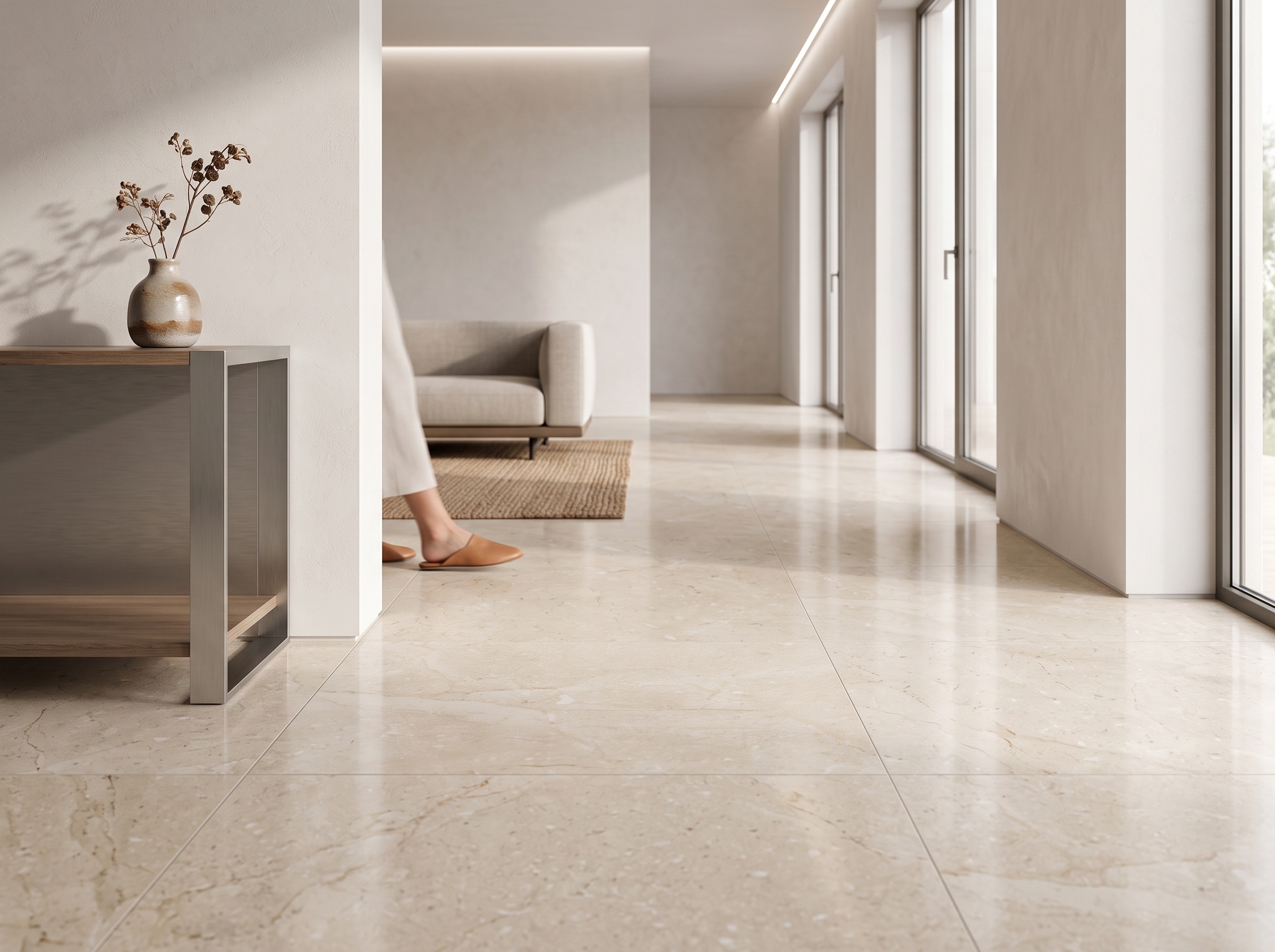
Standards such as ASTM C503 and TS EN 12440 may classify limestone and travertine within the broader “marble group” for commercial purposes. In other words, many stones marketed as “beige marble” are actually limestone from a geological perspective and have never undergone metamorphism. This does not mean that the product is inferior; however, its water absorption, porosity and maintenance behavior are different. Understanding this distinction is essential for setting accurate expectations.
The Mineralogical and Chemical Composition of Marble
Pure marble consists of more than 90% calcium carbonate by weight. However, pure marble is rare in nature. Impurities such as clay, sand, iron and organic matter in the original rock form new minerals during metamorphism. These secondary minerals determine the marble's color, veining and technical behavior.
| Mineral | Chemical Composition | Role in Marble |
|---|---|---|
| Calcite | CaCO₃ | Main component; responsible for the white color and polishability |
| Dolomite | CaMg(CO₃)₂ | Dominant in dolomitic marble; somewhat harder and more resistant |
| Graphite / Organic Carbon | C | Gray, smoky gray and black tones; fine veining |
| Hematite, Limonite, Goethite | Fe₂O₃, FeO(OH) | Red, pink, yellow and brown tones |
| Serpentine, Chlorite, Tremolite | Mg-silicates | Green veins and patches in verde marbles |
| Quartz | SiO₂ | Increases hardness and makes processing more difficult |
| Mica (Muscovite, Biotite) | Aluminosilicate | Directional luster and a tendency toward foliation |
| Pyrite | FeS₂ | Metallic spots; may cause surface rusting when oxidized |
This table also has practical implications. High pyrite content can cause yellowish staining or runoff on exterior applications, while mica-rich marble may exhibit weak planes depending on the cutting direction. Natural stone selection is therefore not merely an aesthetic decision; it is also a mineralogical decision.
How Is Marble Formed? The Five-Stage Geological Process
The formation of marble is not a single event but a chain of processes that takes place over tens of millions of years. The process can be examined in five fundamental stages.
1. Formation of the Parent Rock: Limestone
Every marble has a “parent,” and that parent is almost always limestone. Limestone forms in shallow, warm and clear marine environments. Corals, foraminifera, algae, mollusks and crinoids build their shells and skeletal structures from calcium carbonate dissolved in seawater. When these organisms die, their remains accumulate on the seafloor. Carbonate mud formed through chemical precipitation also contributes to the deposit.
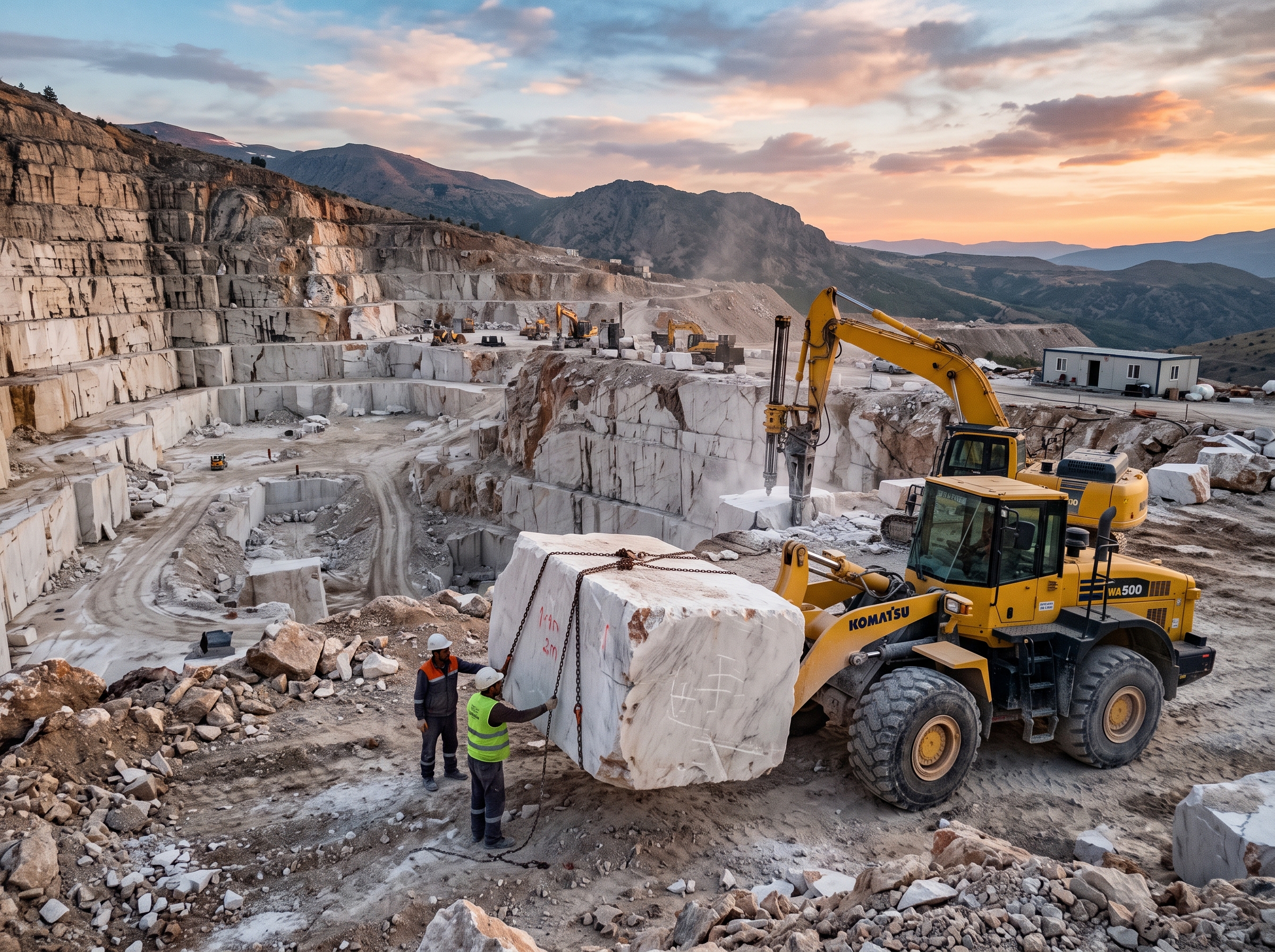
This accumulation continues for millions of years and can create carbonate platforms hundreds of meters thick. The raw material extracted today from marble quarries in Muğla, Afyon and the Taurus Mountains consists of these very carbonate deposits that accumulated along the shallow shores of the Tethys Ocean during the Mesozoic Era, approximately 250–65 million years ago.
2. Burial and Diagenesis
As new sediments accumulate on top of the carbonate deposits, the carbonate mud becomes buried deeper underground. Under increasing pressure, it loses water, its particles become interlocked, and the loose sediment becomes lithified.
During this stage, known as diagenesis, metamorphism has not yet occurred. The resulting rock is still limestone. Fossils, bedding and the original depositional texture remain preserved.
3. Metamorphism: When Heat and Pressure Take Over
The actual transformation begins when limestone becomes subjected to tectonic movements. When two continental plates collide or an oceanic plate subducts beneath another plate, the sedimentary sequences between them can be carried kilometers underground and compressed.
For carbonate rocks, metamorphism typically occurs under the following conditions:
| Parameter | Typical Range | Equivalent Condition |
|---|---|---|
| Temperature | Begins at approximately 150–200°C; becomes pronounced at 300–500°C | Geothermal conditions at depth |
| Pressure | Approximately 100–400 MPa (1–4 kbar) | Burial at roughly 4–15 km depth |
| Duration | On the order of 10⁶–10⁷ years | An orogenic cycle |
| Environment | Solid state — the rock does not melt | If melting occurred, an igneous rock would form |
Critical point: Marble does not form through melting. The rock remains in a solid state; what changes is the arrangement of its minerals at the atomic level.
4. Recrystallization: The Moment Limestone Becomes Marble
Under high temperature and pressure, calcite crystals become unstable. Dissolution and reprecipitation begin along grain boundaries; small crystals are dissolved while larger crystals grow at their expense. This process, known in geology as recrystallization, determines many of marble's defining characteristics:
- Pores close. Voids within limestone are filled as crystals grow. This is one of the reasons why marble generally has a water absorption rate below 0.5%.
- Crystals grow. Micron-scale grains in limestone can grow to approximately 0.1–5 mm in marble. The “sugary” or saccharoidal texture of Afyon Sugar marble is a direct result of this coarse crystalline structure.
- Fossils and bedding disappear. Recrystallization destroys the original texture. This is one of the most reliable field criteria for distinguishing marble from limestone: fossils are generally no longer visible in marble.
- Granoblastic texture develops. The crystals interlock and form approximately 120° triple junctions under microscopic examination. This interlocking structure gives marble its compressive strength and allows it to achieve a high-gloss polish.
As temperature increases further and silica is present in the system, decarbonation reactions may occur. For example, the reaction between calcite and quartz can produce wollastonite, while dolomite and quartz can produce tremolite, diopside and forsterite. These minerals act as geological “thermometers” that can help determine the temperature conditions under which the marble formed.
5. Uplift and Exposure at the Surface
A rock formed at a depth of 15 km must eventually reach the surface before it can be extracted from a quarry. Tectonic uplift and erosion work together to make this possible. As mountain belts rise, the kilometers-thick layers of rock above them are gradually eroded. Over millions of years, marble bodies are brought to or close to the Earth's surface.
This is precisely why the majority of marble quarries in Türkiye are concentrated in Western Anatolia, around uplifted metamorphic massifs.
Types of Metamorphism: The Same Stone, Two Different Stories
Marble can form through two different metamorphic mechanisms, and this directly influences the characteristics of the resulting stone.
| Characteristic | Regional Metamorphism | Contact Metamorphism |
|---|---|---|
| Cause | Plate collision and mountain building | Heating caused by the intrusion of magma |
| Extent | Hundreds to thousands of km² | Meters to several kilometers around the intrusion |
| Temperature | 300–600°C | Up to 500–800°C |
| Pressure | High | Low, at shallow depths |
| Texture | Generally oriented and veined | Coarse-crystalline, homogeneous and non-oriented |
| Economic importance | Most commercial marble deposits | More limited, but often very pure and white |
| Example | Menderes Massif marbles, Carrara | Local marbles within skarn zones |
The strong and symmetrical vein patterns used in bookmatching applications often originate from marbles formed through regional metamorphism. The veining is essentially a record of deformation preserved within the stone.
How Do Marble Colors and Veins Form?
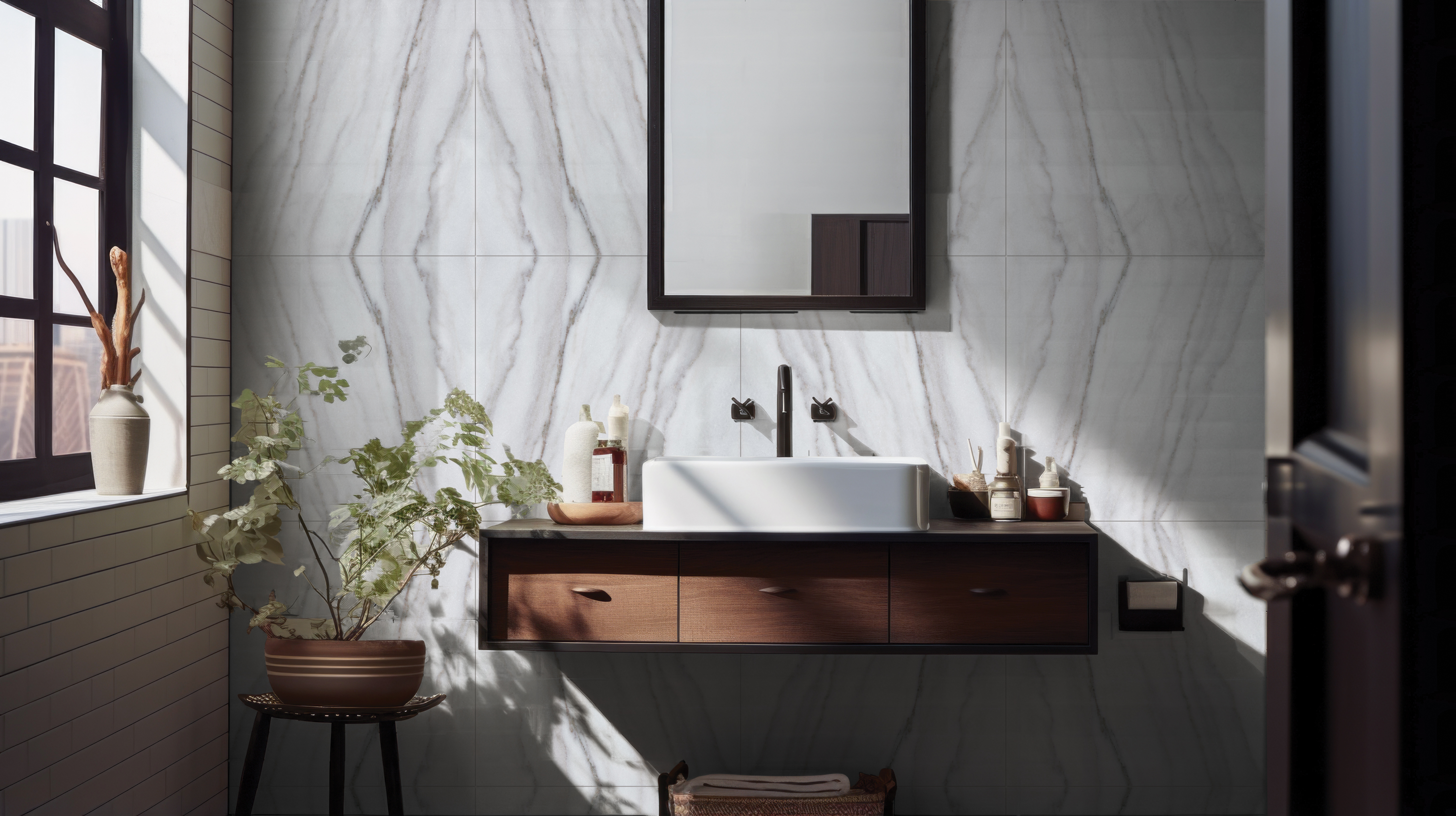
Pure calcite is colorless or white. Therefore, pure marble is white — the color of stones such as Carrara, Muğla White and Afyon Sugar is essentially the result of a high degree of purity. Color and veining develop from impurities in the parent rock that are redistributed during metamorphism.
| Color | Mineral / Process Responsible |
|---|---|
| White | High-purity calcite or dolomite |
| Gray, smoky gray, black | Graphite and organic carbon residues |
| Red, pink, salmon | Hematite (Fe₂O₃) |
| Yellow, honey, brown | Iron hydroxides such as limonite and goethite |
| Green | Magnesium-rich silicates such as serpentine, chlorite and tremolite |
| Blue-gray | Finely dispersed organic matter and clay minerals |
Veins form through two primary mechanisms:
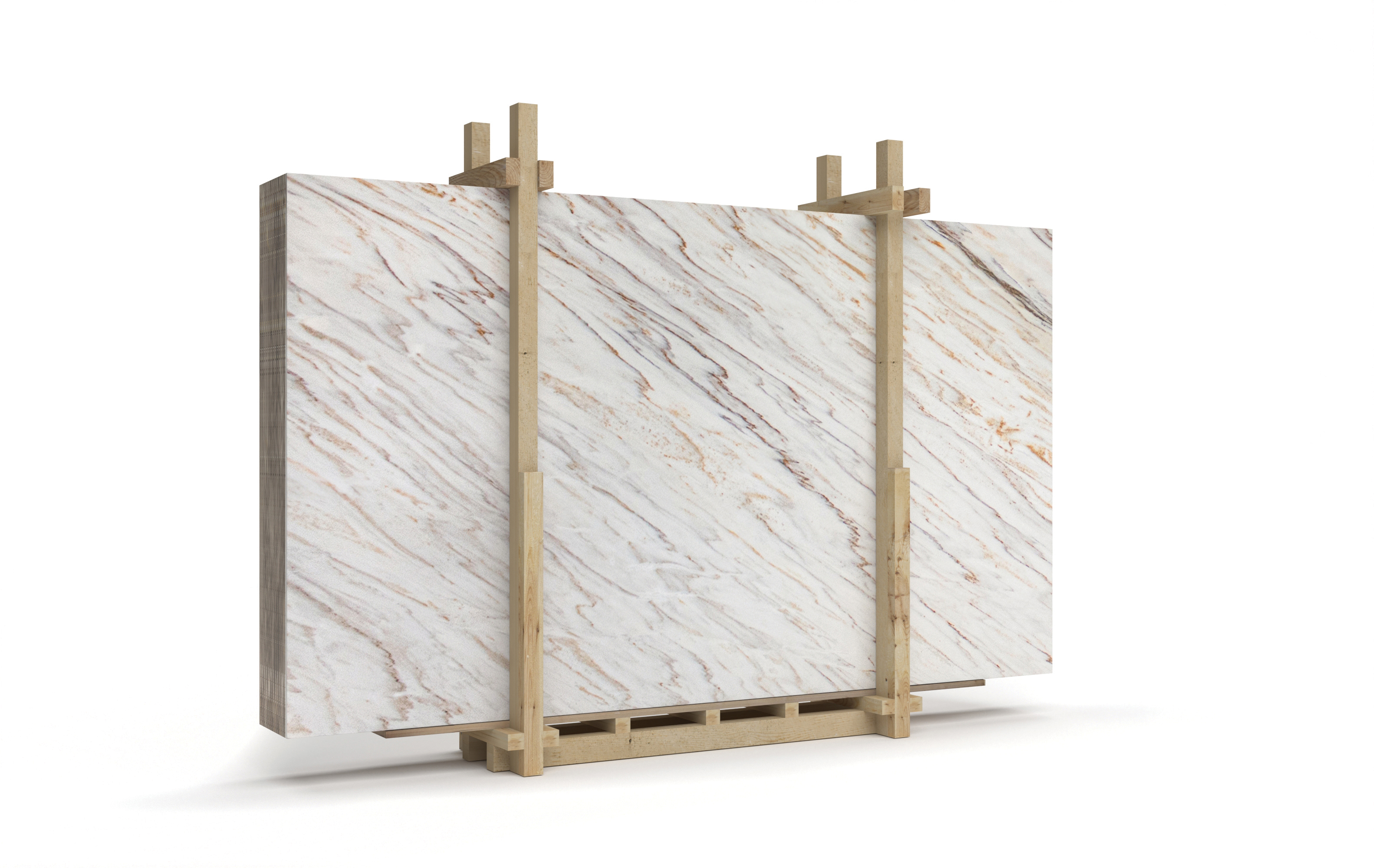
- Alignment of impurities: Directional pressure during metamorphism concentrates clay and iron oxides along specific planes. Veins formed in this way can be continuous within the stone and produce completely different patterns depending on the cutting direction. This is the reason for the dramatic visual difference between cross-cut and vein-cut slabs.
- Fracture filling: During deformation, fractures develop within the rock. Secondary calcite or iron-bearing minerals transported in hot fluids can precipitate within these fractures. The distinctive, sharply defined golden and gray veins characteristic of Calacatta marble are largely formed through this mechanism.
This is why marble veining never repeats exactly. Every block is a unique record of its own deformation history — and this is precisely what gives natural stone a value that cannot be replicated by mass-produced materials.
The Difference Between Marble, Limestone, Travertine and Onyx
These four stones are frequently confused with one another. However, their formation processes are fundamentally different.
| Property | Marble | Limestone | Travertine | Onyx |
|---|---|---|---|---|
| Rock classification | Metamorphic | Sedimentary | Sedimentary (chemical) | Sedimentary (chemical) |
| Formation environment | Deep underground, under heat and pressure | Shallow seafloor | Hot springs | Groundwater cavities |
| Crystal structure | Interlocking, coarse-crystalline | Fine-grained, porous | Cavernous, banded | Fibrous, banded |
| Fossil content | None — erased during metamorphism | Frequently present | Plant traces may occur | None |
| Water absorption | Low (<0.5%) | Moderate–high | High; filling is often required | Low–moderate |
| Distinguishing feature | Sugary crystalline luster | Matte, chalky surface | Visible cavities | Translucency |
A practical field test is to examine the freshly broken surface of the stone. If you can see fine crystalline sparkles under light, you are likely looking at marble; if the surface appears matte and dusty, it is more likely limestone. If you can see fossils, the stone is not marble in the geological sense.
Why Is Türkiye One of the World's Richest Marble Regions?
The answer is geological rather than economic.
Türkiye is located on the Alpine-Himalayan orogenic belt. This belt formed as a result of the closure of the Tethys Ocean and the collision of the African and Arabian plates with the Eurasian Plate. This created two major advantages:
- The shallow shores of the Tethys Ocean accumulated enormous carbonate platforms throughout the Mesozoic Era — providing an extensive source of raw material.
- Collision and mountain-building processes subjected these carbonates to metamorphism, transforming them into marble and subsequently uplifting them toward the surface.
In Western Anatolia, the Menderes Massif lies at the center of this geological history. Paleozoic–Mesozoic cover carbonates underwent regional metamorphism during the Alpine orogeny, particularly during the Eocene, and were subsequently uplifted and exposed by extensional tectonics beginning in the Neogene. This is the geological setting behind the marble quarries stretching across İzmir, Muğla, Denizli, Afyon and Aydın.
According to data from MTA, Türkiye has approximately 5.1 billion m³ (13.9 billion tons) of natural stone reserves, representing approximately one-third to 40% of the world's potential. More than 80 different marble types with different structures and over 120 colors and patterns have been identified across the country.
This geological richness is also reflected in history. The white marble of Marmara Island, known in antiquity as Proconnesos, became a standard building material throughout the Roman and Byzantine worlds, while the purple-veined marble of Afyon İscehisar, ancient Dokimeion, was used in imperial buildings. Anatolia has been doing the same thing for more than two thousand years.
Major Marble Varieties Around the World and Their Geological Origins
| Marble | Region | Geological Origin |
|---|---|---|
| Carrara / Calacatta / Statuario | Apuan Alps, Italy | Metamorphism of Jurassic limestone during the Apennine orogeny |
| Pentelic | Attica, Greece | Marble used in the Parthenon; fine-crystalline with a subtle golden patina |
| Paros, Naxos | Cyclades Islands | Translucent marbles and classical references for sculptural marble |
| Makrana | Rajasthan, India | Marble of the Taj Mahal; high-purity calcitic marble |
| Marmara White | Marmara Island, Türkiye | Ancient Proconnesos quarries; used in Hagia Sophia |
| Afyon Sugar / Afyon White | Afyonkarahisar, Türkiye | Coarse-crystalline metamorphic marble with a saccharoidal texture |
| Muğla White | Milas, Türkiye | Menderes Massif marbles; among Türkiye's most widely exported white marbles |
Typical Technical Properties of Marble
The values below represent general ranges for commercial marbles. Values vary from quarry to quarry and even from one level within the same quarry to another. Exact values should only be obtained from accredited laboratory test reports.
| Property | Typical Range | Project Implication |
|---|---|---|
| Density | 2.60–2.85 g/cm³ | Static load and transportation calculations |
| Water absorption | 0.1–0.5% | Freeze-thaw resistance and stain resistance |
| Compressive strength | 50–180 MPa | Flooring and load-bearing applications |
| Flexural strength | 7–20 MPa | Safety of thin slabs and cladding applications |
| Mohs hardness | 3–4 | Scratch resistance and workability |
| Porosity | Low | Maintenance frequency and need for impregnation |
| Acid resistance | Low | Sensitive to lemon, vinegar and acidic cleaning products |
The most important technical fact here is that marble's chemical composition is primarily calcium carbonate, which means that it reacts with acids. Lemon juice, vinegar and acidic cleaning products can cause etching, resulting in a dull surface. This is not a quality defect; it is a natural consequence of the stone's chemistry and can be managed through appropriate product selection and a proper maintenance protocol.
How Long Does Marble Formation Take?
The process operates on two different timescales:
- Accumulation of limestone: Building carbonate sequences hundreds of meters thick can take approximately 10–100 million years.
- Metamorphism: Within an orogenic cycle, metamorphism typically takes approximately 1–10 million years.
- Uplift and exposure through erosion: This process also takes millions of years.
Overall, the marble that is eventually cut into a slab today is often 100 to 300 million years old. Every block extracted from a quarry is a physical record of geological time on this scale — and a material formed over such an immense period requires equally careful handling and processing to preserve its value.
Turning a Stone Formed Over Millions of Years into a Project
Preserving the value of a material produced by geology over millions of years requires making the right decisions at every stage of production. If a block is not cut in accordance with its geological structure, its veining pattern may be lost; if quality control is not properly performed, microcracks may become apparent at the slab stage; and if the surface treatment is not selected according to the mineralogical characteristics of the stone, the expected performance may not be achieved.
As Biser Marble, we process natural stones extracted from our own quarry in Torbalı, İzmir, into blocks, slabs, cut-to-size products, French Pattern and mosaic forms, taking their geological characteristics into consideration, and deliver them to global projects with an annual capacity of 30,000 m³. This integrated process, beginning at the quarry, enables us to evaluate the geological characteristics of the stone and the technical requirements of each project together.
For detailed information:
Frequently Asked Questions
How is marble formed?
Marble forms when limestone or dolomitic limestone recrystallizes deep beneath the Earth's surface at approximately 150–500°C and 100–400 MPa of pressure without melting. During this process, pores close, calcite crystals grow, and fossils and the original bedding are erased.
What type of rock is marble?
Marble is a metamorphic rock. In this respect, it differs from igneous granite and sedimentary rocks such as limestone and travertine.
What is the main difference between marble and limestone?
Both have calcium carbonate as their primary component, but marble has undergone metamorphism. As a result, marble is generally less porous, more coarsely crystalline and capable of achieving a higher polish, while fossils and bedding may remain preserved in limestone but are generally erased in marble.
Why is marble white?
The white color results from a lack of impurities. Marbles composed almost entirely of pure calcite or dolomite are white. As impurities such as iron, graphite or magnesium-rich silicates increase, color and veining develop.
How do veins form in marble?
Veins form through two primary mechanisms. Directional pressure during metamorphism concentrates impurities such as clay and iron oxides along specific planes. In addition, secondary calcite and other minerals can precipitate from hot fluids within fractures formed during deformation.
Is travertine also marble?
Geologically, no. Travertine is a sedimentary rock formed through the precipitation of calcium carbonate from hot springs and has not undergone metamorphism. It may be classified within the broader “marble group” for commercial purposes, but its porosity and water absorption behavior are significantly different.
Why is marble affected by acids?
Because its primary component is calcium carbonate, marble reacts chemically with acids. Lemon juice, vinegar and acidic cleaning products can cause surface etching and dullness. Therefore, neutral-pH cleaning products should be used on marble surfaces.
Why is marble so abundant in Türkiye?
Türkiye is located on the Alpine-Himalayan orogenic belt. Massive carbonate platforms deposited along the shallow shores of the Tethys Ocean underwent metamorphism during continental collision, transforming them into marble before tectonic uplift brought them toward the surface. According to MTA data, Türkiye has approximately 5.1 billion m³ of natural stone reserves.
How old is marble?
Commercially quarried marbles are generally 100–300 million years old. A significant proportion of the marble found in Türkiye originated from carbonate rocks deposited during the Mesozoic Era.
Conclusion
Marble is much more than a building material. It is the final form of a long geological process that began on the floor of a shallow sea, was transformed deep beneath the Earth's surface by heat and pressure, and was eventually brought back to the surface by tectonic movements. Its color is determined by its chemistry, its veining by its deformation history, and its luster by its crystalline structure.
Understanding this process is not merely an academic exercise. You can only properly assess why marble reacts to acids, why its veining changes depending on the cutting direction, and which stone will perform best in a particular environment by understanding how it formed. Choosing the right natural stone begins with being able to read the story of the stone.
References
- General Directorate of Mineral Research and Exploration (MTA) — Natural Stone Reserve Data for Türkiye
- Republic of Türkiye Ministry of Trade — Natural Stone Industry Report
- Winkler, H.G.F., Petrogenesis of Metamorphic Rocks
- Bucher, K. & Grapes, R., Petrogenesis of Metamorphic Rocks
- ASTM C503 — Standard Specification for Marble Dimension Stone
- TS EN 12440 — Natural Stone — Denomination Criteria