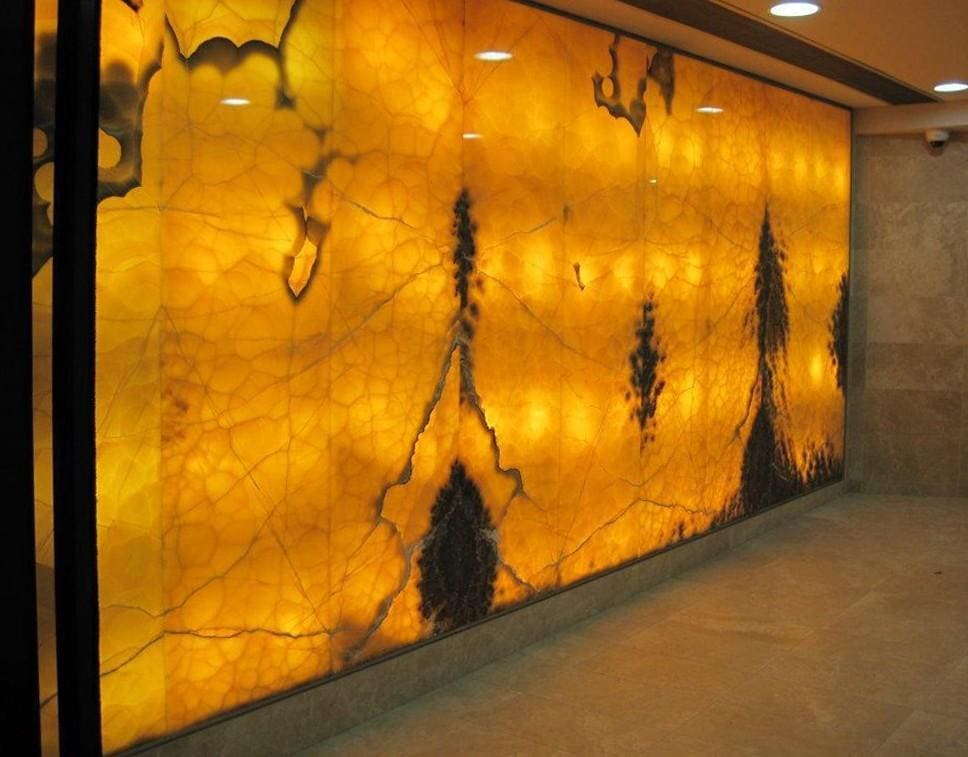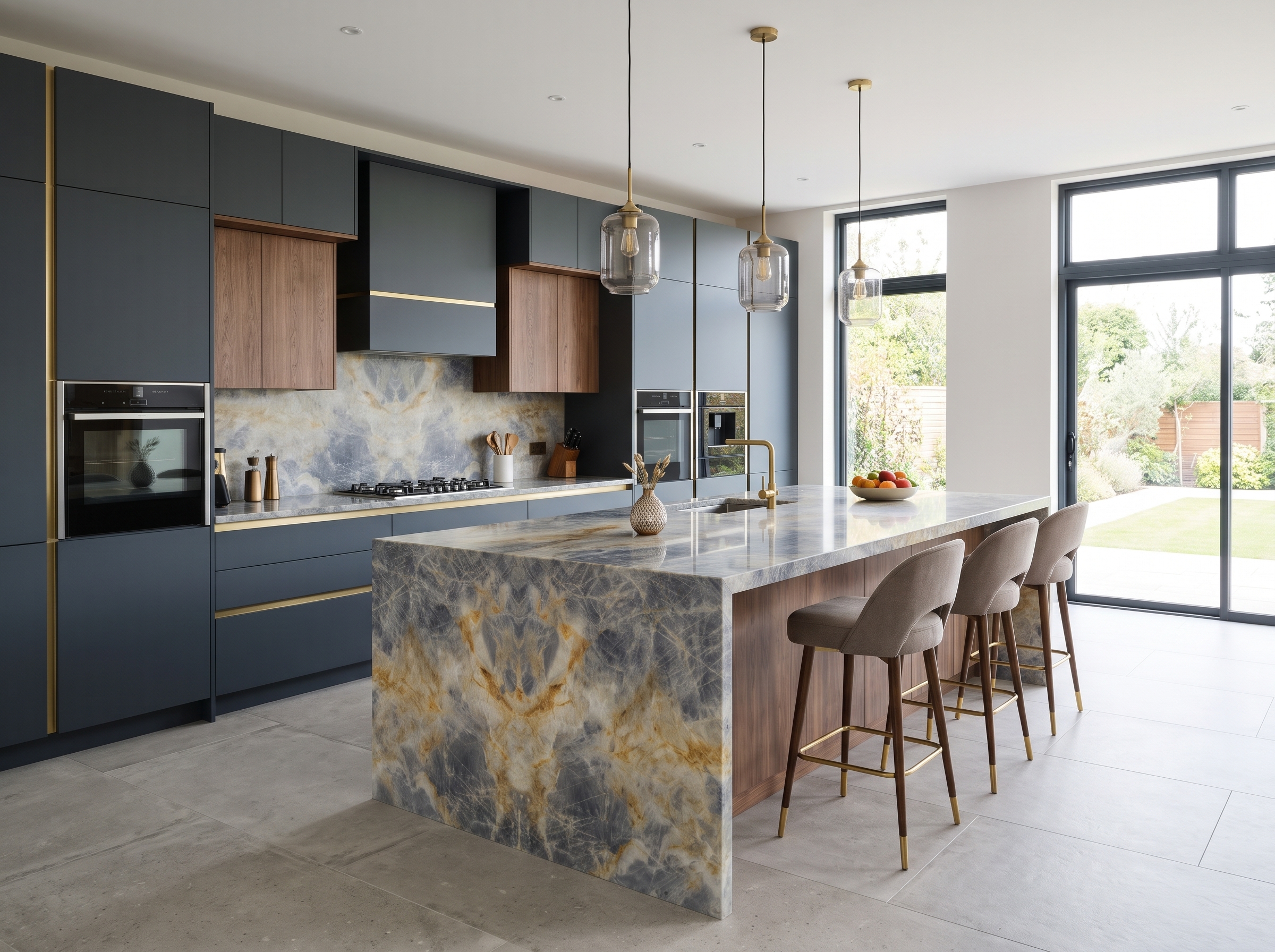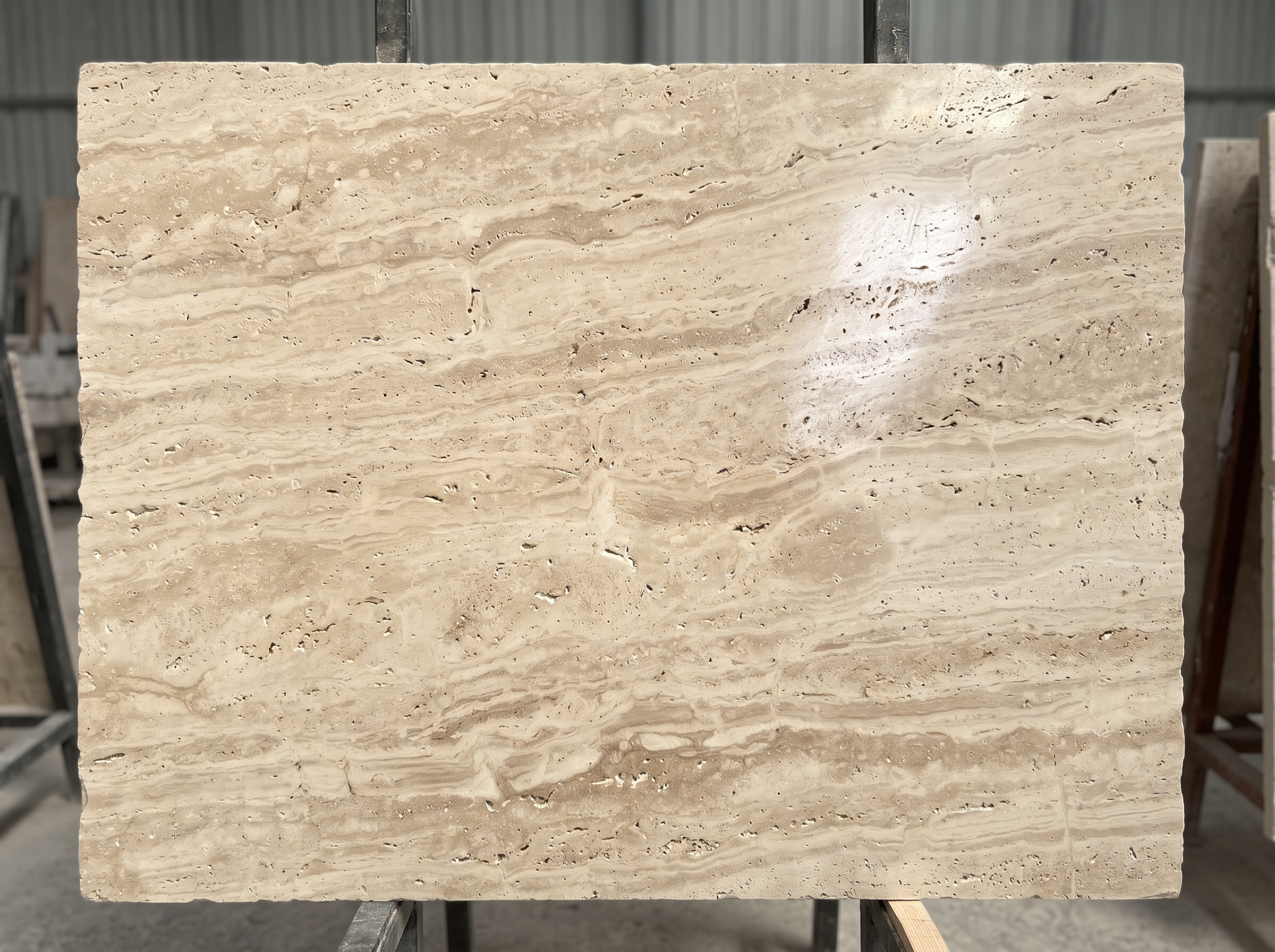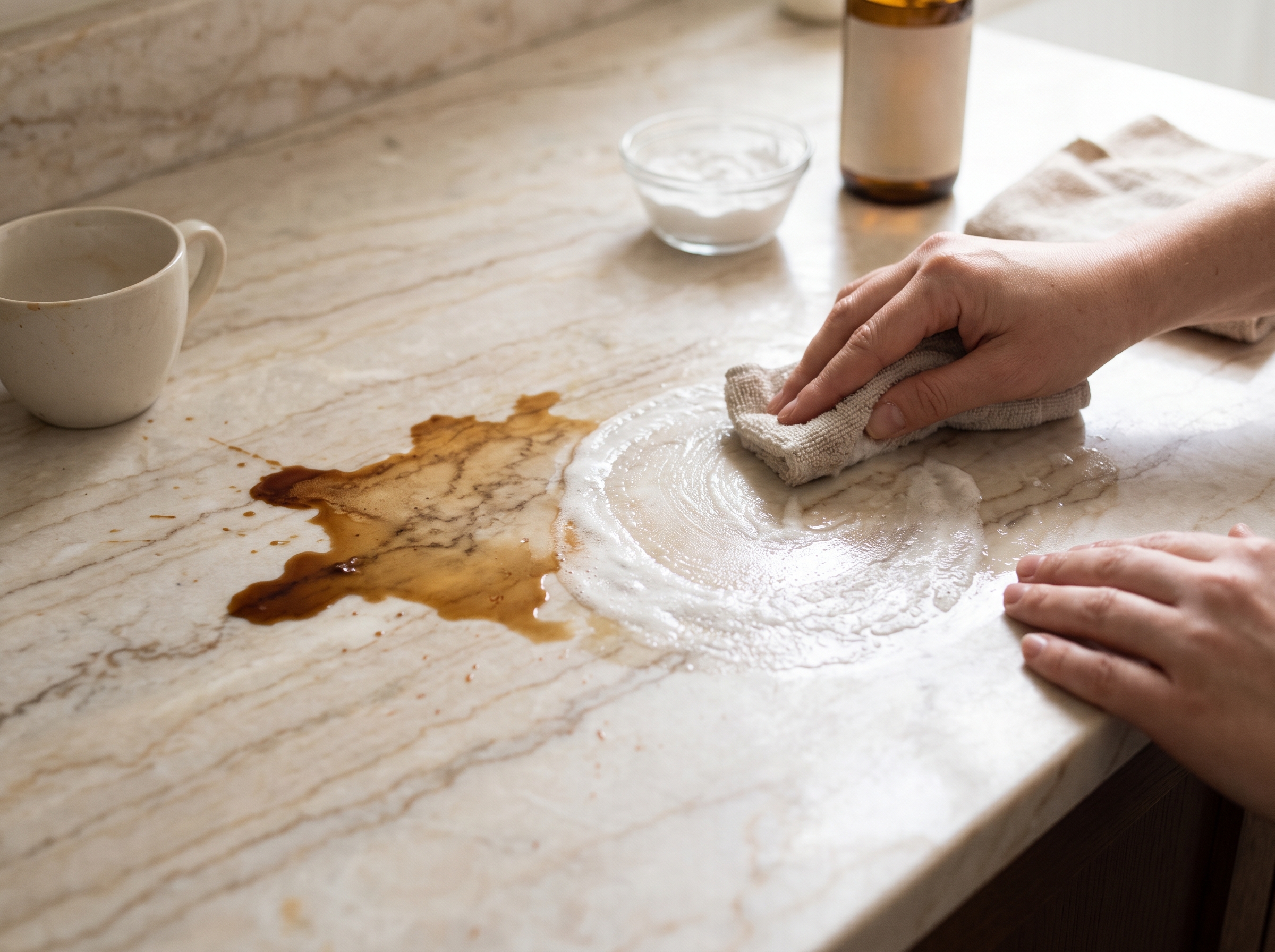
What Is Dolomite Stone? Comparison with Marble and Quartzite
When choosing natural stone, appearance is not the only factor to consider. Mineral composition, hardness, resistance to acids and overall performance are equally important. Dolomite, marble and quartzite are among the natural stones frequently compared for applications such as kitchen countertops, bathroom surfaces, wall cladding and decorative architectural designs.
Dolomite stone is a naturally occurring carbonate rock that contains dolomite mineral as one of its main components. It is commonly found in white, grey and cream tones, although other colours are also possible. Its natural veining and distinctive patterns make it an attractive option for decorative stone applications.
However, the term "dolomite" is sometimes used commercially for different types of natural stone. Understanding the distinction between dolomite rock and dolomitic marble is important when selecting the right material.
So, what is dolomite stone, what are its properties, and how does it differ from marble and quartzite?
What Is Dolomite Stone?
Dolomite is a mineral with the chemical formula CaMg(CO₃)₂, consisting of calcium magnesium carbonate. Rocks containing a high proportion of this mineral are known as dolomite rock or dolostone.
Dolomite rocks generally form through sedimentary processes. One example is the geological process known as dolomitisation, in which limestone interacts with magnesium-rich water and its mineral composition changes over time.
In the natural stone industry, however, some products marketed as dolomite may be metamorphic rocks rich in dolomite mineral. These materials can be classified geologically as dolomitic marble.
This distinction is important: dolomitic marble is a type of marble, whereas dolomite rock belongs to a different geological rock category. Therefore, in addition to the commercial product name, the stone's actual mineralogical and petrographic characteristics should also be considered.
What Are the Properties of Dolomite Stone?
The physical and visual properties of dolomite stone vary depending on its mineral composition, the presence of other minerals, its porosity and the conditions under which it formed.
1. Mineral Composition
The main chemical composition of dolomite mineral consists of calcium and magnesium carbonate. Its chemical formula is CaMg(CO₃)₂.
Natural dolomite rocks may also contain calcite, quartz, clay minerals and other impurities. These components can influence the stone's colour, texture and physical properties.
2. Colour and Veining
Dolomite stone is commonly found in white, light grey, cream and beige tones. Depending on the minerals and impurities it contains, it may also display pink, brown or darker colour variations.
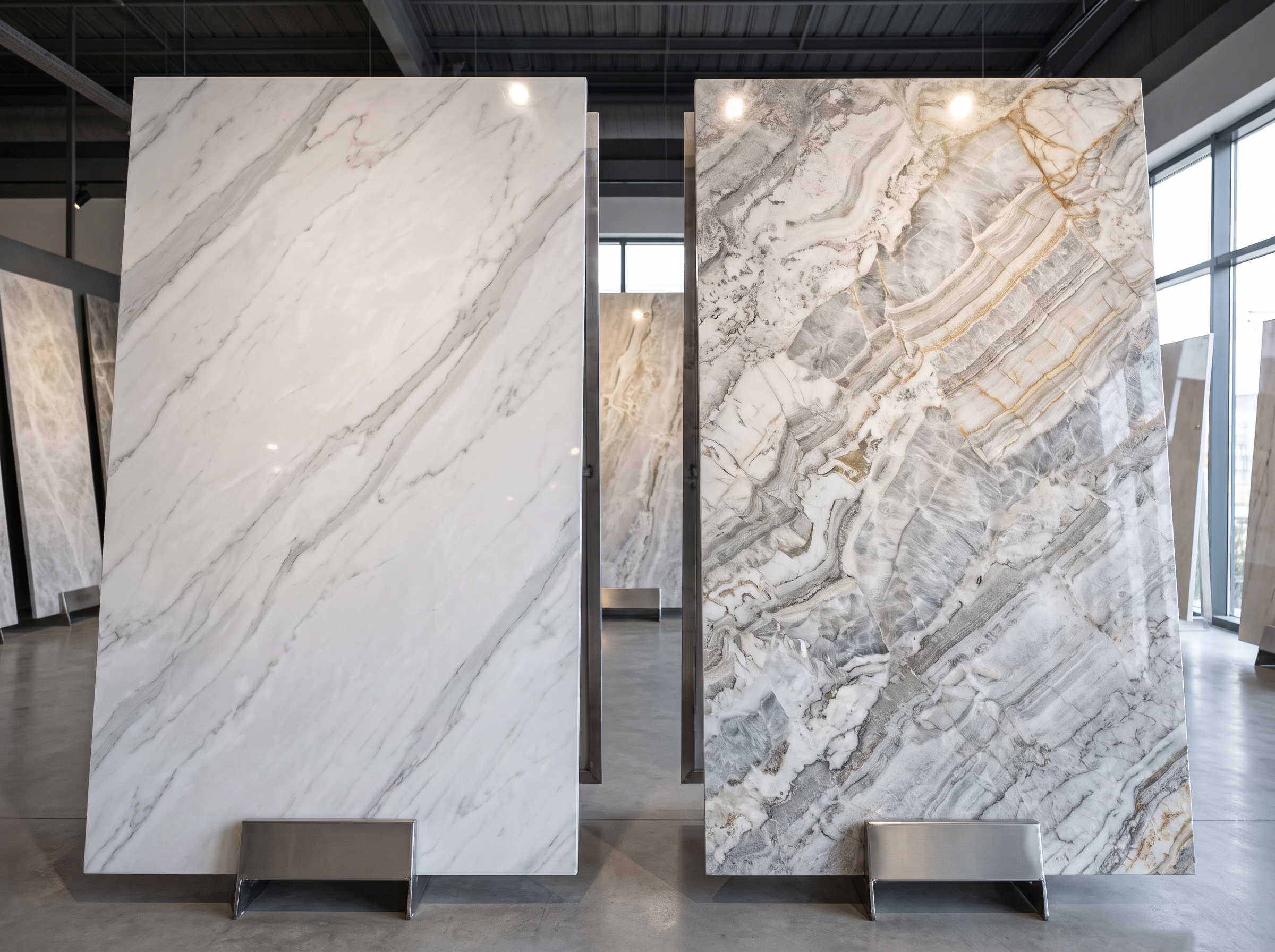
Natural veins and mineral distribution give each slab its own distinctive appearance. For this reason, dolomite can be considered for architectural and decorative designs where natural patterns are an important feature.
3. Hardness
Dolomite mineral has a Mohs hardness of approximately 3.5–4. This is slightly higher than calcite but considerably lower than quartz, which has a Mohs hardness of 7.
It is important to understand that Mohs hardness indicates relative resistance to scratching. The actual performance of a natural stone slab is not determined by mineral hardness alone. Other minerals in the rock, porosity, microcracks and surface treatments can also affect its performance.
4. Sensitivity to Acids
Compared with calcite-rich marble, dolomite generally reacts more slowly with dilute acids. However, it is not completely resistant to acidic substances.
Lemon juice, vinegar and acidic cleaning products may cause dull spots or surface etching over time. Therefore, using suitable cleaning products is important, particularly in kitchens and bathrooms.
5. Surface Finishing Options
Dolomite-based natural stones can be processed with different surface finishes depending on their mineral composition and production characteristics.
Common surface finishes include:
-
Polished finish: Creates a glossy appearance and makes the stone's natural patterns more prominent.
-
Honed finish: Provides a smooth, matte and understated appearance.
-
Brushed finish: Enhances the natural texture of the stone and creates a more tactile surface.
-
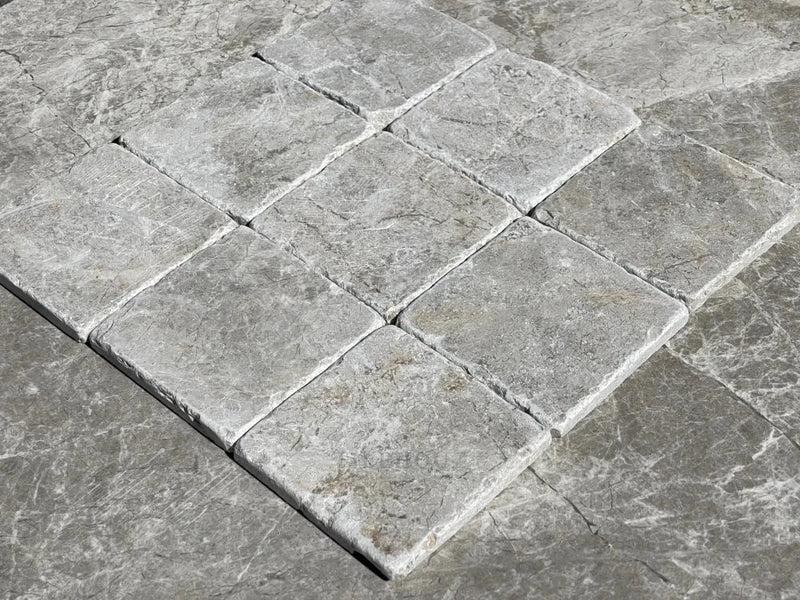
Tumbled finish: Offers a more natural and rustic aesthetic.
The appropriate surface finish should be selected according to the stone's characteristics and the intended application.
What Are the Differences Between Dolomite, Marble and Quartzite?
Dolomite, marble and quartzite may have similar colours and veining patterns at first glance. Particularly in white and light-coloured natural stones, visual inspection alone may not always be sufficient to identify the correct stone type.
The main differences between these three materials arise from their mineral compositions and geological formation processes.
Difference Between Dolomite and Marble
The relationship between dolomite and marble depends on how the term "dolomite" is being used.
Calcitic marble consists mainly of calcite, while dolomitic marble contains a high proportion of dolomite mineral. Both can be classified as carbonate-based metamorphic rocks.
Dolomitic marble may offer certain advantages compared with calcitic marble:
-
Dolomite mineral is slightly harder than calcite.
-
It generally reacts more slowly with dilute acids.
-
Under certain conditions, it may be more tolerant of acid-related surface marks.
However, dolomitic marble can still be scratched, stained and etched by acidic substances. It should therefore not be considered a completely maintenance-free or acid-resistant stone.
Difference Between Dolomite and Quartzite
The most important difference between dolomite and quartzite is their mineral composition.
Dolomite is based on calcium magnesium carbonate, whereas quartzite is a metamorphic rock composed predominantly of quartz mineral.
Quartzite forms when quartz-rich sandstone recrystallises under high temperatures and pressure. Since quartz has a Mohs hardness of approximately 7, genuine quartzite is significantly harder than dolomite and marble.
The main differences include:
-
Quartzite has considerably higher scratch resistance than dolomite.
-
Quartzite is not affected by common acidic substances such as lemon juice and vinegar in the same way as carbonate-based stones.
-
Dolomite and dolomitic marble are not as hard as quartzite.
-
Due to its high hardness, quartzite may require different equipment and production conditions during cutting and processing.
Comparison Table
| Property | Dolomite / Dolomitic Marble | Calcitic Marble | Quartzite |
|---|---|---|---|
| Main mineral | Dolomite | Calcite | Quartz |
| Chemical composition | Calcium magnesium carbonate | Calcium carbonate | Silicon dioxide |
| Mineral hardness (Mohs) | 3.5–4 | Approximately 3 | Approximately 7 |
| Acid sensitivity | Generally lower than calcitic marble, but still sensitive | High | Very low in genuine quartzite |
| Scratch resistance | Low to moderate | Low | High |
| Appearance | Varying colours and natural veining | Wide range of colours and patterns | Wide range of colours and mineral patterns |
| Maintenance | Depends on the stone and application | Depends on the stone and application | Generally less susceptible to acid-related surface etching |
| Common applications | Countertops, wall cladding and decorative surfaces | Flooring, wall cladding, countertops and decoration | Countertops, wall cladding and architectural surfaces |
Note: The hardness values refer to the approximate Mohs hardness of the main minerals, not guaranteed performance values for entire rock slabs. The actual performance of natural stone depends on its mineral composition and physical structure.
Is Dolomite Stone Suitable for Kitchen Countertops?
Dolomite and dolomitic marble may be preferred for kitchen countertops because of their natural appearance and distinctive veining options.
Compared with calcitic marble, dolomitic stones may react more slowly to certain acidic substances. This can provide a degree of advantage in kitchen applications.
However, dolomite-based stones also have certain limitations:
-
They can be scratched by sharp or hard objects.
-
Prolonged contact with acidic foods may cause dull spots or surface etching.
-
Oil and coloured liquids may leave stains depending on the stone's porosity.
-
They may require regular and appropriate surface care.
For this reason, selecting a kitchen countertop should not be based solely on the stone's commercial name or appearance. Its actual mineralogical composition, water absorption rate, surface characteristics and intended use should all be evaluated.
Where Is Dolomite Stone Used?
Dolomite and dolomitic marble can be used in different applications depending on their physical properties and the technical requirements of the project.
Kitchen Countertops
Dolomite-based stones may be preferred in kitchen designs where natural veining is an important visual feature. However, potential issues such as acid sensitivity, scratching and staining should be considered.
Bathroom Designs
Dolomite can be used for bathroom countertops, vanity areas and decorative wall cladding. Suitable protection and maintenance methods should be considered for surfaces exposed to water and cleaning products.
Wall Cladding
The natural patterns and colour variations of dolomite can create an attractive appearance in interior wall cladding. Large-format slabs can also provide a more continuous and cohesive stone surface.
Flooring
Dolomite-based stones may be used in certain flooring applications, provided they meet the relevant technical requirements and have an appropriate surface finish. In high-traffic areas, abrasion, scratching, slip resistance and maintenance requirements should be evaluated separately.
Furniture and Decorative Applications
Dolomite stone can be used for table tops, coffee table surfaces, fireplace surrounds and bespoke furniture designs. Its natural veining gives each product a distinctive character.
What Should You Consider When Choosing Dolomite Stone?
When purchasing dolomite stone, it is important to evaluate its technical properties as well as its appearance.
1. Actual stone type: Where possible, verify whether the product is dolomite rock or dolomitic marble through petrographic analysis or technical documentation.
2. Mineral composition: The proportions of calcite, dolomite, quartz and other minerals can influence the stone's physical performance.
3. Cracks and veining: Natural cracks, microfractures and vein density should be evaluated in terms of processing requirements and performance.
4. Water absorption rate: The water absorption properties of stones intended for kitchens and bathrooms should be examined.
5. Surface finish: Choose a suitable finish, such as polished, honed or another available option, according to the intended application.
6. Maintenance requirements: The stone's sensitivity to acids, potential for staining and need for protective products should be understood in advance.
7. Sample and slab inspection: For large-scale projects, decisions should not be based solely on a small sample. Whenever possible, inspect the actual slabs intended for the project.
Frequently Asked Questions About Dolomite Stone
Is dolomite stone a type of marble?
Dolomite stone and marble are not exactly the same. Dolomite rock is a sedimentary rock composed mainly of dolomite mineral. Dolomitic marble is a metamorphic rock rich in dolomite mineral. In the natural stone trade, these two terms are sometimes used interchangeably.
Is dolomite stone quartzite?
No. Dolomite and quartzite differ in both mineral composition and geological formation. Dolomite is carbonate-based, whereas quartzite consists predominantly of quartz mineral.
Can dolomite stone be scratched?
Yes. Dolomite mineral has a Mohs hardness of approximately 3.5–4. Therefore, dolomite-based stones can be scratched by hard objects. Quartzite, with a hardness of approximately 7 Mohs, offers significantly higher scratch resistance.
Is dolomite stone affected by acids?
Yes. Although dolomite generally reacts more slowly than calcitic marble, it is not completely acid-resistant. Lemon juice, vinegar and acidic cleaning products may cause dull spots or surface etching.
Is dolomite stone suitable for kitchen countertops?
Dolomite and dolomitic marble with suitable physical properties can be used for kitchen countertops. However, potential risks such as scratching, acid sensitivity and staining should be taken into account. Those looking for higher scratch and acid resistance may also consider genuine quartzite options.
Does dolomite stone absorb water?
The water absorption rate of dolomite-based natural stones varies depending on porosity, crack structure and mineral composition. Not every dolomite slab absorbs the same amount of water. Therefore, it is important to review the technical water absorption values before purchasing.
How can dolomite stone be distinguished from quartzite?
Visual inspection alone may not be sufficient. Mineral hardness, acid reaction and petrographic analysis can be used to help identify the stone. Genuine quartzite is very hard and does not react with common acids in the same way as carbonate-based stones. For accurate classification, professional inspection and, when necessary, laboratory analysis are recommended.
Conclusion: How to Choose Between Dolomite, Marble and Quartzite
Dolomite, marble and quartzite are natural stones with different mineral compositions, hardness levels and performance characteristics.
Dolomite and dolomitic marble can be used in architectural projects thanks to their natural veining and decorative appearance. Calcitic marble stands out in interior design with its wide range of colours and patterns. Quartzite, on the other hand, offers an important alternative for surfaces exposed to intensive use due to its high mineral hardness and resistance to acids.
When selecting the right natural stone, it is important to consider more than just colour and pattern. The stone's actual geological classification, technical properties, intended application and maintenance requirements should also be evaluated.
Biser Marble brings the distinctive colours and natural veining of natural stone into architectural projects, offering marble products for a variety of design requirements.