What Are the Different Types of Natural Stone? Marble, Granite, Travertine, Onyx and Quartzite
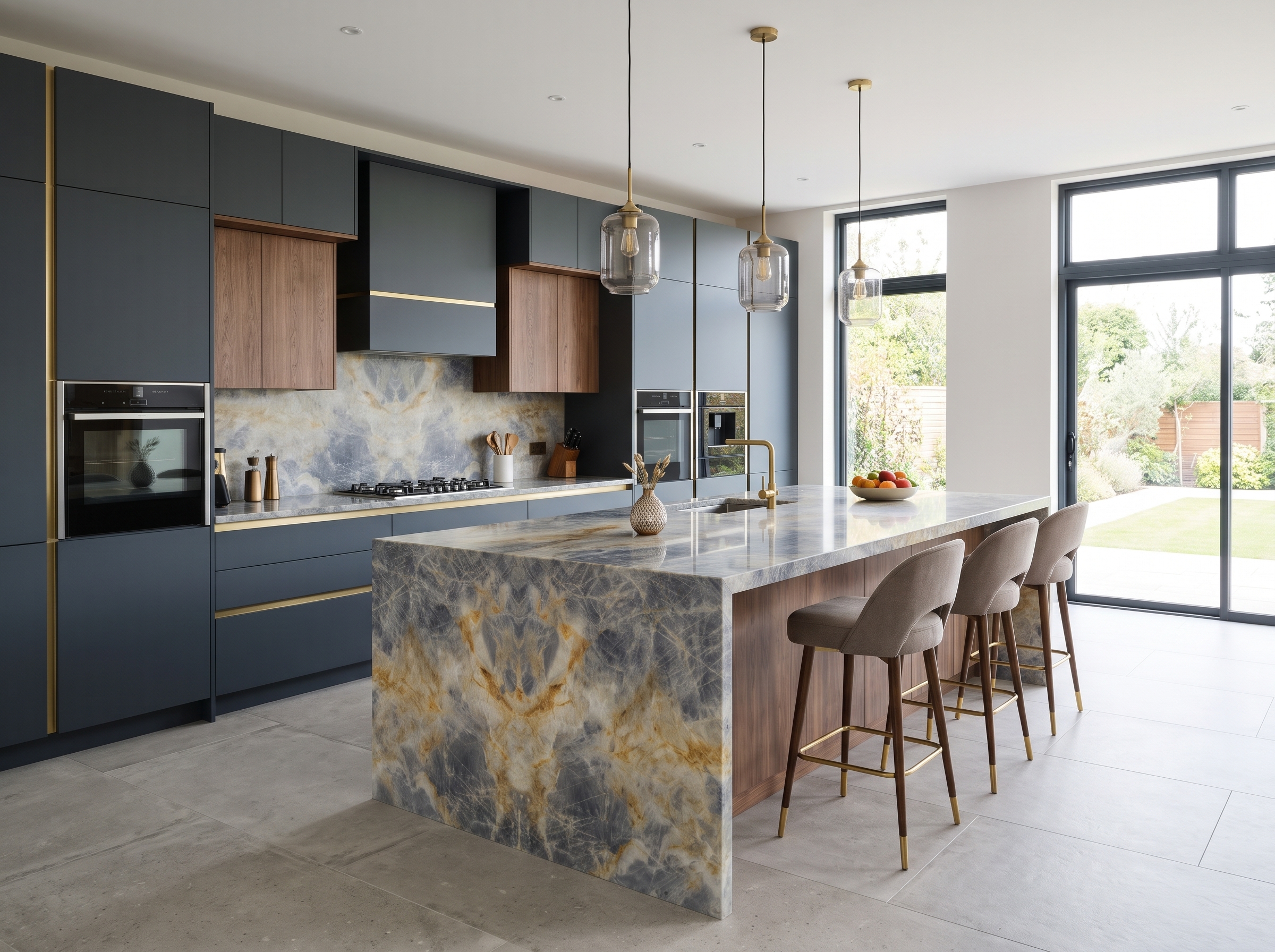
Natural stones are among the most preferred building materials in architecture and interior design, thanks to their aesthetic appearance, distinctive textures and durability. They are widely used in various applications, ranging from flooring and wall cladding to kitchen countertops, facade designs, bathrooms, hotels and commercial projects.
However, not all natural stones have the same properties. Marble, granite, travertine, onyx and quartzite differ in terms of their mineral composition, formation processes, hardness, porosity, appearance and applications. Therefore, choosing the right natural stone requires considering not only its colour and pattern but also the requirements of the intended application.
In this guide, we explore the most common types of natural stone, their characteristics, differences and areas of application.
What Is Natural Stone?
Natural stone refers to rock materials formed through geological processes within the Earth's crust. After being extracted from quarries, these stones are processed through cutting, polishing, honing, brushing, sandblasting and other finishing techniques to make them suitable for construction, architecture and decorative applications.
The formation of natural stone can take millions of years. Depending on their geological origins, natural stones are generally classified into three main groups: igneous, sedimentary and metamorphic rocks.
One of the most distinctive characteristics of natural stone is its unique appearance. Each block and slab may feature different patterns, veins, colour variations and textures. This natural diversity makes stone a valuable material for both architectural and decorative purposes.
What Are the Different Types of Natural Stone?
Natural stones are classified according to their formation processes and mineral compositions. Some of the most commonly used types in architecture, construction and interior design include:
-
Marble
-
Granite
-
Travertine
-
Onyx
-
Quartzite
-
Limestone
-
Slate
-
Basalt
Each type of natural stone offers different aesthetic, physical and functional properties.
1. What Is Marble? Characteristics and Applications
Marble is a natural stone formed when limestone or dolomitic rocks undergo metamorphism under high temperatures and pressure. During this process, the original minerals recrystallise, creating the distinctive crystalline structure and veined appearance associated with marble.
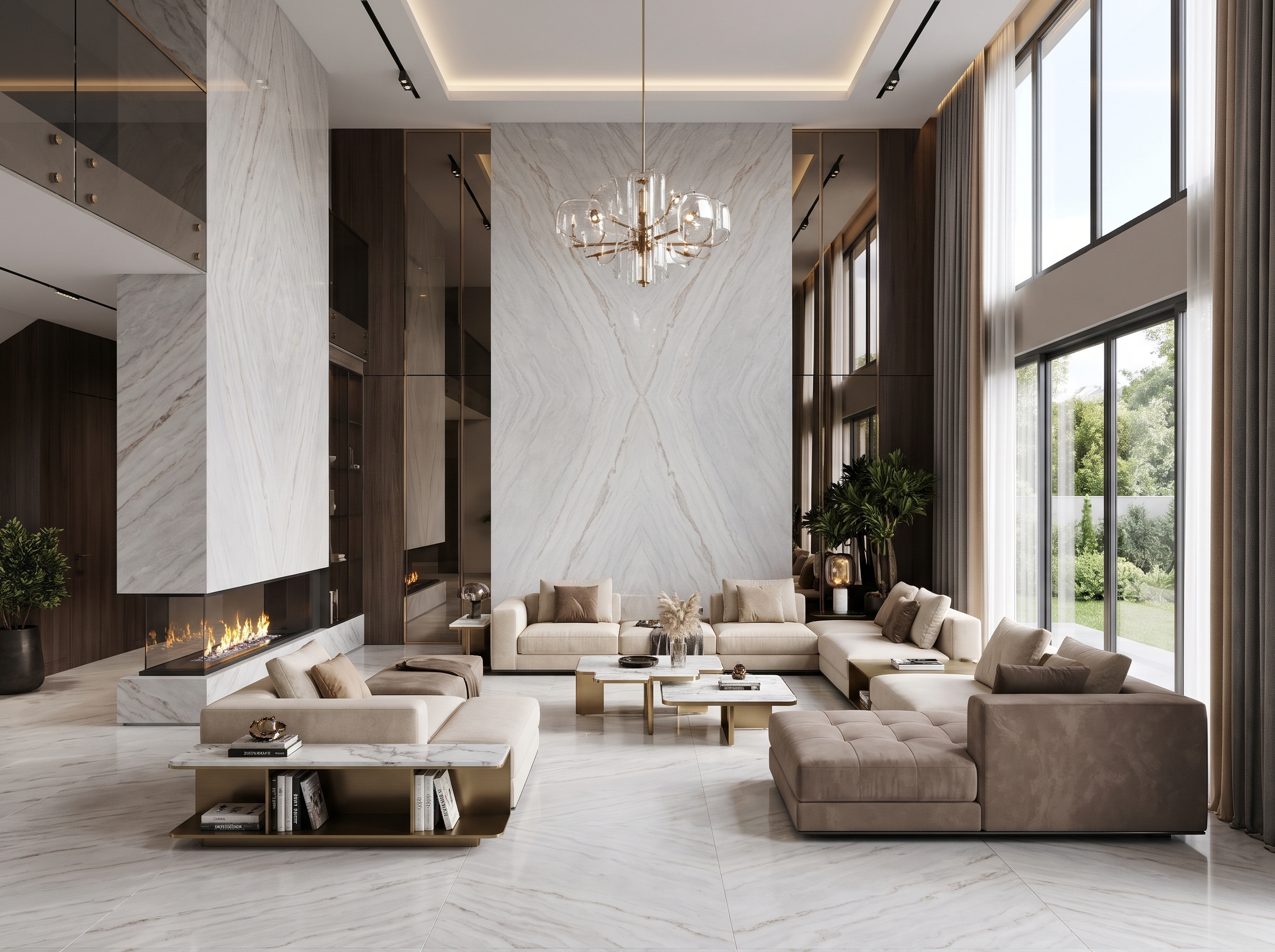
Thanks to its wide range of colours, natural veins and surface finishes, marble is used in everything from classical architecture to contemporary interior design.
Characteristics of Marble
-
Offers a wide variety of natural veins and patterns.
-
Available in numerous colours and shades.
-
Can be processed with polished, honed, brushed and other surface finishes.
-
Suitable for many decorative and architectural applications.
-
Hardness and water absorption rates vary depending on its mineral composition.
-
Calcite-rich marble is sensitive to acidic substances.
Where Is Marble Used?
Marble is suitable for a wide range of interior applications and selected exterior applications when the appropriate stone is chosen.
Common applications include:
-
Flooring
-
Wall cladding
-
Kitchen and bathroom interiors
-
Staircases and steps
-
Fireplace surrounds
-
Hotel, villa and commercial projects
-
Tables and decorative furniture
-
Washbasins and bespoke furniture designs
What Are the Different Types of Marble?
Marble varieties differ in colour, veining, mineral composition and geographical origin.
| Marble Type | General Appearance |
|---|---|
| White Marble | White or light backgrounds with grey, beige or other coloured veins |
| Grey Marble | Different shades of grey, sometimes featuring white or dark veins |
| Black Marble | Dark backgrounds with contrasting light-coloured veins |
| Beige Marble | Warm cream and beige tones with natural patterns |
| Green Marble | Various green shades with mineral variations and veins |
| Pink Marble | Pink, light red and pastel colour variations |
The colour and pattern of marble may vary depending on its geological origin, mineral composition and production batch.
2. What Is Granite? Characteristics and Applications
Granite is an igneous rock formed when magma slowly cools and crystallises beneath the Earth's surface. It primarily consists of minerals such as quartz, feldspar and mica.
Granite is widely recognised for its hardness, durability and resistance to wear, making it a popular choice for surfaces exposed to intensive use.
Characteristics of Granite
-
Generally has high hardness.
-
Offers good resistance to abrasion.
-
Available in various colours and textures depending on its mineral composition.
-
Provides good heat resistance in many applications.
-
Can maintain its appearance for many years with appropriate surface treatment and maintenance.
-
Has a dense and crystalline structure.
Where Is Granite Used?
-
Kitchen countertops
-
Flooring
-
Outdoor paving
-
Staircases
-
Facade cladding
-
Landscaping and outdoor design
-
Commercial spaces
-
High-traffic surfaces
What Is the Difference Between Granite and Marble?
Although granite and marble are both widely used in architecture and interior design, they differ in terms of their geological formation and physical characteristics.
| Property | Marble | Granite |
|---|---|---|
| Rock Type | Metamorphic | Igneous |
| Formation | Metamorphism | Cooling and crystallisation of magma |
| Appearance | Flowing veins and natural patterns | Crystalline, speckled and granular patterns |
| Hardness | Generally lower than granite, depending on the variety | Generally higher |
| Acid Resistance | Calcite-rich marble is sensitive to acids | Generally more resistant, depending on mineral composition |
| Common Applications | Decorative surfaces, walls and flooring | Countertops, flooring and outdoor applications |
Not all granite varieties have identical performance characteristics. Mineral composition, surface treatment and installation conditions should always be considered.
3. What Is Travertine? Characteristics and Applications
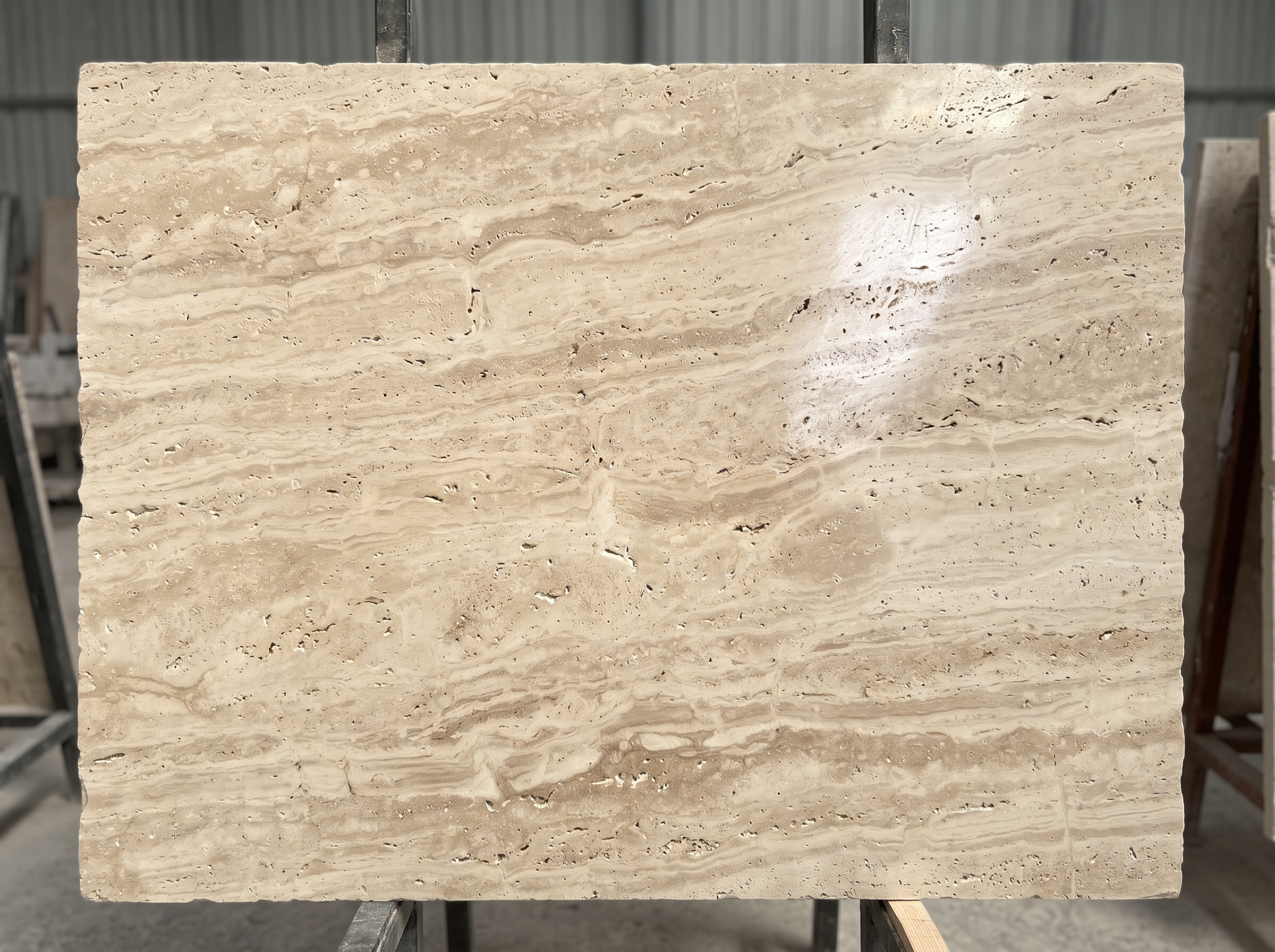
Travertine is a natural sedimentary stone formed through the precipitation of calcium carbonate carried by groundwater or surface water. It commonly develops around mineral-rich springs and geothermal water sources.
One of the most distinctive features of travertine is its naturally porous structure, which results from its formation process. It is commonly available in beige, cream, brown and grey tones.
Characteristics of Travertine
-
Has a naturally porous structure.
-
Usually offers warm and earthy colour tones.
-
Can be processed with different surface finishes.
-
Suitable for rustic, natural and contemporary designs.
-
May require protective treatments depending on its porosity and intended application.
-
Can be used in both interior and exterior applications when the appropriate variety is selected.
Where Is Travertine Used?
-
Garden and terrace paving
-
Swimming pool surrounds
-
Wall cladding
-
Bathroom designs
-
Flooring
-
Staircases
-
Landscaping projects
-
Hotel and residential developments
What Are the Different Travertine Finishes?
Travertine can be processed with different surface treatments to meet various design and functional requirements.
| Surface Finish | Characteristics |
|---|---|
| Polished Travertine | Smooth and glossy appearance |
| Honed Travertine | Smooth, matte and understated surface |
| Brushed Travertine | Textured surface with a natural feel |
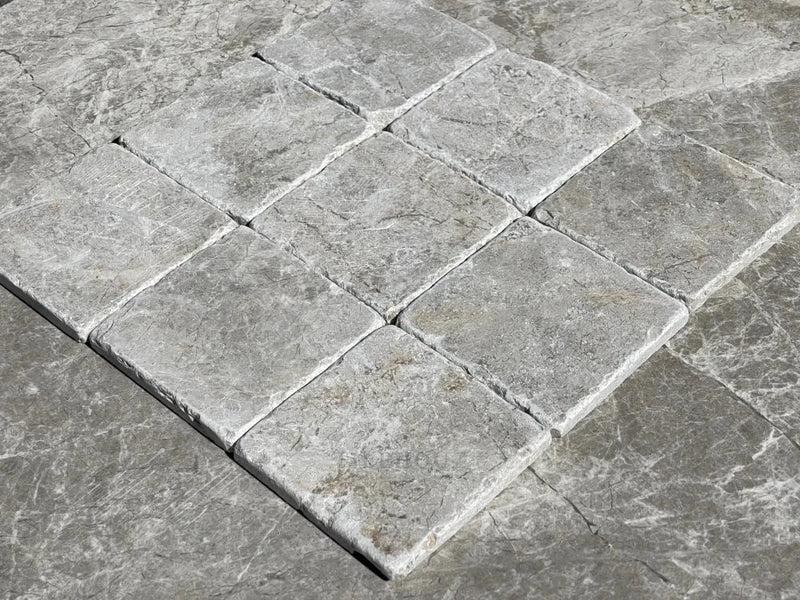
| Tumbled Travertine | Aged and rustic appearance |
| Filled Travertine | Natural pores filled with suitable filling materials |
| Unfilled Travertine | Natural pores remain visible |
When selecting travertine, it is important to consider its porosity, surface finish, intended application, exposure to water and maintenance requirements.
4. What Is Onyx? Characteristics and Applications
Onyx is a natural decorative stone particularly valued for its translucent properties. Many varieties of natural onyx are formed through mineral precipitation and contain calcium carbonate.
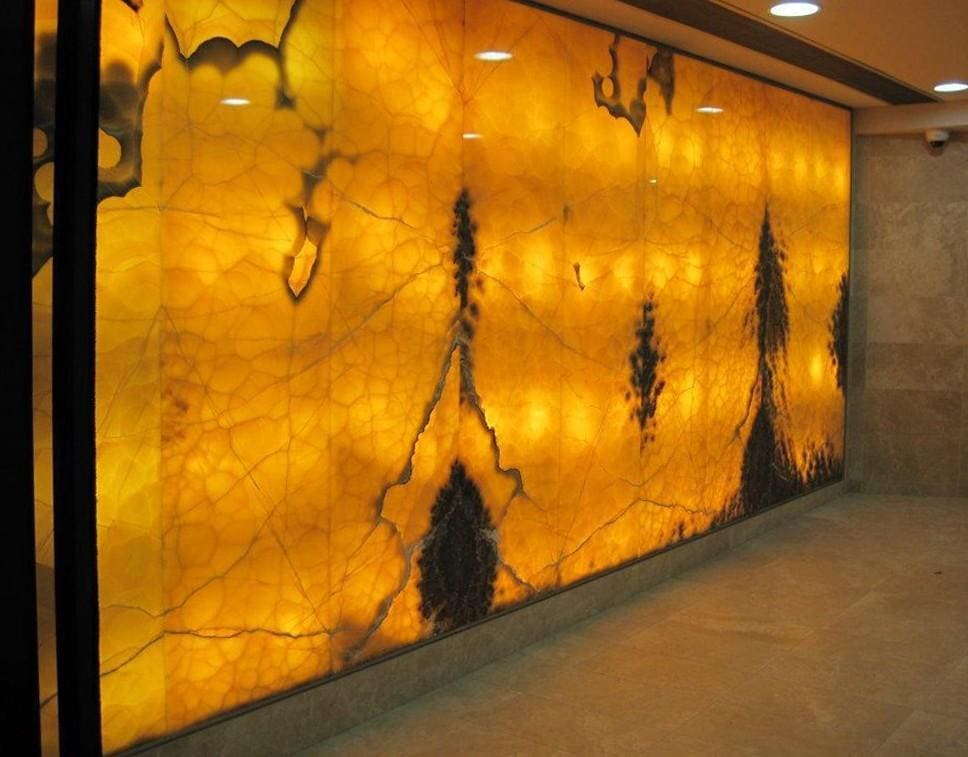
Onyx stands out with its distinctive colour transitions, pronounced veining and ability to transmit light in certain varieties. When used in illuminated applications, its natural patterns and colour layers can become more prominent.
Characteristics of Onyx
-
Certain varieties have a translucent structure.
-
Suitable for decorative backlit applications.
-
Features distinctive natural colours and veins.
-
Creates a striking visual effect in interior design.
-
Some varieties may be sensitive to scratching and acidic substances.
-
May require careful installation and maintenance.
Where Is Onyx Used?
-
Backlit wall panels
-
Hotel lobby interiors
-
Bar and restaurant decoration
-
Decorative tables and countertops
-
Bathroom designs
-
Interior wall cladding
-
Bespoke furniture
-
Architectural feature walls
Why Is Onyx Used in Backlit Applications?
Certain varieties of onyx can partially transmit light due to their translucent mineral structure. When combined with LED lighting installed behind the stone, this property highlights its natural veins, colour transitions and distinctive patterns.
For this reason, onyx is frequently used in luxury hotels, restaurants, high-end residences and prestigious commercial projects.
However, not all onyx varieties have the same level of translucency. For backlit applications, the actual slab should be evaluated in terms of light transmission, thickness, colour and vein density.
5. What Is Quartzite? Characteristics and Applications
Quartzite is a natural metamorphic rock formed when quartz-rich sandstone undergoes metamorphism under high temperatures and pressure. During this process, the quartz grains recrystallise, creating a denser and harder structure.
Quartzite is particularly popular in countertop, wall cladding and decorative applications due to its high hardness and distinctive natural patterns.
Characteristics of Quartzite
-
Has a mineral composition rich in quartz.
-
Generally offers high hardness.
-
Many varieties provide excellent resistance to abrasion.
-
Features natural veins and crystalline patterns.
-
Available in white, grey, beige, pink and other colour variations.
-
Can be used in various architectural applications with appropriate stone selection and protective treatments.
Where Is Quartzite Used?
-
Kitchen countertops
-
Bathroom countertops
-
Flooring
-
Wall cladding
-
Tables and decorative surfaces
-
Hotel and commercial interiors
-
Bespoke architectural projects
What Is the Difference Between Quartzite and Marble?
Quartzite and marble can sometimes look similar due to their natural veining. In particular, white quartzite varieties with grey veins may resemble certain types of marble.
However, their geological formation processes and mineral compositions are different.
| Property | Quartzite | Marble |
|---|---|---|
| Formation | Metamorphism of sandstone | Metamorphism of limestone or dolomitic rocks |
| Mineral Composition | Primarily quartz | Primarily calcite or dolomite |
| Hardness | Generally high | Generally lower than quartzite |
| Acid Resistance | Pure quartzite is generally more resistant to acids | Calcite-rich marble is sensitive to acids |
| Appearance | Crystalline structures and mineral veins | Flowing veins and crystalline textures |
| Applications | Countertops, flooring and wall cladding | Flooring, wall cladding and decorative applications |
Some stones marketed as quartzite may have different mineral compositions. Therefore, the actual mineral structure and performance characteristics should be verified, especially when selecting stone for countertops.
6. What Is Limestone?
Limestone is a sedimentary rock composed primarily of calcium carbonate. It can form through biological accumulation, chemical precipitation and other geological processes, particularly in marine environments.
With its natural and understated appearance, limestone is frequently used in contemporary architecture, facade cladding and interior design.
Characteristics of Limestone
-
Generally available in light colour tones.
-
Common colours include beige, cream, grey and light brown.
-
Can offer simple and relatively uniform surfaces.
-
Porosity and durability vary depending on the stone variety.
-
Certain varieties are suitable for exterior and landscaping applications.
Where Is Limestone Used?
-
Exterior facade cladding
-
Interior wall surfaces
-
Flooring
-
Landscaping
-
Architectural blocks and decorative applications
-
Hotel and residential projects
When selecting limestone for exterior applications, particular attention should be paid to freeze-thaw resistance, water absorption and mechanical properties.
7. What Is Slate?
Slate is a fine-grained natural stone formed through low-grade metamorphism of clay-rich sedimentary rocks. It has a distinctive layered structure that allows it to split into thin sheets.
Slate is commonly found in grey, black, green and brown shades. Its natural layered appearance and textured surface make it suitable for rustic, contemporary and minimalist designs.
Characteristics of Slate
-
Has a naturally layered structure.
-
Offers textured and distinctive surfaces.
-
Available in different colour variations.
-
Suitable varieties can be used outdoors.
-
Its performance depends on the stone type and surface treatment.
Where Is Slate Used?
-
Flooring
-
Wall cladding
-
Garden pathways
-
Terraces
-
Landscaping
-
Roofing
-
Decorative applications
8. What Is Basalt?
Basalt is a fine-grained igneous rock formed when lava cools relatively quickly at or near the Earth's surface. It is generally available in dark grey and black tones.
Due to its dense structure, contemporary appearance and durability in suitable varieties, basalt is particularly popular in exterior architectural and landscaping applications.
Characteristics of Basalt
-
Generally has dark colour tones.
-
Features a fine-grained mineral structure.
-
Suitable varieties offer good resistance to wear.
-
Can be processed with different surface finishes.
-
Suitable for various architectural and landscaping projects.
Where Is Basalt Used?
-
Outdoor flooring
-
Pavements and walkways
-
Landscaping
-
Facade cladding
-
Staircases
-
Architectural decoration
When selecting basalt for outdoor applications, its surface finish, slip resistance, water absorption and resistance to environmental conditions should be evaluated.
Natural Stone Comparison Table
When choosing natural stone, it is important to consider not only its appearance but also its physical properties and suitability for the intended application.
The following table provides a general comparison of commonly used natural stone varieties.
| Natural Stone | Rock Type | General Appearance | Key Characteristic | Common Applications |
|---|---|---|---|---|
| Marble | Metamorphic | Veined with colour variations | Aesthetic diversity | Interiors, flooring and walls |
| Granite | Igneous | Crystalline and speckled | Hardness and abrasion resistance | Countertops, flooring and exteriors |
| Travertine | Sedimentary | Porous and naturally textured | Warm and distinctive appearance | Flooring, walls and landscaping |
| Onyx | Mineral precipitate | Translucent and veined | Light transmission | Decorative and backlit applications |
| Quartzite | Metamorphic | Crystalline and veined | High hardness | Countertops, flooring and walls |
| Limestone | Sedimentary | Simple and natural | Uniform appearance | Facades, flooring and walls |
| Slate | Metamorphic | Layered and textured | Natural layered structure | Flooring, roofing and landscaping |
| Basalt | Igneous | Dark and fine-grained | Dense structure | Outdoor applications, flooring and facades |
The characteristics listed above are general descriptions. Different varieties of the same natural stone may have different physical and visual properties depending on their quarry and geological origin.
What Should You Consider When Choosing Natural Stone?
When selecting natural stone, aesthetic expectations should be evaluated alongside installation conditions, maintenance requirements and the intended application.
1. Intended Application
The area where the stone will be installed is one of the most important factors in the selection process. A decorative stone used on an interior wall does not necessarily need the same properties as a flooring material exposed to heavy foot traffic.
The intended application should be clearly identified before selecting the appropriate stone.
2. Water Absorption Rate
The water absorption rate of natural stone varies depending on its mineral composition, porosity and physical structure. Water absorption is particularly important for bathrooms, pool surrounds, exterior facades and outdoor paving.
3. Hardness and Abrasion Resistance
Hardness and abrasion resistance are important for surfaces exposed to intensive use, such as flooring, staircases and countertops. Selecting a stone suitable for the expected level of use can improve its long-term performance.
4. Surface Finish
Different surface finishes offer different aesthetic and functional characteristics.
-
Polished Finish: Creates a glossy and reflective appearance.
-
Honed Finish: Provides a smooth, matte and understated look.
-
Brushed Finish: Offers a textured surface with a natural feel.
-
Sandblasted Finish: Creates a rougher and more textured appearance.
-
Tumbled Finish: Provides an aged and rustic look.
Surface finishing affects not only the appearance of natural stone but also certain functional properties.
5. Maintenance and Protection
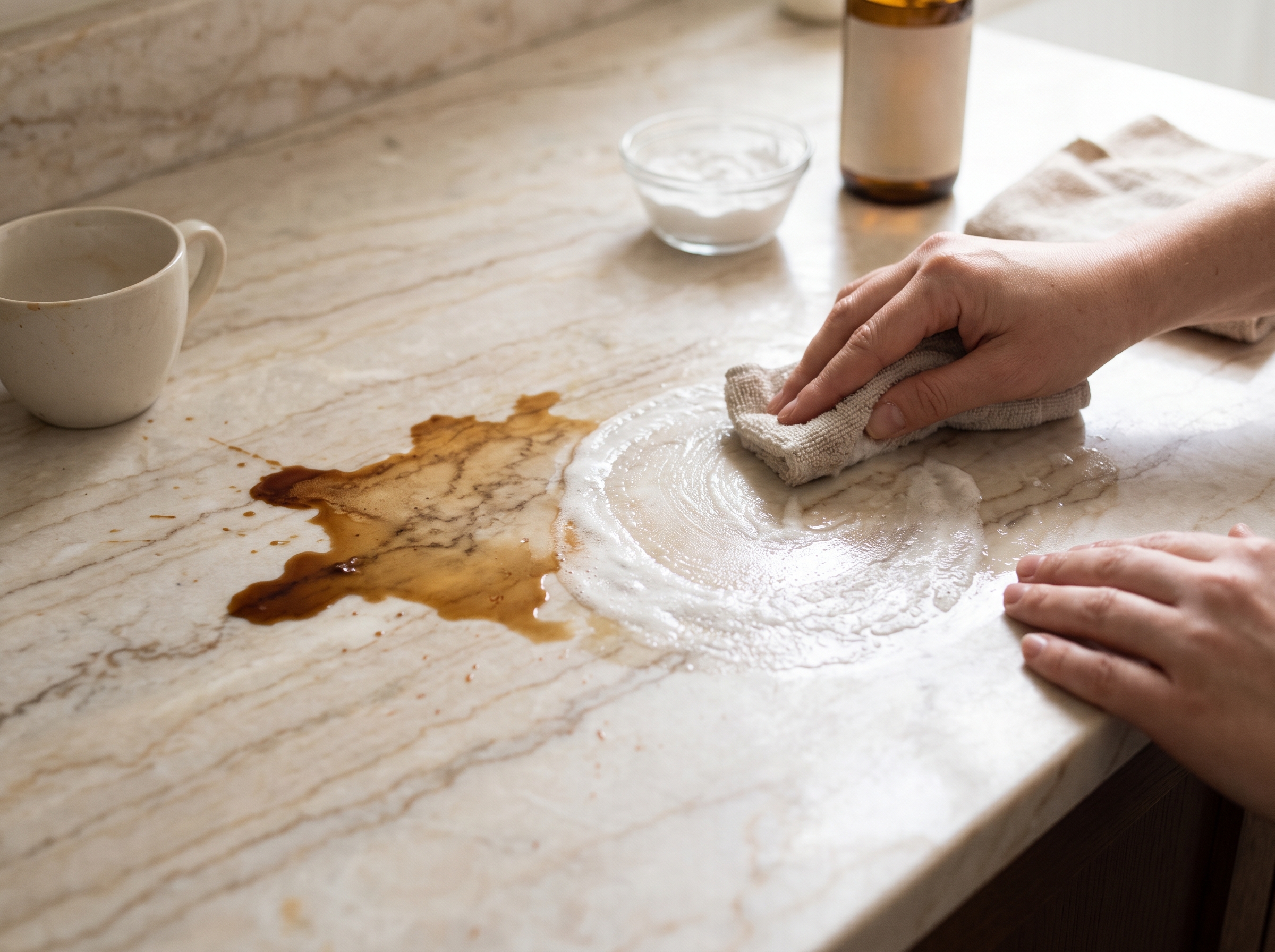
The maintenance requirements of natural stone vary according to its mineral composition and intended use. Certain stones can be treated with suitable sealers to improve their resistance to staining and water absorption.
Stone-specific cleaning products should be used. Acidic cleaning agents should be avoided, particularly on calcium carbonate-based stones such as marble and limestone.
6. Colour and Pattern Compatibility
Colour and pattern variations are a natural characteristic of stone production. Differences in veining, colour tones and patterns may occur between blocks, slabs and production batches of the same stone.
For large-scale projects, it is recommended to inspect actual slabs whenever possible and evaluate colour and pattern consistency across the entire project.
Natural Stone vs Artificial Stone: What Is the Difference?
Both natural and artificial stones are used in architecture and interior design, but they serve different requirements. The choice should depend on appearance, intended application, maintenance requirements and design expectations.
| Property | Natural Stone | Artificial Stone |
|---|---|---|
| Production | Formed through natural geological processes | Manufactured through industrial production processes |
| Patterns | Naturally occurring and variable | Controlled according to the manufacturing method |
| Colour | Determined by natural mineral composition | Determined by pigments and production methods |
| Appearance | May vary from slab to slab | Can offer more consistent patterns and colours |
| Applications | Architectural, decorative and construction applications | Countertops, decoration and various cladding applications |
| Uniqueness | Each stone may have distinctive natural variations | More consistent appearance can be achieved in mass production |
Natural stones stand out with their distinctive patterns and mineral structures, which are the result of millions of years of geological processes. Artificial stones, on the other hand, can offer specific colours, patterns and performance characteristics through controlled manufacturing processes.
The most suitable material should always be selected according to the requirements of the project.
The Importance of Natural Stone in Architecture and Interior Design
Natural stone is more than just a building material. It is also an important design element that helps define the character of architectural spaces. The colour, veining, surface finish and texture of a stone can significantly influence the overall appearance of an interior or exterior environment.
In contemporary architecture, natural stone is often combined with materials such as wood, metal, glass and concrete to create distinctive designs.
For example:
-
Minimalist designs: Light-coloured stones and varieties with relatively uniform appearances.
-
Luxury interiors: Marble with distinctive veining and decorative onyx varieties.
-
Exterior projects: Granite, basalt and travertine varieties suitable for outdoor conditions.
-
Rustic designs: Textured travertine, slate and naturally finished stones.
Combining natural stone with different materials creates extensive design possibilities in both contemporary and traditional architecture.
Frequently Asked Questions About Natural Stone
What Is the Most Durable Type of Natural Stone?
Granite and quartzite are generally among the natural stones known for their high hardness and abrasion resistance. However, durability depends on mineral composition, surface treatment and application conditions. Not every stone is suitable for every project.
What Is the Main Difference Between Marble and Granite?
Marble is a metamorphic rock, whereas granite is an igneous rock. Marble is generally recognised by its distinctive veining, while granite typically features crystalline and speckled mineral patterns. Granite varieties are generally harder, whereas marble is widely preferred for its decorative appearance.
Can Travertine Be Used Outdoors?
Yes. Travertine can be used in outdoor applications when the appropriate variety, surface finish and installation method are selected. It is commonly used for terraces, gardens, walkways and swimming pool surrounds. Freeze-thaw resistance, slip resistance and water absorption should be evaluated according to the intended application.
Does Onyx Transmit Light?
Certain varieties of onyx have a translucent structure and can partially transmit light. This property makes them suitable for decorative applications with LED lighting installed behind the stone. Light transmission depends on the stone's thickness, mineral structure, colours and vein density.
Is Quartzite More Durable Than Marble?
Quartzite is generally harder than marble and may offer greater resistance to scratching and abrasion. However, its actual mineral composition and purity are important. Not all stones marketed as quartzite have identical performance characteristics.
What Are the Different Natural Stone Surface Finishes?
Natural stone can be processed using various finishing techniques, including polishing, honing, brushing, sandblasting, tumbling and other mechanical treatments. These processes influence the stone's appearance, texture and certain functional properties.
Do Natural Stones Change Colour Over Time?
Some natural stones may undergo changes in appearance over time due to sunlight, moisture, chemical substances, surface wear and environmental conditions. Mineral composition and surface treatment play important roles in how a stone ages.
What Is the Most Important Factor When Choosing Natural Stone?
The most important factor is selecting a stone with physical properties suitable for its intended application. Hardness, water absorption, slip resistance, chemical sensitivity, maintenance requirements and aesthetic characteristics should all be considered.
Conclusion
Natural stone varieties such as marble, granite, travertine, onyx, quartzite, limestone, slate and basalt offer a wide range of possibilities for architectural and decorative projects thanks to their different mineral compositions, geological origins and physical properties.
Each natural stone has its own distinctive character. The veining of marble, the crystalline texture of granite, the porous appearance of travertine, the translucency of onyx and the hardness of quartzite make these materials suitable for different design preferences and applications.
Choosing the right natural stone requires more than simply considering its appearance. The technical requirements of the intended application and the stone's long-term performance should also be taken into account.
Biser Marble brings the distinctive colours, textures and natural patterns of stone to a variety of architectural and design projects. Evaluating the appearance and physical properties of natural stone alongside project requirements is essential for making the right material selection.