What Are the Different Marble Surface Finishes? Polished, Honed, Brushed and Sandblasted Finishes
Marble is one of the most preferred natural stones in architectural and decorative projects, thanks to its natural veining, colour variations and distinctive texture. However, the appearance and performance of marble are not determined solely by its colour or veining. Surface treatments also play an important role in defining its aesthetic character, texture, gloss level and suitability for different applications.
From the glossy and smooth appearance of polished marble to the matte finish of honed marble, the textured surface of brushed marble and the rougher character of sandblasted marble, different finishing techniques can give the same natural stone remarkably different appearances.
So, what are the different types of marble surface finishes? What is the difference between polished and honed marble? Where is brushed marble used? Which projects are suitable for sandblasted surfaces?
In this guide, we explore the different marble surface finishes, their production methods, technical characteristics, advantages and applications.
What Is a Marble Surface Finish?
A marble surface finish refers to the mechanical or chemical processes applied to the surface of marble after extraction and cutting to achieve a desired appearance, texture and physical characteristics.
Raw marble slabs can be processed through different production stages to create polished, matte, textured, rough or aged surfaces.
The choice of surface finish depends on several factors:
-
The intended application of the marble
-
Architectural design and aesthetic expectations
-
Preferred gloss level and surface texture
-
Slip resistance requirements
-
Cleaning and maintenance conditions
-
Intensity of use
-
Mineral composition and physical properties of the stone
For example, polished marble may be preferred for achieving a glossy and smooth appearance in interior spaces, while more textured surfaces can be considered for outdoor flooring applications.
Choosing the right surface finish helps maximise both the visual appeal and functional performance of marble.
What Are the Different Types of Marble Surface Finishes?
There are several surface finishing techniques used in the marble industry. The most common options include polished, honed, brushed, sandblasted, tumbled, leathered and sawn finishes.
1. Polished Marble (Polished Finish)
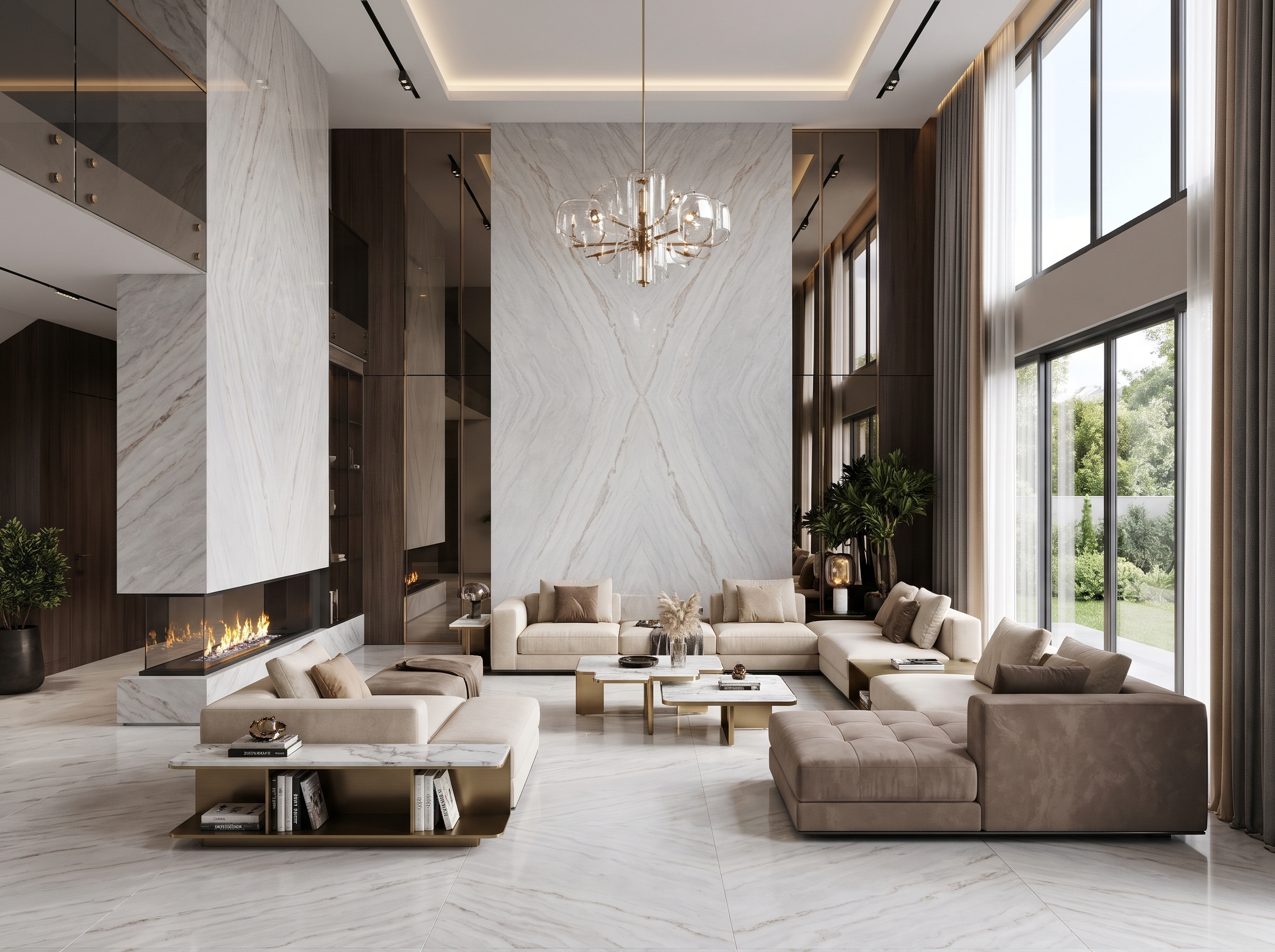
Polished marble is produced by progressively grinding and polishing the stone surface to achieve a glossy, smooth and reflective appearance.
During this process, the marble surface is treated with abrasive discs of increasingly finer grades. The final polishing stages enhance the stone's natural colours and make its veining more visible.
Characteristics of polished marble:
-
Features a glossy and reflective surface.
-
Enhances natural veins and colour variations.
-
Provides a smooth touch and appearance.
-
Complements luxury and classical design concepts.
-
May make certain surface stains more noticeable.
-
Slip performance should be evaluated separately in wet areas.
Where is polished marble used?
-
Hotel and residential building entrances
-
Living rooms and lounge areas
-
Wall cladding
-
Kitchen and bathroom decoration
-
Staircases and steps
-
Decorative architectural details
Polished finishes are particularly effective on white and light-coloured marble, highlighting the natural veining and creating an elegant appearance.
2. Honed Marble (Honed Finish)
Honed marble is produced by levelling and smoothing the stone surface through controlled abrasive processes, resulting in a matte or semi-matte appearance.
Unlike polished marble, the final stage does not aim to achieve a high-gloss finish. Instead, the natural colours of the stone are preserved while light reflection is reduced.
Honed finishes are particularly popular in simple and contemporary architectural designs.
Characteristics of honed marble:
-
Offers a matte or semi-matte appearance.
-
Reflects less light than polished surfaces.
-
Preserves natural veins and colour variations.
-
Creates a subtle and balanced aesthetic.
-
May make certain minor scratches and imperfections less noticeable compared to glossy surfaces.
Where is honed marble used?
-
Modern residential projects
-
Bathrooms and washbasin areas
-
Kitchen countertops
-
Interior flooring
-
Wall cladding
-
Hotels and commercial spaces
A matte surface does not automatically mean that the stone is slip-resistant. Slip resistance should be tested separately, especially for bathrooms, showers and outdoor applications.
3. Brushed Marble (Brushed Finish)
Brushed marble is produced by treating the stone surface with specialised abrasive brushes to enhance its natural texture.
During this process, softer mineral areas of the surface are carefully abraded, bringing out the natural structure of the stone. This creates a slightly rough, textured and natural-looking finish.
Brushed surfaces are frequently preferred in projects where preserving the natural character of marble is important.
Characteristics of brushed marble:
-
Features a textured and slightly rough surface.
-
Highlights natural veins and patterns.
-
Generally has a low gloss level.
-
Creates a rustic and natural appearance.
-
Surface texture varies depending on the stone type and brushing intensity.
Where is brushed marble used?
-
Terraces and verandas
-
Gardens and landscaping projects
-
Exterior facade cladding
-
Bathrooms and shower areas
-
Interior flooring
-
Rustic and nature-inspired architectural projects
When selecting brushed marble, cleanability and slip performance should be considered according to the intended application.
4. Sandblasted Marble (Sandblasted Finish)
Sandblasted marble is produced by applying abrasive particles to the stone surface using compressed air, resulting in a textured finish.
During this process, abrasive materials are sprayed onto the surface under controlled conditions, changing its texture and creating a rougher and more uniform appearance.
The intensity of sandblasting can vary depending on the abrasive material, pressure and application time.
Characteristics of sandblasted marble:
-
Creates a matte and textured surface.
-
Reduces surface gloss.
-
Features a relatively rough texture.
-
Can present the natural patterns of the stone in a more understated way.
-
Slip performance depends on the application method and stone characteristics.
Where is sandblasted marble used?
-
Outdoor flooring
-
Garden pathways
-
Terraces
-
Staircases and steps
-
Facade applications
-
Landscaping projects
Sandblasted finishes are particularly suitable for architectural applications where a natural and textured appearance is desired.
5. Tumbled Marble (Tumbled Finish)
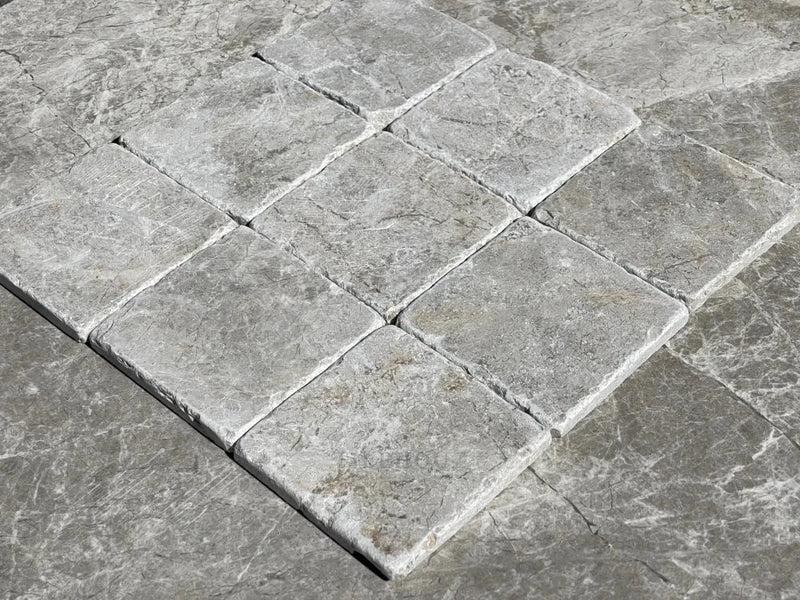
Tumbled marble is produced by applying controlled mechanical processes to the edges and surfaces of the stone to create an aged appearance.
This process is generally carried out in tumbling systems using specialised abrasive materials. The edges become slightly rounded, while the surface develops a texture that resembles natural ageing and wear.
Characteristics of tumbled marble:
-
Offers an aged and natural appearance.
-
Usually has softer and more rounded edges.
-
Complements rustic and classical designs.
-
Highlights the natural character of the stone.
-
Surface texture may vary depending on the intensity of the treatment.
Where is tumbled marble used?
-
Gardens and landscaping
-
Terraces and courtyards
-
Rustic interior designs
-
Wall cladding
-
Decorative stone applications
-
Traditional architectural projects
Tumbled marble surfaces are particularly popular in Mediterranean-style and classical architectural designs.
6. Leathered Marble (Leathered Finish)
Leathered marble is produced by applying specialised abrasive brushes and processing equipment to create a slightly textured, soft and natural-looking surface.
Known as Leathered Finish in the natural stone industry, this treatment has become increasingly popular in kitchen and interior design in recent years.
The surface is not as glossy as traditional polished marble, but it may have a more pronounced texture than a honed finish.
Characteristics of leathered marble:
-
Features a slightly textured and natural surface.
-
Generally has a matte or low-gloss appearance.
-
Highlights the stone's natural veining.
-
Creates a modern and sophisticated look.
-
Surface texture varies depending on the processing technique.
Where is leathered marble used?
-
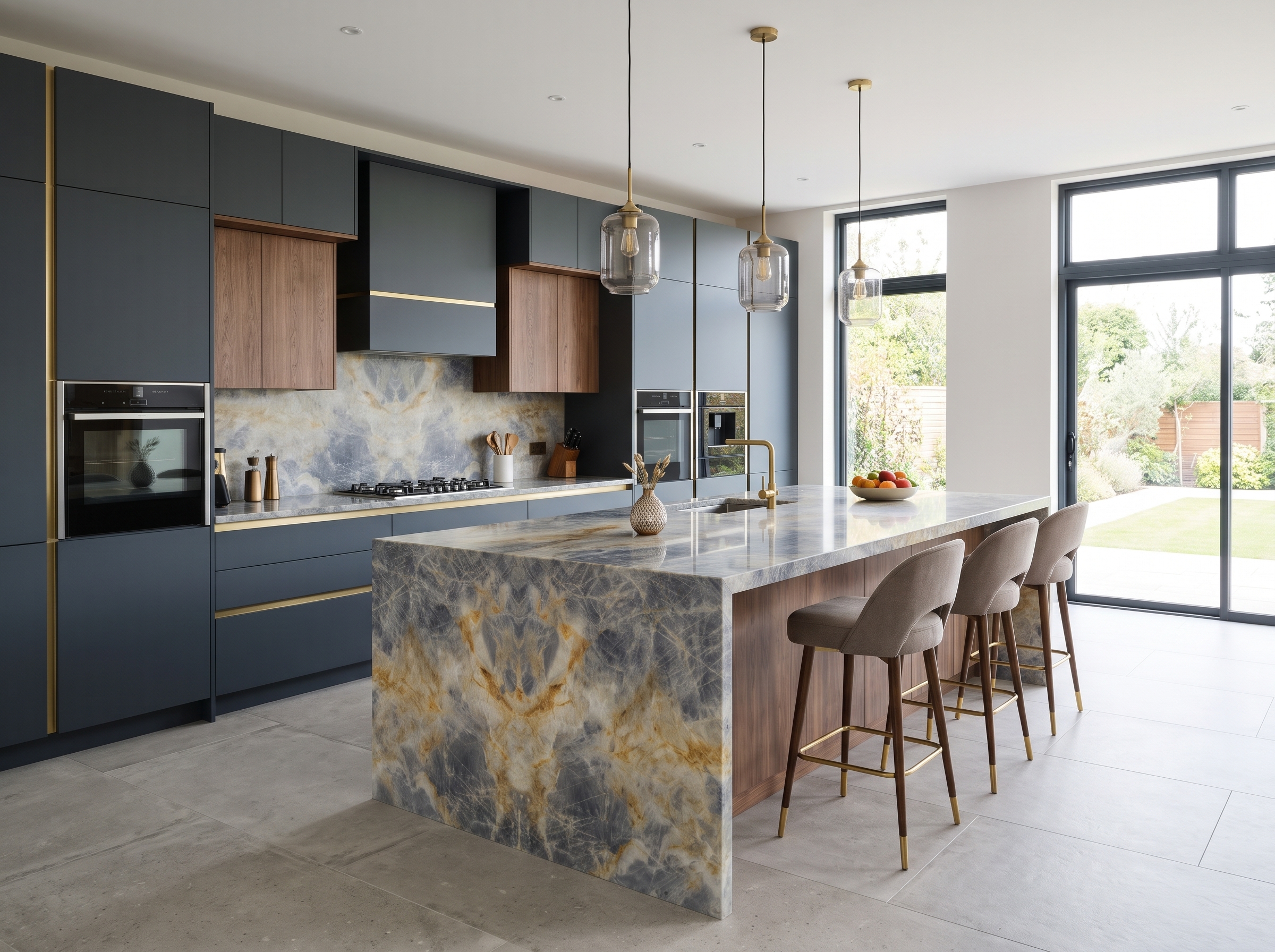
Kitchen countertops
-
Kitchen islands
-
Bathroom countertops
-
Wall cladding
-
Decorative furniture
-
Interior design applications
The cleaning and maintenance requirements of leathered surfaces should be evaluated according to the stone's porosity and the characteristics of the applied finish.
7. Natural Cut Marble (Sawn Finish)
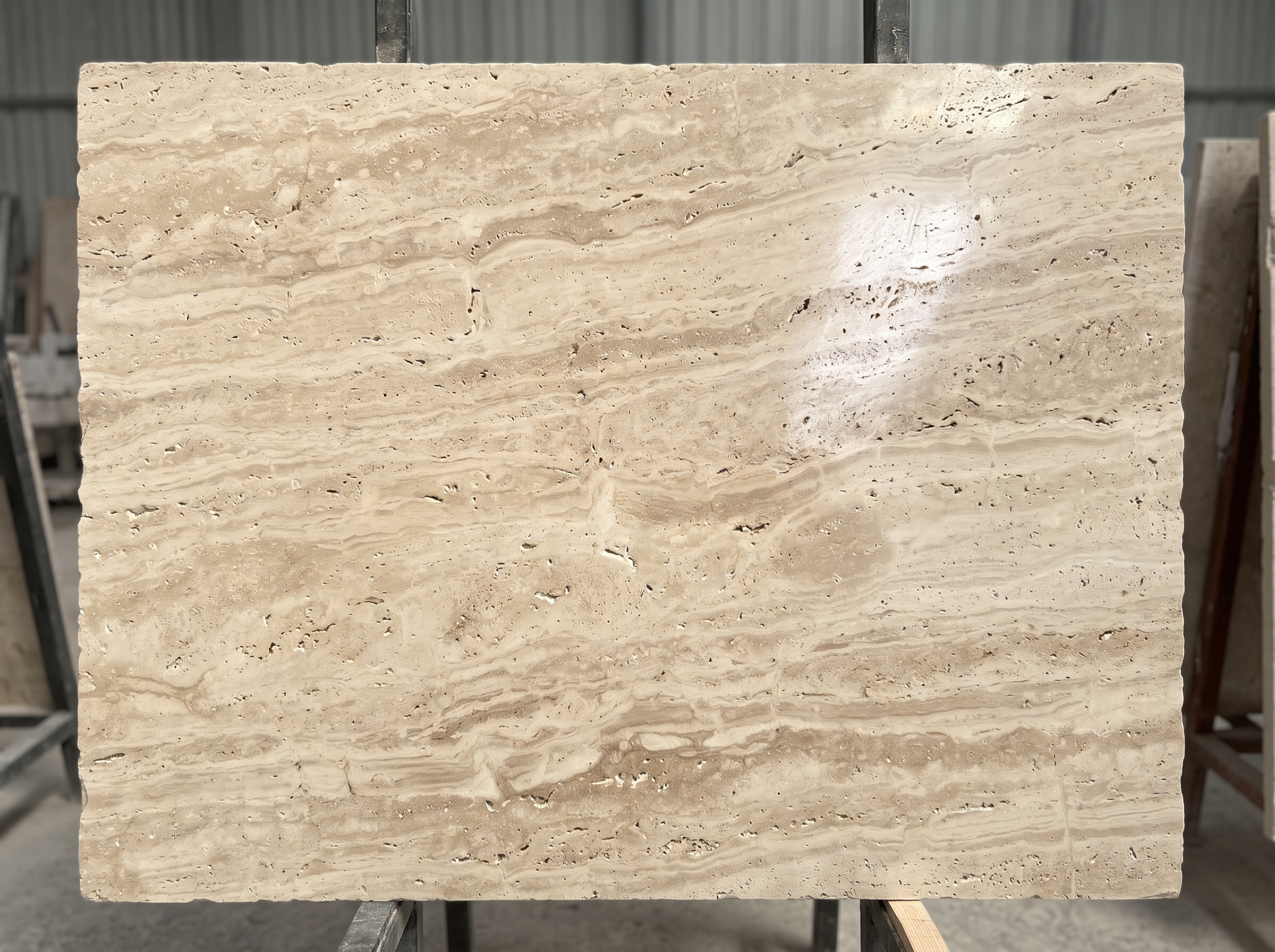
Natural cut marble is a surface finish in which blocks or slabs are left without additional polishing or intensive surface treatment after the cutting process.
As a result, the stone retains the natural marks created by the cutting equipment, giving it a raw and more untreated appearance.
Characteristics of natural cut marble:
-
Has a matte and raw appearance.
-
Cutting marks may remain visible on the surface.
-
Features a low gloss level.
-
Can complement industrial and minimalist designs.
Where is natural cut marble used?
-
Exterior facade applications
-
Architectural details
-
Technical and decorative stone applications
-
Bespoke design projects
Comparison of Marble Surface Finishes
Comparing the appearance and application characteristics of different surface finishes makes it easier to select the right option for a project.
| Surface Finish | Appearance | Texture | Common Applications |
|---|---|---|---|
| Polished | Glossy | Smooth | Interiors, walls and decoration |
| Honed | Matte | Smooth | Flooring, bathrooms and countertops |
| Brushed | Matte / Natural | Slightly textured | Terraces, landscaping and outdoor areas |
| Sandblasted | Matte | Rough | Outdoor areas, gardens and facades |
| Tumbled | Natural / Aged | Textured | Courtyards, gardens and rustic designs |
| Leathered | Low-gloss | Slightly textured | Kitchens, countertops and interiors |
| Sawn | Raw / Matte | Cutting marks visible | Facades and architectural details |
The appearance of these finishes may vary depending on the mineral composition, hardness and natural texture of the marble.
What Is the Difference Between Polished Marble and Honed Marble?
Polished and honed marble are two of the most frequently compared surface finishes in the natural stone industry.
Both processes involve mechanically grinding and smoothing the marble surface. However, the final appearance is different.
Polished marble:
-
Has a high-gloss finish.
-
Reflects more light.
-
Can make veins and colour variations more prominent.
-
Offers a more luxurious and striking appearance.
Honed marble:
-
Has a matte or semi-matte surface.
-
Reflects less light.
-
Creates a more understated and natural appearance.
-
Complements modern and minimalist designs.
When choosing between these finishes, it is important to consider not only the gloss level but also the intended application, cleaning conditions and surface performance.
What Should You Consider When Choosing a Marble Surface Finish?
Selecting the right marble surface finish depends on both the aesthetic expectations and technical requirements of the project.
1. Intended Application
The first step is to determine where the marble will be used.
Polished finishes may be preferred for interior walls, while more textured surfaces can be considered for outdoor flooring applications.
2. Slip Resistance
Slip resistance is an important safety consideration, particularly in bathrooms, showers, swimming pool surrounds, staircases and outdoor flooring.
A matte or textured surface should not automatically be considered slip-resistant. The surface's slip performance should be evaluated using appropriate testing methods.
3. Cleaning and Maintenance
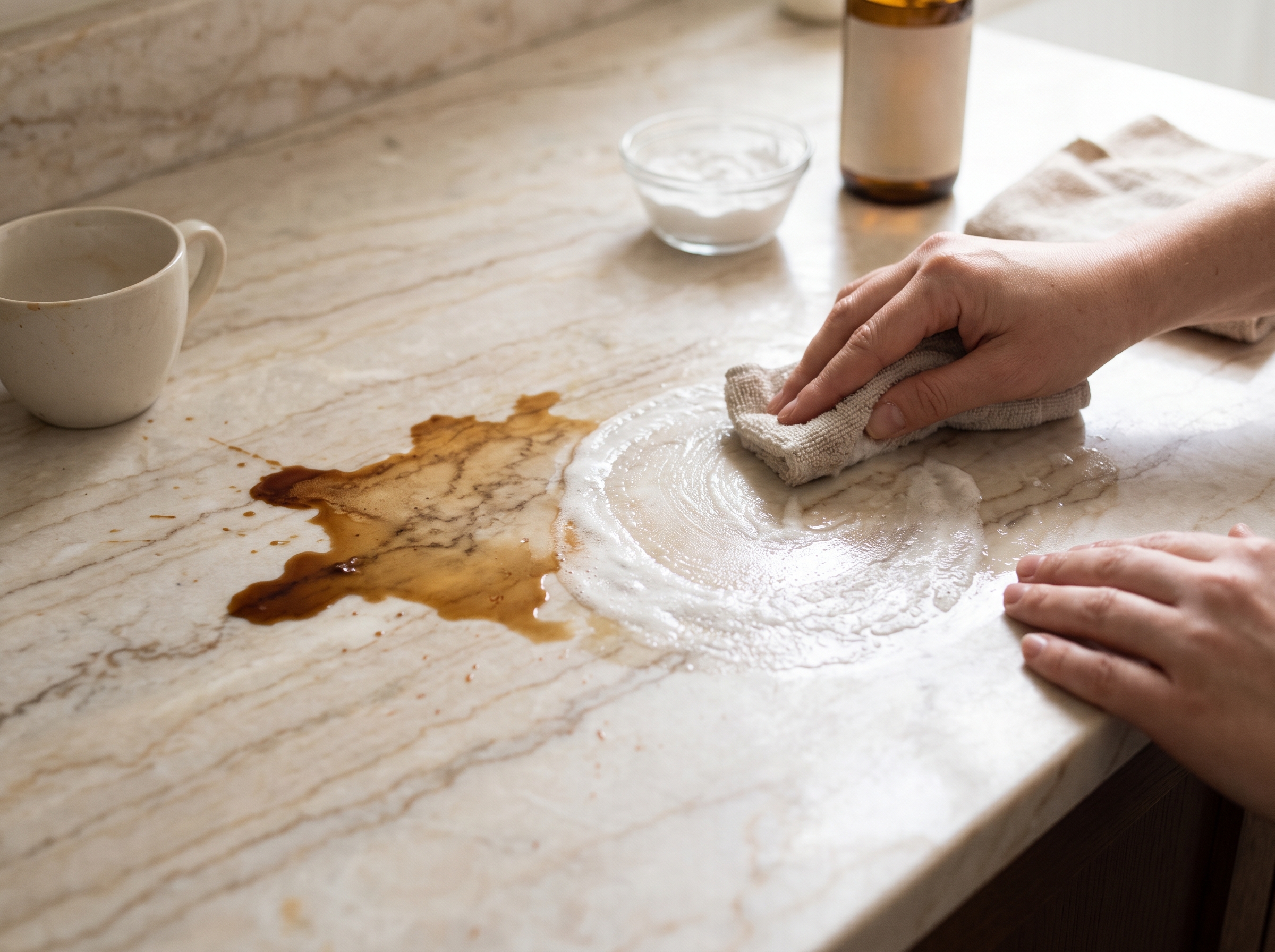
Surface texture and porosity can influence cleaning and maintenance requirements.
Polished surfaces are generally easier to wipe clean, while deeper textured finishes may allow more dust and dirt to accumulate.
4. Architectural Design
The surface finish should complement the overall design concept of the project.
-
Classical and luxury designs: Polished marble
-
Modern and minimalist designs: Honed marble
-
Natural and rustic designs: Brushed or tumbled marble
-
Textured outdoor applications: Sandblasted marble
5. Natural Characteristics of Marble
Not every type of marble responds to all surface finishing techniques in the same way. The hardness, mineral distribution, porosity and veining of the stone can influence the final result.
For this reason, the technical and physical properties of the marble should be evaluated before selecting a surface finish.
Do Marble Surface Finishes Affect Durability?
Yes. Surface treatments can influence the physical performance and functional characteristics of marble. However, these effects are generally related to the surface characteristics and conditions of use rather than fundamentally changing the stone's structural strength.
For example:
-
Polished surfaces may make scratches and surface wear more visible due to their glossy appearance.
-
Honed surfaces may make certain minor surface imperfections less noticeable thanks to their matte appearance.
-
The texture depth of brushed and sandblasted surfaces may increase cleaning requirements.
-
Edges and surface details may become more pronounced in tumbled finishes.
To evaluate the actual durability of marble, technical properties such as compressive strength, flexural strength, abrasion resistance and water absorption should also be examined.
Frequently Asked Questions About Marble Surface Finishes
What Are the Different Types of Marble Surface Finishes?
The most common marble surface finishes include polished, honed, brushed, sandblasted, tumbled, leathered and sawn finishes. Each treatment creates a different appearance and texture.
What Is Polished Marble?
Polished marble is marble that has undergone mechanical grinding and polishing processes to achieve a glossy, smooth and light-reflecting surface.
What Is Honed Marble?
Honed marble is a marble surface finish created by mechanically smoothing the stone to achieve a matte or semi-matte appearance.
Is Polished Marble Better Than Honed Marble?
Both finishes offer different advantages. Polished marble provides a glossy and luxurious appearance, while honed marble has a more understated and matte character. The right choice depends on the intended application and design preferences.
What Is Brushed Marble?
Brushed marble is a type of marble that has been processed with specialised abrasive brushes to create a natural and slightly textured surface.
What Is Sandblasted Marble?
Sandblasted marble is a textured marble surface created by applying abrasive particles to the stone using compressed air. This process produces a matte and textured finish.
Do Marble Surface Finishes Affect Slip Resistance?
Yes. Surface treatments can influence the texture and friction characteristics of the stone. However, slip resistance cannot be determined solely by whether a surface is matte or glossy. Appropriate test results should be evaluated.
Which Marble Surface Finish Is Best for Outdoor Applications?
For outdoor applications, textured finishes that have been tested for slip performance can be considered, depending on the intended use and environmental conditions. Technical properties such as freeze-thaw resistance and water absorption should also be examined.
Can a Marble Surface Finish Be Changed Later?
Yes. With suitable equipment and professional processing, certain marble surfaces can be re-honed or polished. However, the available methods depend on the existing condition, thickness and physical properties of the stone.
What Is Leathered Marble?
Leathered marble is a natural stone surface treated with specialised brushing and abrasive techniques to achieve a slightly textured and low-gloss appearance.
Conclusion: Achieve the Right Look for Your Project with the Correct Marble Surface Finish
Marble surface finishes are among the most important stages of natural stone processing, as they determine the appearance and functional character of the stone. Polished, honed, brushed, sandblasted, tumbled and leathered finishes allow the same marble variety to complement a wide range of architectural designs.
When selecting the right surface finish, the natural characteristics of the stone, intended application, aesthetic expectations, slip resistance and maintenance requirements should all be considered.
It is not only the colour and veining of marble that influence the overall appearance of a project. The way its surface is processed also plays a significant role in the final design and user experience.