Mohs Hardness Scale: Why It Matters When Choosing Natural Stone
When selecting natural stone, aesthetics are often the first consideration. Color, veining, texture, and finish play a significant role in defining the visual character of a space. However, the long-term performance of a natural stone depends on much more than its appearance. Its physical and mechanical properties are equally important, particularly in projects where durability, longevity, and ease of maintenance are critical.
One of the most important technical characteristics of any natural stone is its hardness. Whether the stone will be used for flooring, wall cladding, kitchen countertops, commercial spaces, or exterior applications, its resistance to scratching directly affects its performance over time.
This is where the Mohs Hardness Scale becomes an essential reference. Developed more than two centuries ago, it remains one of the most widely used systems for evaluating the scratch resistance of minerals and natural stones. Architects, designers, contractors, engineers, and stone suppliers continue to rely on this simple yet effective classification when comparing different materials.
However, hardness alone should never determine whether a stone is suitable for a project. Compressive strength, water absorption, porosity, chemical resistance, weather resistance, and maintenance requirements all contribute to the overall performance of a natural stone.
In this comprehensive guide, we explain what the Mohs Hardness Scale is, how it works, why it is still relevant today, and how understanding hardness can help architects, developers, and buyers choose the right natural stone for their projects.
What Is the Mohs Hardness Scale?
The Mohs Hardness Scale is a relative scale used to classify minerals according to their ability to scratch one another. It was introduced in 1812 by the German mineralogist Friedrich Mohs, who sought a practical method for identifying minerals without requiring sophisticated laboratory equipment.
The principle behind the scale is remarkably straightforward:
A harder mineral can scratch a softer mineral, while a softer mineral cannot scratch a harder one.
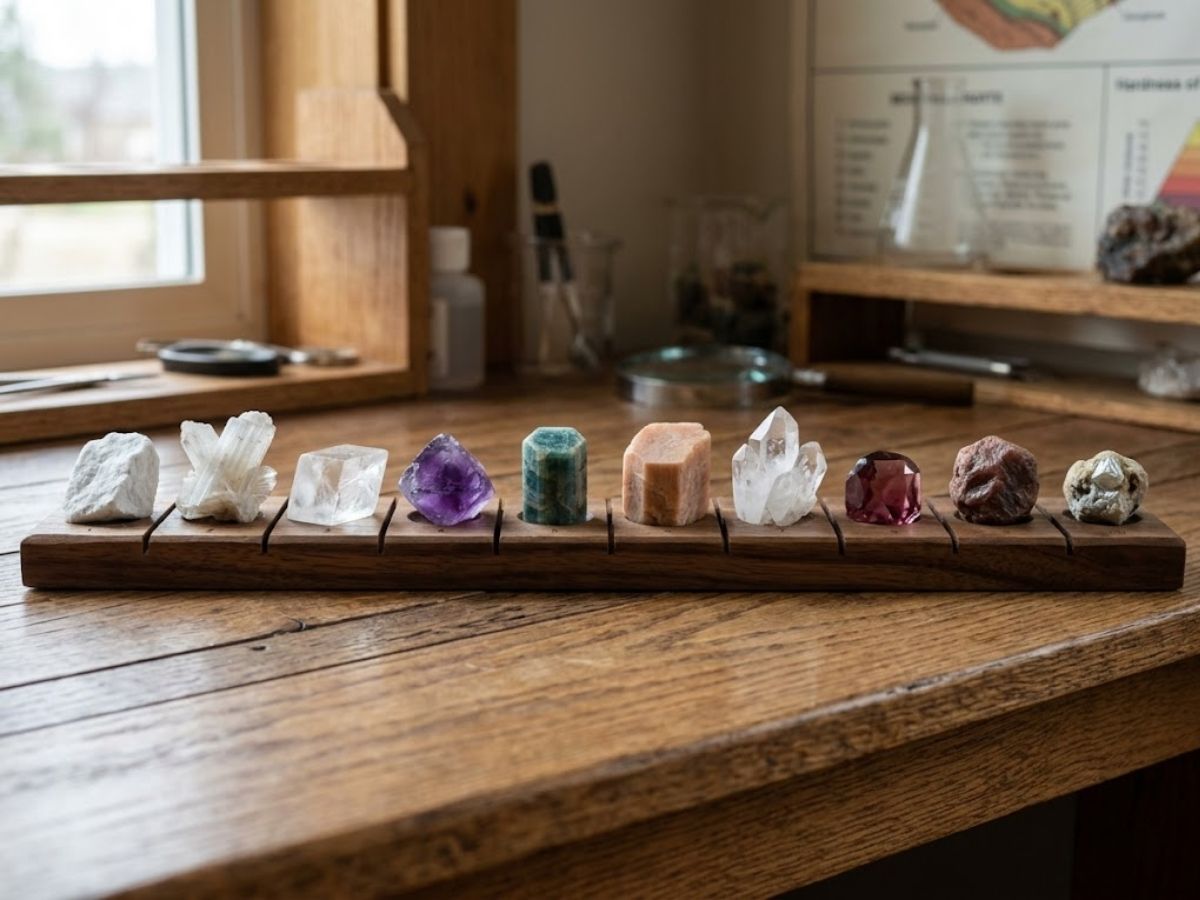
Rather than measuring absolute hardness, the Mohs Scale compares the relative scratch resistance of minerals. Each mineral on the scale represents a specific hardness level, ranging from 1 to 10, with every successive mineral capable of scratching the ones below it.
This practical approach has made the Mohs Scale one of the most recognized classification systems in geology, mining, construction, and the natural stone industry.
Although modern laboratories now use more advanced hardness testing methods such as the Vickers and Knoop tests, the Mohs Hardness Scale remains the industry's preferred tool for quick comparisons and preliminary evaluations.
The History of the Mohs Hardness Scale
Before Friedrich Mohs introduced his classification system, identifying minerals often required complex chemical analyses or detailed visual observations. These methods were time-consuming and impractical for fieldwork.
Recognizing this challenge, Mohs developed a simple comparative system based solely on scratch resistance. Instead of assigning arbitrary values, he selected ten common minerals and arranged them from the softest to the hardest.
Published in 1812, the Mohs Hardness Scale quickly gained international acceptance because of its simplicity and reliability. More than 200 years later, it continues to serve as a fundamental educational and industrial reference.
Its longevity is largely due to the fact that the underlying principle remains universally applicable: comparing the scratch resistance of minerals is one of the fastest ways to evaluate their relative hardness.
Today, geologists use the Mohs Scale during field surveys, mining companies apply it during material evaluation, and natural stone manufacturers rely on it as part of their quality assessment processes.
How Does the Mohs Hardness Scale Work?
Unlike laboratory hardness tests that use specialized instruments, the Mohs Scale works through direct comparison.
A mineral is tested against another mineral with a known hardness value. If it leaves a visible scratch, it is considered harder. If no scratch appears, it is softer than the reference mineral.
For example, quartz, which has a Mohs hardness of 7, can easily scratch marble, whose primary mineral—calcite—has a hardness of 3. However, marble cannot scratch quartz.
It is important to understand that the Mohs Scale is not linear. The difference between hardness levels is not equal from one number to the next.
For instance, diamond (10) is not simply twice as hard as corundum (9). In reality, diamond is many times harder. The scale represents the order of scratch resistance rather than precise numerical hardness values.
Because of this, the Mohs Scale should be viewed as a comparative classification system rather than an exact scientific measurement.
Mohs Hardness Scale Table
The following table lists the ten reference minerals used in the Mohs Hardness Scale.
| Mohs Hardness | Mineral | Characteristics |
|---|---|---|
| 1 | Talc | The softest mineral; easily scratched with a fingernail. |
| 2 | Gypsum | Very soft and easy to shape. |
| 3 | Calcite | The primary mineral found in marble. |
| 4 | Fluorite | Moderately soft mineral. |
| 5 | Apatite | Similar hardness to window glass. |
| 6 | Feldspar | One of the most common rock-forming minerals. |
| 7 | Quartz | A major component of granite and one of the most abundant minerals on Earth. |
| 8 | Topaz | High scratch resistance. |
| 9 | Corundum | The mineral family that includes ruby and sapphire. |
| 10 | Diamond | The hardest naturally occurring mineral known. |
Although these minerals are primarily used as reference points, the table also provides valuable insight into the relative hardness of many natural stones used in construction and architecture.
Understanding where different minerals fall on the Mohs Scale helps architects, designers, and buyers make more informed decisions when selecting materials for specific applications.
What Is the Mohs Hardness of Marble?
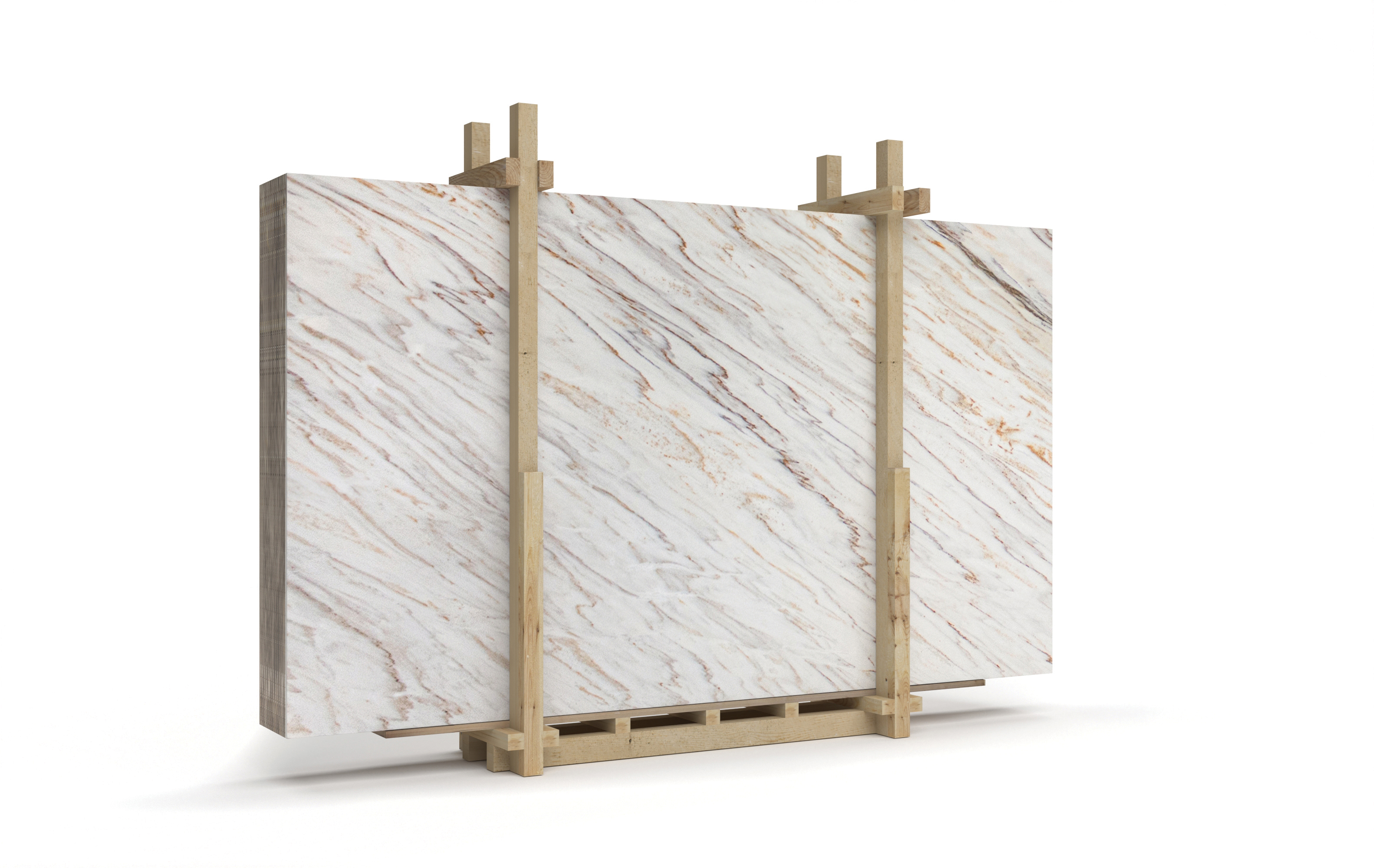
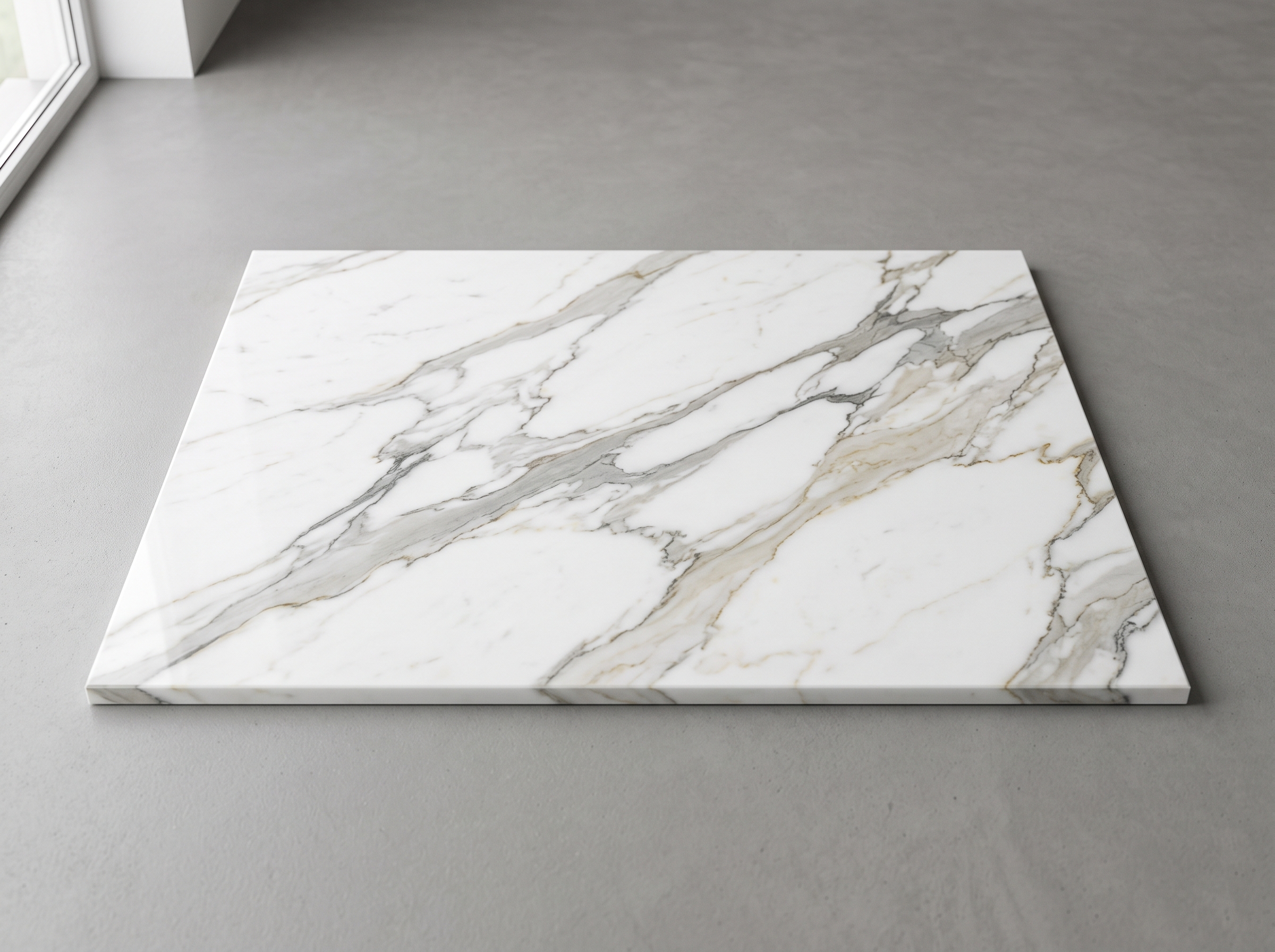
Marble is a metamorphic natural stone formed when limestone is subjected to high temperatures and pressure over millions of years. Its primary mineral is calcite (CaCO₃), which has a Mohs hardness of approximately 3. This relatively low hardness distinguishes marble from harder natural stones such as granite, making it easier to process and polish.
Rather than being a disadvantage, marble's moderate hardness is one of the reasons it has remained one of the world's most prestigious architectural materials for centuries. Because it can be cut, carved, and polished with exceptional precision, marble has been used in sculptures, monuments, luxury residences, hotels, museums, and public buildings throughout history.
Its ability to achieve a deep, reflective polish enhances the natural beauty of its veining, making each slab unique. For architects and interior designers, marble offers an elegant combination of timeless aesthetics and excellent workability.
However, a Mohs hardness of 3 also means that marble is more susceptible to scratches than harder stones. Fine quartz particles carried on footwear, abrasive cleaning pads, or improper maintenance practices can gradually affect the surface finish. For this reason, marble performs best in applications where its beauty can be appreciated while receiving appropriate care and maintenance.
When selected for the right environment and maintained correctly, marble can preserve its elegance and structural integrity for decades.
Marble vs. Granite: Understanding the Difference in Hardness
Marble and granite are two of the most widely used natural stones in architecture, yet they differ significantly in mineral composition and physical performance.
Granite is an igneous rock composed primarily of quartz, feldspar, and mica. Because quartz has a Mohs hardness of 7, granite generally falls between 6 and 7 on the Mohs Scale. This higher hardness makes granite more resistant to scratches and everyday wear.
Marble, on the other hand, consists mainly of calcite and has a Mohs hardness of approximately 3. As a result, it is softer, easier to shape, and capable of achieving a richer polished finish.
These differences often influence where each material is used. Granite is commonly selected for heavily used commercial flooring, kitchen countertops, airports, shopping malls, and other high-traffic environments where superior scratch resistance is beneficial.
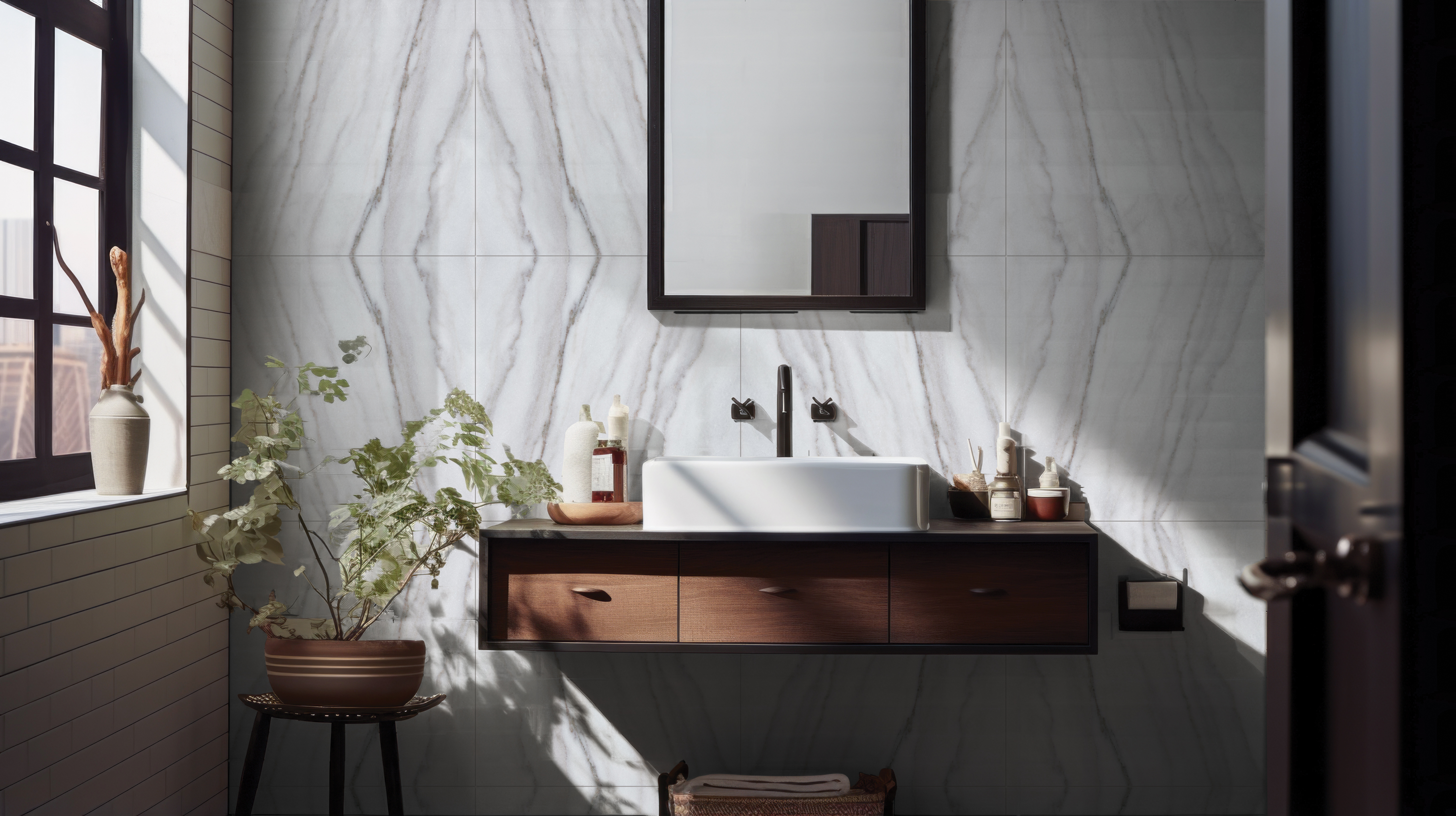
Marble is typically chosen for luxury interiors, feature walls, hotel lobbies, bathrooms, fireplaces, staircases, and decorative architectural elements where elegance and natural beauty are the primary design objectives.
It is important to remember that higher hardness does not automatically mean a stone is "better." Each natural stone has unique characteristics that make it suitable for specific applications. The best choice depends on the project's functional requirements, design vision, maintenance expectations, and long-term performance goals.
Does Hardness Mean Durability?
One of the most common misconceptions in the natural stone industry is that hardness and durability are the same thing. In reality, they represent different physical properties.
The Mohs Hardness Scale measures scratch resistance only. It does not indicate how well a stone resists impact, bending, compression, thermal stress, or weathering.
A stone with a high hardness rating may still crack under heavy impact, while a softer stone may possess excellent compressive strength and remain structurally stable for generations.
For this reason, engineers and architects evaluate several technical characteristics before selecting a natural stone for a project.
Among the most important are:
- Compressive strength, which indicates the stone's ability to withstand heavy loads.
- Flexural strength, particularly important for thin panels and exterior cladding.
- Water absorption, which influences freeze-thaw durability and stain resistance.
- Density, often associated with structural performance and durability.
- Porosity, affecting maintenance requirements and long-term appearance.
- Chemical resistance, especially for stones exposed to acidic substances or harsh environmental conditions.
Marble, for example, reacts naturally with acidic materials such as lemon juice, vinegar, and certain household cleaners because of its calcite composition. This reaction is unrelated to hardness but can affect the stone's surface over time.
Consequently, selecting natural stone should always involve a comprehensive evaluation of all relevant physical and mechanical properties rather than relying solely on the Mohs Hardness Scale.
Choosing the Right Natural Stone for Different Applications
Every natural stone has strengths that make it suitable for specific architectural applications. Understanding how hardness relates to actual performance helps ensure that the selected material meets both functional and aesthetic expectations.
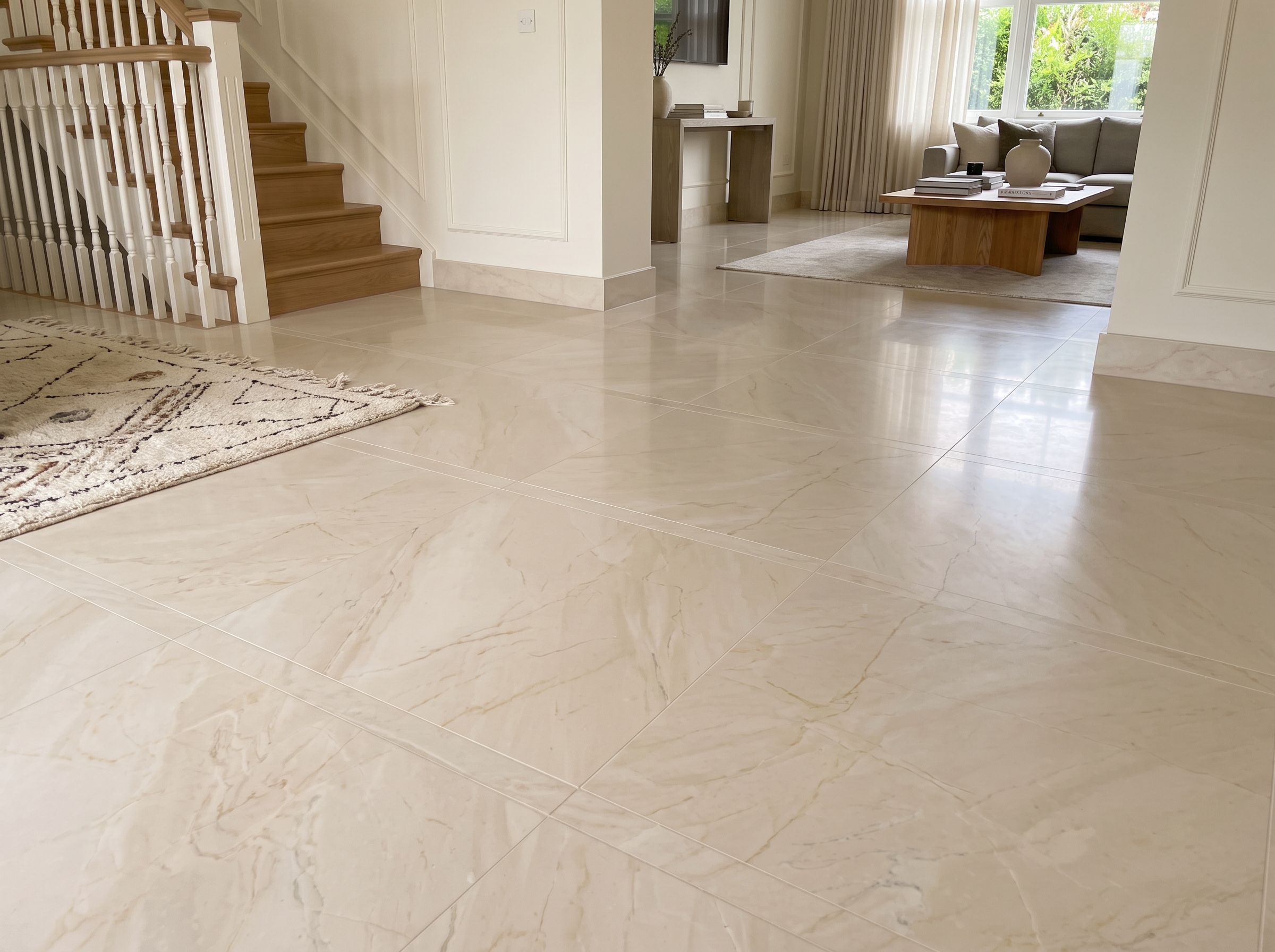
For luxury residential interiors, marble remains one of the most desirable choices. Its refined appearance, distinctive veining, and ability to achieve a mirror-like polish make it ideal for living spaces, bathrooms, fireplaces, and feature walls where visual impact is a priority.
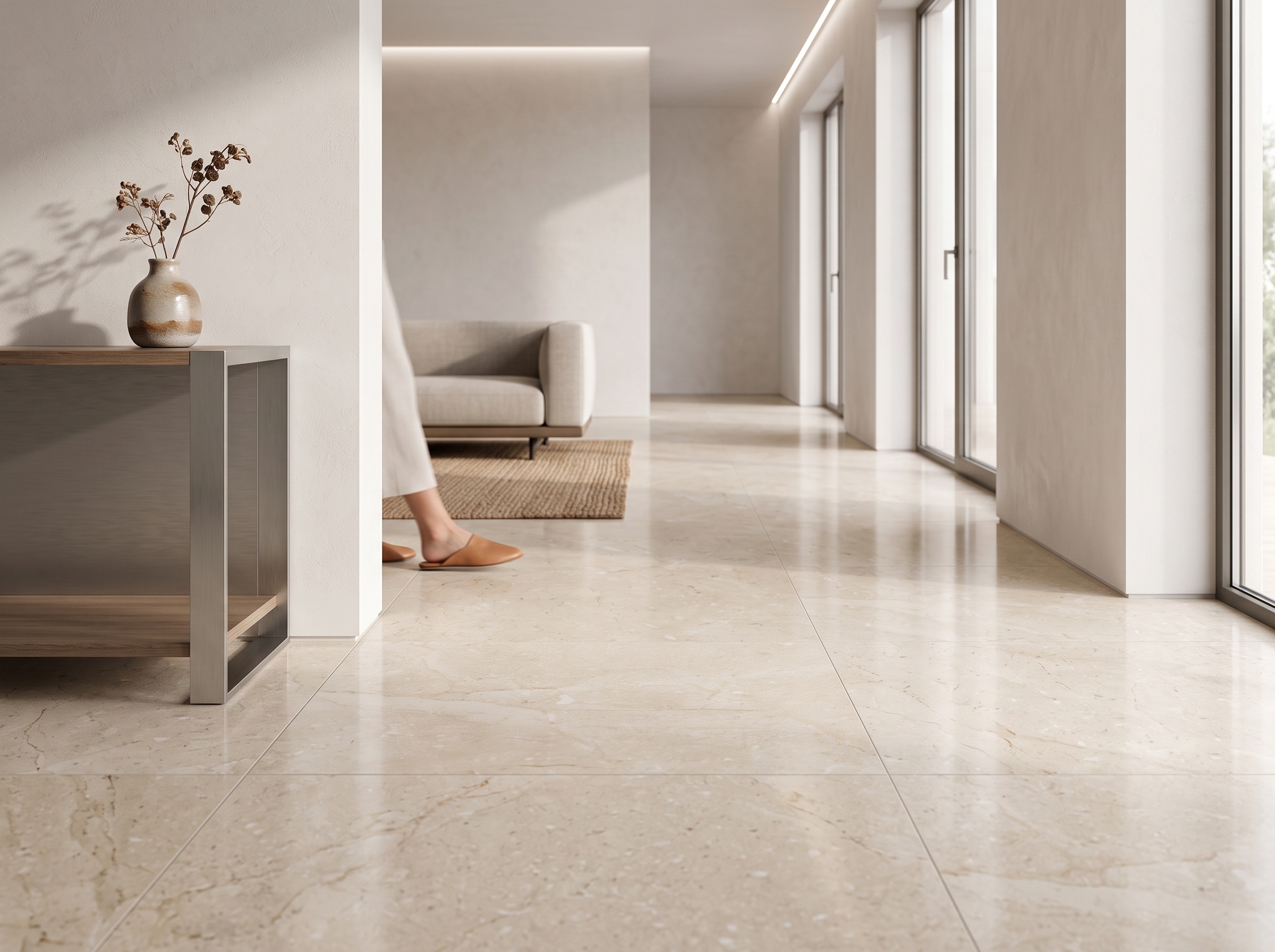
In commercial buildings with heavy pedestrian traffic, durability becomes more critical. Airports, shopping centers, hotels, office buildings, and public spaces often require materials capable of withstanding continuous use. In these environments, harder stones such as granite may provide greater long-term resistance to surface wear.
Kitchen countertops require a balanced combination of scratch resistance, stain resistance, heat resistance, and ease of maintenance. While granite is frequently selected for these reasons, marble continues to be a preferred material in high-end residential projects where its distinctive appearance outweighs the need for maximum scratch resistance.
For exterior cladding, hardness is only one part of the equation. Weather resistance, freeze-thaw performance, water absorption, thermal expansion, and structural stability all influence how a natural stone performs outdoors. A comprehensive technical evaluation is therefore essential before specifying materials for exterior applications.
Ultimately, selecting the right natural stone is about matching the material's properties with the intended use rather than choosing the stone with the highest hardness value. A well-informed selection ensures better long-term performance, reduced maintenance costs, and greater architectural value.
The Relationship Between the Mohs Hardness Scale and Scratch Resistance
Although the Mohs Hardness Scale is widely associated with scratch resistance, it is important to understand what the scale actually measures—and what it does not. The Mohs Scale compares the relative ability of one mineral to scratch another, but it does not predict every type of surface damage that may occur during everyday use.
For example, many of the fine scratches that appear on polished marble floors are not caused by metal objects but by microscopic quartz particles carried on the soles of shoes. Since quartz has a Mohs hardness of 7, it is significantly harder than marble and can gradually wear the polished surface over time.
Likewise, even harder natural stones such as granite can lose their surface finish if exposed to abrasive cleaning products, improper maintenance techniques, or continuous mechanical wear. This demonstrates that long-term appearance depends not only on the stone's hardness but also on how it is used and maintained.
Proper installation, routine cleaning with pH-neutral products, and regular maintenance are essential for preserving the beauty of any natural stone. When these factors are combined with an appropriate material selection, both marble and granite can maintain their appearance for decades.
Technical Properties to Consider Beyond Hardness
While the Mohs Hardness Scale provides valuable information about scratch resistance, professional stone selection requires a much broader evaluation. Architects, engineers, contractors, and natural stone suppliers consider several technical characteristics before recommending a material for a specific project.
One of the most important is compressive strength, which indicates how much load a stone can withstand before failure. This property is especially critical for flooring systems, structural applications, and areas exposed to heavy traffic.
Another key factor is flexural strength, particularly for large-format slabs, staircases, and ventilated façade systems where bending resistance directly affects safety and long-term performance.
Water absorption is equally important. Stones with lower water absorption generally perform better in outdoor environments because they are less susceptible to freeze-thaw damage, moisture penetration, and staining.
Professionals also evaluate density, porosity, abrasion resistance, chemical resistance, and the stone's ability to retain its polish over time. Together, these characteristics determine how a material will perform under real operating conditions.
For this reason, experienced natural stone manufacturers never recommend a product based solely on its hardness value. Instead, they assess the complete technical profile of the stone alongside the intended application, environmental conditions, and maintenance expectations.
Biser Marble's Approach to Quality
Selecting the right natural stone requires more than choosing an attractive color or pattern. Every project has its own technical requirements, and the performance of the material depends on selecting a stone whose physical properties match the intended application.
At Biser Marble, quality begins at the quarry. By carefully controlling the extraction process and applying modern production technologies, we ensure that every block, slab, and cut-to-size product meets demanding international quality standards.
Our production philosophy combines natural beauty with technical reliability. Every project is different, which is why we help customers evaluate not only aesthetics but also the mechanical and physical characteristics of each stone. Whether the project involves residential interiors, hospitality developments, commercial buildings, or large-scale architectural applications, our goal is to recommend the most suitable natural stone for long-term performance.
With extensive industry experience and a commitment to consistent quality, Biser Marble supplies natural stone solutions that combine timeless elegance with dependable engineering performance.
Frequently Asked Questions
What does the Mohs Hardness Scale measure?
The Mohs Hardness Scale measures a mineral's resistance to scratching by comparing its ability to scratch other minerals. It is a relative scale rather than an absolute measurement of hardness.
What is the Mohs hardness of marble?
Marble has a Mohs hardness of approximately 3 because it is primarily composed of calcite. This makes it easier to process and polish while also making it more susceptible to scratches than harder stones.
Why is granite harder than marble?
Granite contains large amounts of quartz and feldspar. Quartz has a Mohs hardness of 7, giving granite significantly greater scratch resistance than marble.
Does a higher Mohs hardness mean better quality?
No. Hardness is only one aspect of a natural stone's performance. Factors such as compressive strength, water absorption, porosity, durability, maintenance requirements, and aesthetic qualities should all be considered when selecting a stone.
Is the Mohs Hardness Scale still used today?
Yes. Although modern laboratory methods such as the Vickers and Knoop hardness tests provide more precise measurements, the Mohs Hardness Scale remains one of the most widely used systems for comparing minerals and natural stones because of its simplicity and practicality.
Conclusion
The Mohs Hardness Scale has remained one of the most important reference systems in geology and the natural stone industry for more than two centuries. Its straightforward approach provides valuable insight into a stone's resistance to scratching and helps architects, designers, manufacturers, and buyers compare different materials quickly and effectively.
However, hardness alone should never determine whether a natural stone is suitable for a particular application. Long-term performance depends on a combination of physical and mechanical properties, including compressive strength, flexural strength, water absorption, density, porosity, and resistance to environmental conditions.
Choosing the right natural stone means balancing technical performance with architectural vision. By understanding how the Mohs Hardness Scale fits within the broader evaluation process, project teams can make informed decisions that maximize durability, functionality, and aesthetic value.
Whether specifying marble for a luxury interior or selecting a more abrasion-resistant stone for a high-traffic commercial environment, working with an experienced manufacturer ensures that every material is matched to its intended purpose.
At Biser Marble, we believe that exceptional natural stone is defined not only by its beauty but also by its long-term performance. Combining careful material selection, advanced manufacturing processes, and technical expertise, we provide natural stone solutions designed to meet the highest expectations of architects, designers, contractors, and global distributors.