How Are Marble Colors Formed? Color and Vein Structure in Natural Stone
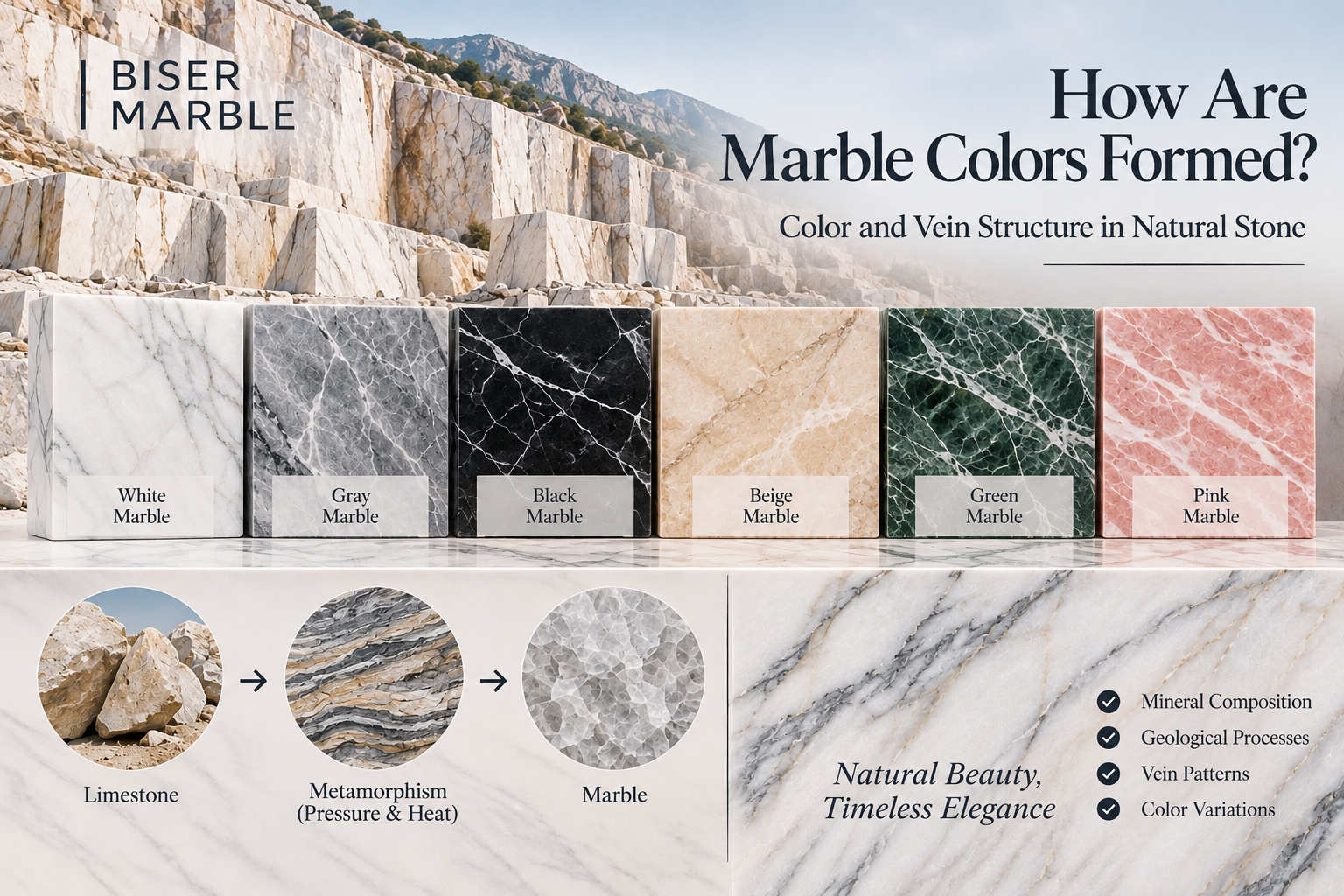
How are marble colors formed? Marble can be found in a wide range of colors, including white, gray, black, beige, green, and pink. These variations are the result of mineral composition, natural impurities, geological processes, and changes that occur over millions of years. The characteristic veins, color transitions, and patterns found in marble are also part of this natural formation process.
One of the most distinctive features of natural stone is that every piece has its own unique appearance. Even within the same type of marble, variations in color intensity, vein density, and pattern distribution can occur. These differences are directly related to the geological history of the area where the stone was formed.
So, why does marble come in different colors? How are marble veins formed? Why do some marble varieties have a relatively uniform white appearance, while others feature prominent gray, brown, or golden veins?
In this article, we explore how marble colors develop, how natural stone veins are formed, and the geological factors behind different marble colors.
1. How Does the Natural Color of Marble Form?
Marble is a metamorphic rock primarily composed of calcite or dolomite minerals. It generally forms when limestone or dolomitic limestone undergoes high temperatures and pressure within the Earth's crust. This process is known as metamorphism.
During metamorphism, the minerals within the original rock recrystallize. The minerals, elements, and other natural components present in the original rock influence the final appearance of the marble.
Marble consisting mainly of relatively pure calcite is generally white or light-colored. However, different minerals and natural impurities incorporated into the rock during its formation can change its color.
The main factors influencing marble color include:
-
Mineral composition: Calcite, dolomite, quartz, mica, and other minerals influence the stone's appearance.
-
Iron compounds: These can contribute to yellow, red, orange, and brown tones.
-
Carbonaceous materials: These may produce gray and black coloration.
-
Clay minerals: These can create gray, greenish, or brownish color variations.
-
Geological processes: Pressure, temperature, mineral movement, and metamorphism can influence the stone's patterns and structure.
Therefore, marble color is not simply a surface characteristic. It reflects the stone's mineralogical composition and geological history.
2. How Do Different Marble Colors Form?
Marble can occur in a wide variety of colors depending on its mineral composition and natural components. Different geological factors contribute to the formation of each color.
How Is White Marble Formed?
White marble generally forms from rocks containing high proportions of calcite or dolomite, with relatively low concentrations of coloring minerals and impurities.
A more uniform mineral composition gives the marble its characteristic white or light-colored appearance.
Some white marble varieties also feature delicate gray veins, subtle cloudy transitions, or variations in crystal structure. These patterns are associated with mineral distribution and geological changes during the stone's formation.
White marble is particularly popular in:
-
Bathroom and kitchen designs
-
Flooring and wall cladding
-
Hotel and residential projects
-
Decorative surfaces
-
Luxury interior applications
How Is Gray Marble Formed?
The gray color of marble is commonly associated with carbonaceous materials, graphite, clay minerals, and other mineral components within the rock.
The concentration and distribution of these materials determine whether the marble appears light gray, medium gray, or dark gray.
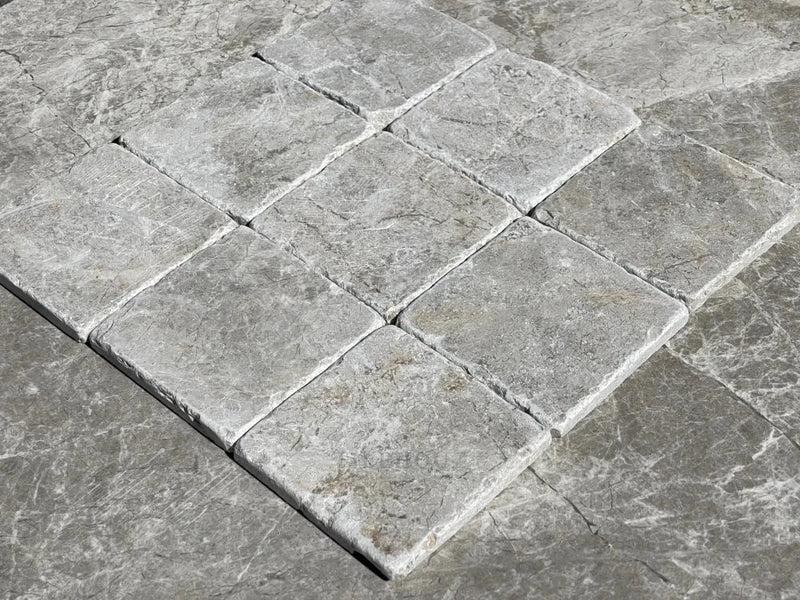
Some gray marble varieties have a relatively uniform appearance, while others feature white veins, darker transitions, and cloudy patterns.
Gray marble is widely used in contemporary architecture due to its neutral and sophisticated appearance.
How Is Black Marble Formed?
The dark color of black marble is generally associated with graphite and carbonaceous materials. In some dark-colored natural stones, pyrite, iron compounds, and other mineral assemblages may also influence the overall appearance.
Black marble can feature white, gray, or golden veins that create a striking contrast against its dark background.
It is frequently used in hotel lobbies, decorative walls, flooring, countertops, and prestigious interior design projects.
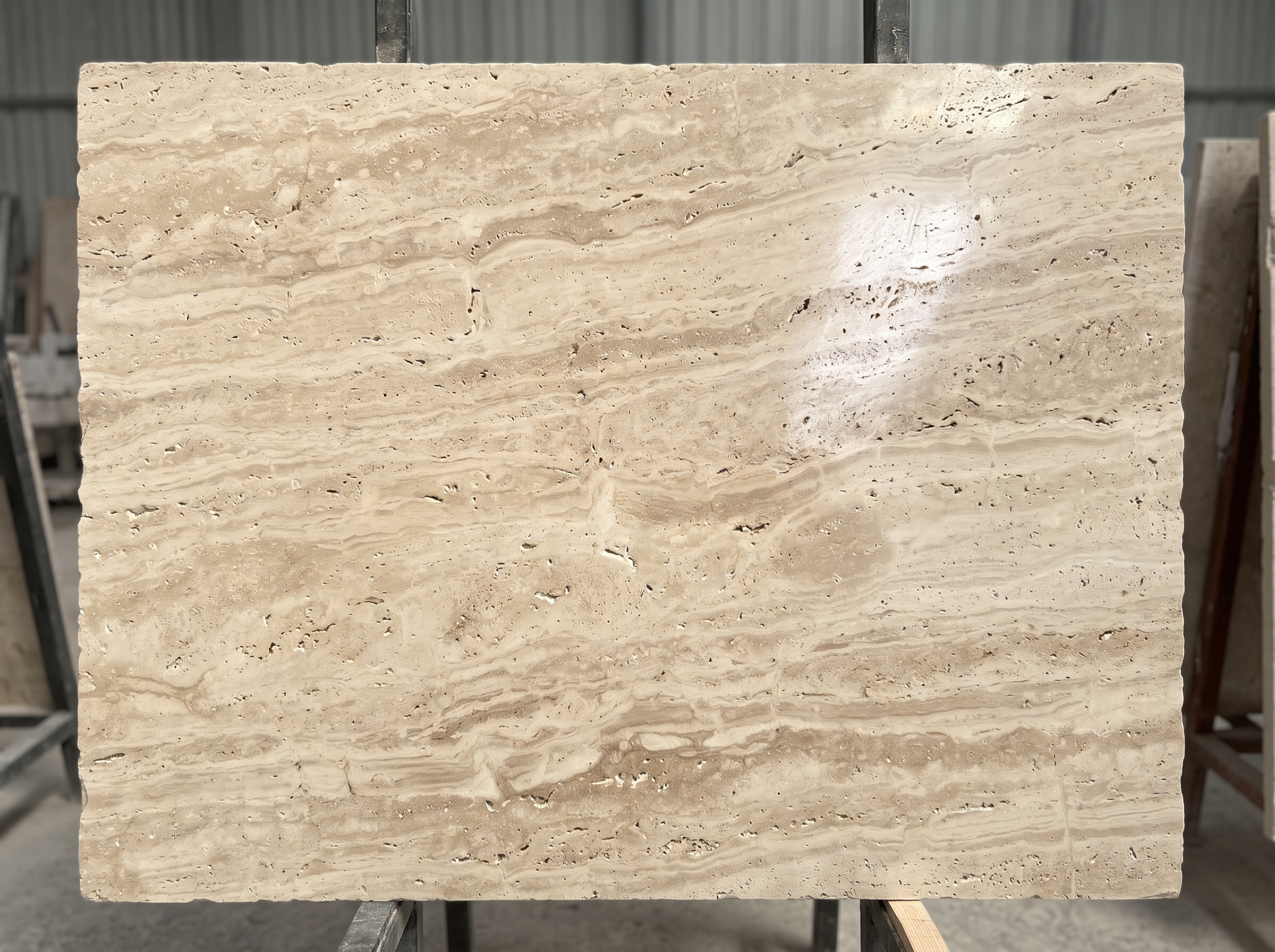
How Is Beige Marble Formed?
The beige color of marble is generally associated with iron-bearing minerals, clay components, and other natural impurities within the rock.
Depending on the mineral composition, beige marble can range from light cream to warm beige and brownish tones.
Some beige marble varieties have a relatively uniform appearance, while others feature prominent veins, fossil traces, and distinctive natural patterns.
Beige marble is particularly popular in classical architecture, residential projects, hotels, flooring, and large-scale interior applications.
How Is Green Marble Formed?
In green-colored marble and marble-like natural stones, minerals such as serpentine, chlorite, and other magnesium- or iron-bearing minerals may contribute to the coloration.
Green shades can range from light green to deep forest green. Some varieties feature white veins and intricate patterns created by different shades of green.
It is important to note that some natural stones commercially marketed as green marble are not technically marble from a geological perspective. Certain varieties may instead be classified as serpentinite or other rock types.
How Are Pink and Red Marble Formed?
Iron oxides can play an important role in the formation of pink and red marble colors. These minerals become distributed throughout the rock, creating different levels of coloration.
Depending on the concentration and distribution of iron compounds, shades can range from pale pink and salmon to terracotta and deep red.
Some varieties have relatively uniform coloration, while others feature white or gray veins.
3. How Are Marble Veins Formed?
One of the most distinctive features of marble is its natural vein structure. Marble veins develop through geological processes that occur during the formation of the rock and throughout its subsequent geological history.
There are two important mechanisms involved in marble vein formation.
1. Mineral Deposition in Fractures
Over time, cracks and fractures may develop within rocks. Mineral-rich fluids can move through these openings and, under suitable conditions, deposit minerals within them.
As these fractures become filled with mineral deposits, vein-like structures develop. Calcite, quartz, and iron oxides can contribute to the formation of such veins.
2. Mineral Distribution and Metamorphic Banding
During metamorphism, minerals within the rock can recrystallize and become redistributed. The combination of areas with different mineral compositions can create layered, banded, or wavy patterns.
Tectonic pressure and deformation may cause these patterns to become folded, irregular, or discontinuous.
Therefore, not all marble veins form in exactly the same way. Some result from mineral deposition in fractures, while others are associated with natural mineral distribution and deformation during metamorphism.
4. What Determines the Color of Marble Veins?
The color of marble veins depends on the types and concentrations of minerals present within them.
Different-colored veins can occur within the same piece of marble because the mineral composition is not necessarily uniform throughout the rock.
Common marble vein colors and their associated minerals or components include:
| Vein Color | Associated Minerals and Components |
|---|---|
| White | Calcite, dolomite, and quartz |
| Gray | Carbonaceous materials, graphite, and clay minerals |
| Yellow | Iron oxides and hydroxides |
| Red | Iron oxides such as hematite |
| Brown | Iron compounds and clay minerals |
| Green | Chlorite, serpentine, and other green minerals |
| Black | Graphite and carbonaceous materials |
This table provides a general guide. It is not possible to identify a specific mineral solely by looking at the color of a vein. Laboratory analysis may be required for accurate mineral identification.
5. Why Are Marble Veins Wavy, Curved, or Irregular?
Natural marble veins do not always follow straight lines. Some varieties feature wavy, curved, discontinuous, or intersecting patterns.
One of the main reasons for these formations is geological deformation during the rock's development.
During tectonic movements, rocks may be exposed to pressure from different directions. This pressure can cause mineral bands and existing veins to fold, change direction, or become fragmented.
The main factors influencing marble vein patterns include:
-
The direction and intensity of pressure on the rock
-
Metamorphic conditions
-
Mineral distribution within the rock
-
Natural fracture and fault systems
-
Subsequent geological movements
As a result, some marble varieties feature thin, parallel veins, while others display broad, curved, and irregular patterns.
6. Why Do Stones from the Same Marble Quarry Have Different Colors?
One of the most important characteristics of natural stone is that every block and slab can have its own unique pattern.
Even blocks extracted from the same marble quarry may show differences in color and vein structure. This is because the entire geological deposit is not necessarily uniform in its mineralogical composition.
Blocks extracted from different areas of a quarry may show variations in:
-
Main color tones
-
Vein density
-
Vein direction and thickness
-
Mineral distribution
-
Natural color transitions and markings
In addition, slabs cut from the same block may have different appearances depending on the cutting direction.
For this reason, selecting natural marble based solely on its commercial name or general color description may not be sufficient. It is important to examine the actual slabs intended for the project.
7. How Does the Cutting Direction Affect Marble Vein Patterns?
The cutting direction of marble directly influences the patterns visible on the finished slab. Different cutting directions can produce noticeably different appearances, even when the slabs originate from the same block.
In the natural stone industry, cutting methods are important because they determine how the natural vein structure appears on the surface.
Vein Cut
Vein cut refers to cutting the stone along its natural vein direction. This method generally produces more linear, parallel, or elongated vein patterns.
Cross Cut
Cross cut involves cutting the stone across its natural vein direction. Instead of predominantly linear patterns, this method can reveal more cloudy, circular, or irregular designs.
These two cutting methods allow the same natural stone to achieve different visual characteristics and meet various architectural and design preferences.
8. Can Marble Color and Vein Structure Change Over Time?
The natural color and vein structure of marble develop during its geological formation. However, several factors can affect the stone's appearance after extraction and processing.
In particular, usage conditions and surface treatments can influence how marble looks.
Surface Treatments: Polishing, honing, brushing, and other finishing processes change how the stone reflects light, making colors appear lighter, darker, or more matte.
Moisture: When marble becomes wet, water within its pores may temporarily darken its appearance.
Oxidation: Certain iron-bearing minerals can react with oxygen and moisture, potentially causing color changes over time.
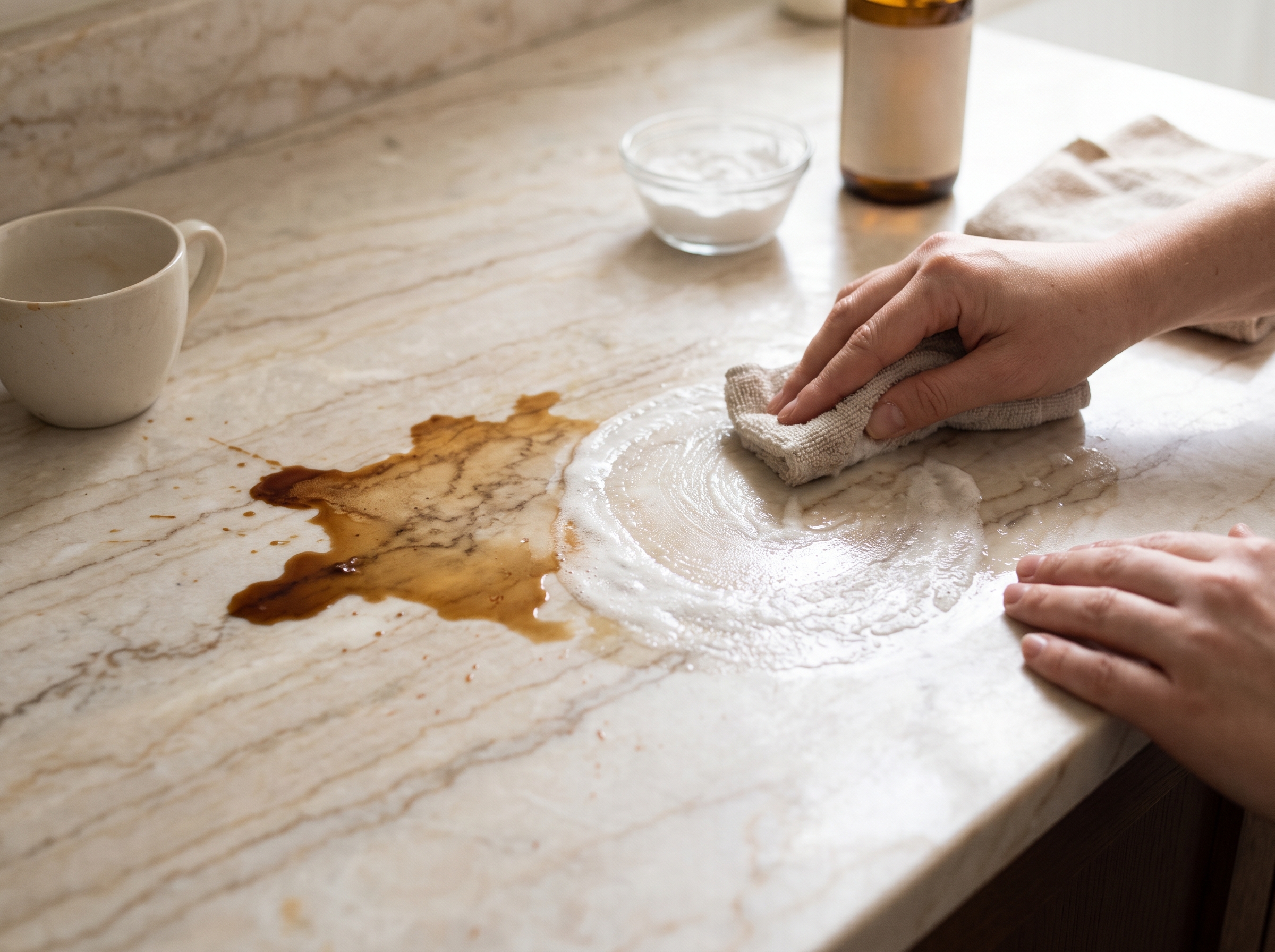
Staining: Oil, acidic substances, and other contaminants can cause surface stains or damage.
Maintenance and Protection: Using suitable cleaning and protective products helps preserve the natural appearance of marble.
To maintain the appearance of marble over time, cleaning and maintenance methods should be selected according to the stone's mineral composition and intended application.
9. How Do Marble Color and Vein Patterns Influence Architectural Design?
Selecting marble involves much more than choosing a color. The vein structure, pattern density, surface finish, and slab dimensions also influence the overall appearance of an architectural project.
Different marble colors and vein patterns offer a variety of possibilities for different design concepts.
| Marble Appearance | Common Applications |
|---|---|
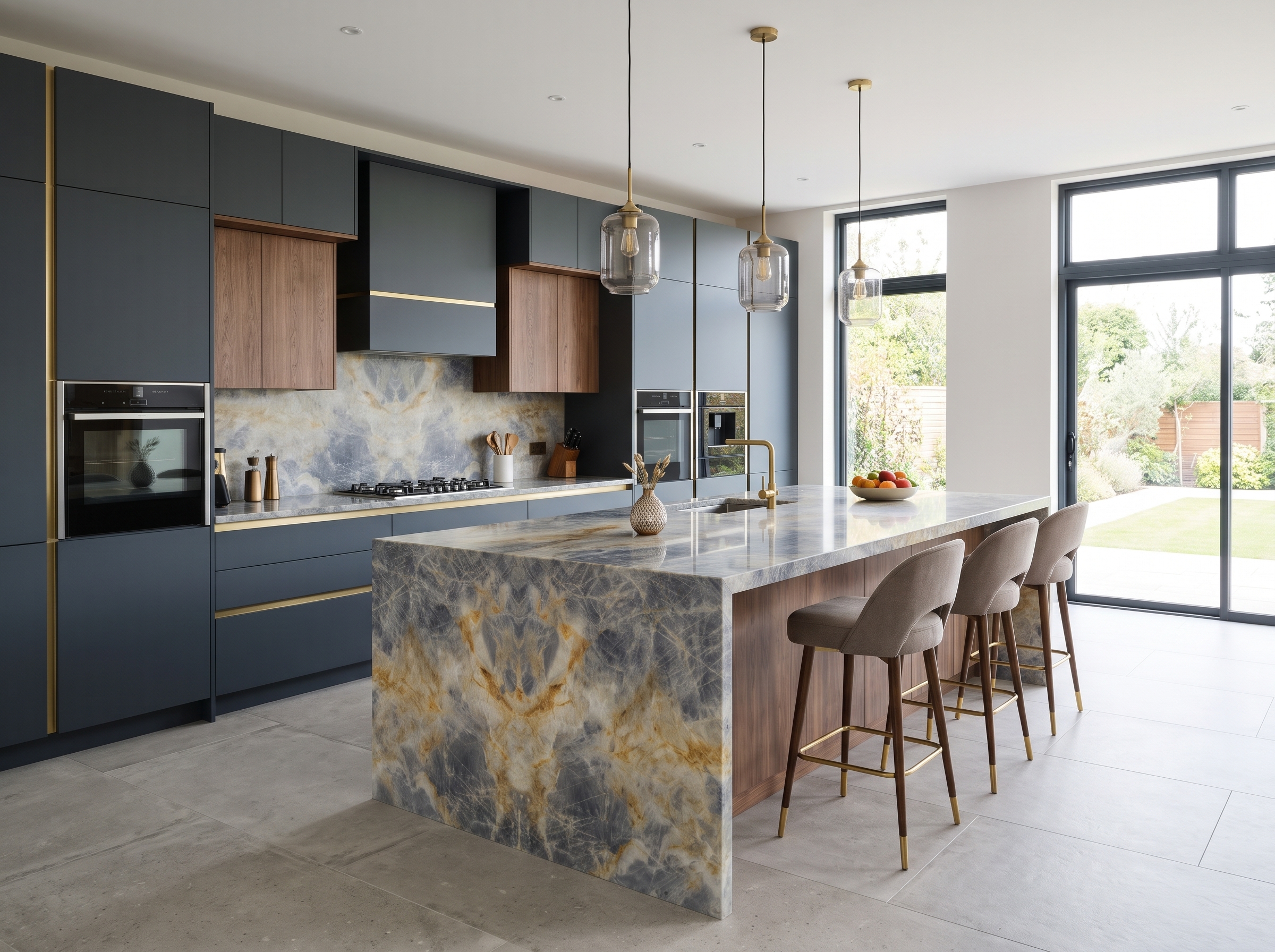
| White and light tones | Bathrooms, kitchens, wall cladding, and flooring |
| Gray tones | Contemporary interiors, hotels, and commercial projects |
| Black and dark tones | Decorative walls, lobbies, and luxury interiors |
| Beige and cream tones | Residential projects, hotels, and classical architecture |
| Green tones | Decorative surfaces and distinctive architectural applications |
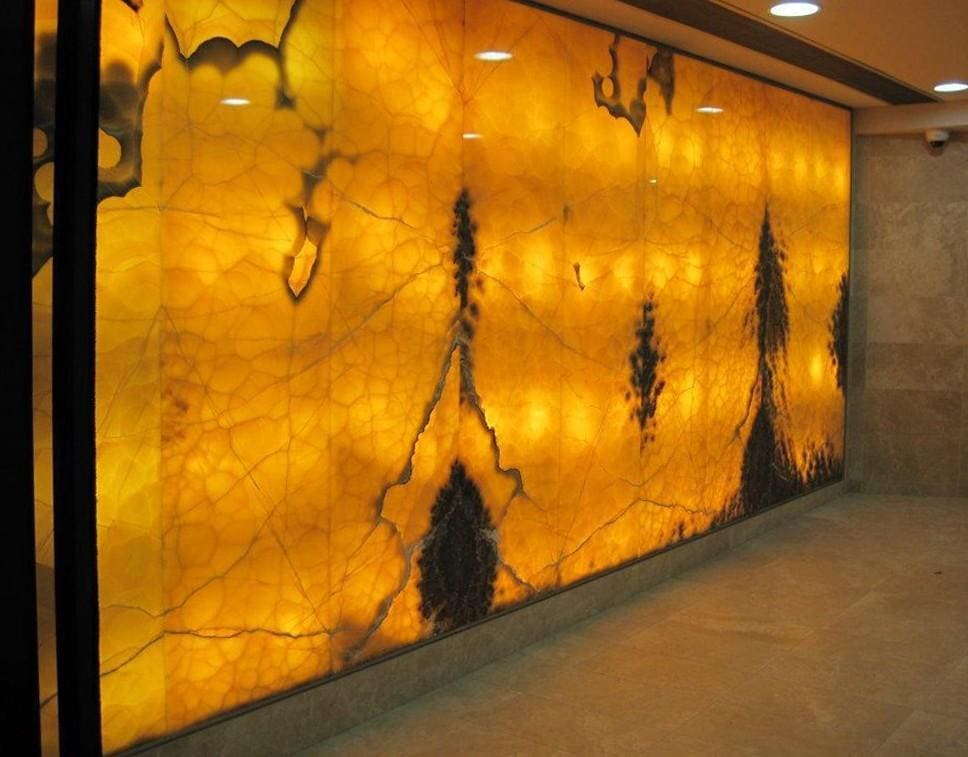
| Strongly veined marble | Wall panels, reception areas, and feature walls |
Vein continuity and the visual harmony between slabs become particularly important in large surface applications.
Bookmatching is a technique in which two adjacent marble slabs are positioned as mirror images of each other. This creates a symmetrical and visually striking design by highlighting the natural vein patterns.
10. What Should You Consider When Selecting Natural Marble?
When selecting natural marble, relying solely on photographs or small samples may not always be sufficient. Evaluating actual slabs is particularly important for large-scale architectural projects.
The following factors should be considered when choosing marble:
-
Color Consistency: Evaluate whether the main color tones of the slabs are visually compatible with one another.
-
Vein Density: Consider the frequency, thickness, and direction of the veins in relation to the design requirements.
-
Slab Selection: Examine how the selected slabs will look together, especially when used across large surfaces.
-
Surface Finish: Choose between polished, honed, brushed, or other available finishes according to the intended application.
-
Technical Properties: Evaluate physical properties such as water absorption, density, flexural strength, and abrasion resistance according to the application.
-
Intended Use: Consider the specific requirements of indoor, outdoor, flooring, and wall applications.
Variations in color and vein patterns are natural characteristics of marble. Therefore, reviewing actual slab photographs and, whenever possible, inspecting the selected blocks before placing an order is recommended.
11. Frequently Asked Questions About Marble Colors
Why Is Natural Marble White?
Marble containing predominantly pure calcite or dolomite generally appears white or light-colored when coloring minerals and impurities are present in relatively low concentrations. Other minerals within the rock can create different colors.
Why Does Marble Turn Yellow?
Yellow coloration in marble may be associated with naturally occurring iron compounds. Surface contamination, unsuitable cleaning products, and oxidation can also contribute to yellow staining over time.
Are Marble Veins Natural?
Yes. Most marble veins are formed through natural geological processes. Mineral deposition, mineral distribution, and metamorphic deformation all contribute to the development of vein patterns.
Why Do Vein Patterns Differ Between Marble Slabs of the Same Type?
The original block, cutting direction, and mineral distribution within the rock can vary. As a result, slabs sold under the same commercial marble name may have different vein patterns.
Is Marble Color Permanent?
The natural color of marble is determined by its mineralogical composition. However, oxidation of iron-bearing minerals, staining, surface wear, and improper maintenance can affect its appearance over time.
Does the Cutting Direction Change Marble Vein Patterns?
Cutting does not alter the stone's natural geological structure, but it determines which veins and patterns become visible on the slab surface. Different cutting directions can reveal different patterns from the same block.
What Is the Difference Between Marble and Natural Stone?
Natural stone is a broad category that includes different rock types such as marble, granite, travertine, onyx, and quartzite. Each rock type has a different mineral composition and geological formation process, resulting in distinct colors and patterns.
Conclusion: Every Marble Has Its Own Natural Story
Marble colors and vein patterns are the result of geological processes that take place over millions of years. Mineral composition, iron oxides, carbonaceous materials, metamorphism, and natural variations within the rock determine whether marble appears white, gray, black, beige, green, pink, or in other distinctive shades.
The shape, direction, and density of natural veins give every stone block its own unique character. This is why natural marble is more than just a building material; it is a distinctive design element that offers unique patterns and visual characteristics in every slab.
Biser Marble offers natural stone solutions for architectural and decorative projects, including marble blocks, slabs, and cut-to-size products in a variety of colors and patterns. Explore our natural stone collections and discover options that meet your project's requirements.
Bring the unique character of natural stone into your projects.