Does Marble Absorb Water? Porosity, Water Absorption and Protection Methods
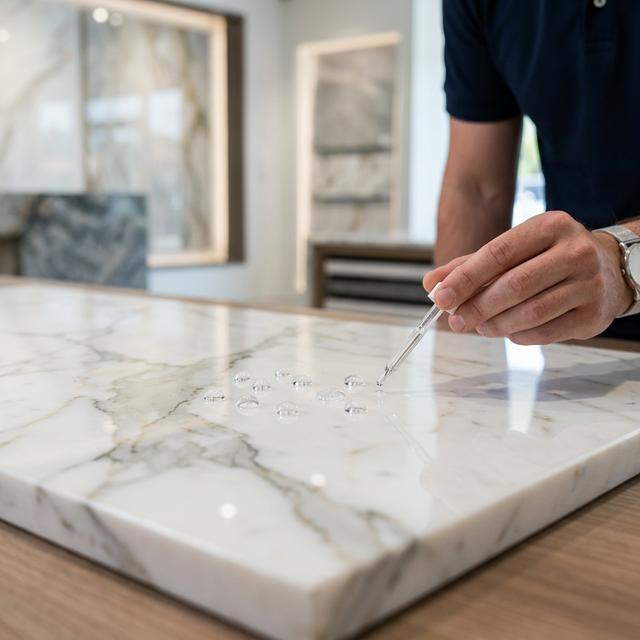
Does marble absorb water? Yes, marble can absorb a certain amount of water due to its naturally porous structure. However, the water absorption rate of marble varies depending on its mineral composition, porosity, microcracks and other physical characteristics. Therefore, not all marble varieties absorb the same amount of water or offer the same level of resistance to moisture.
Water absorption is an important factor when selecting marble for bathrooms, kitchens, flooring, wall cladding, countertops, shower areas and outdoor applications. With the right marble selection, appropriate surface treatment and regular maintenance, the risk of moisture-related problems and staining can be reduced.
In this article, we explore marble's water permeability, the concepts of porosity and water absorption, the effects of water on marble surfaces and the methods that can be used to protect natural marble.
Does Marble Absorb Water?
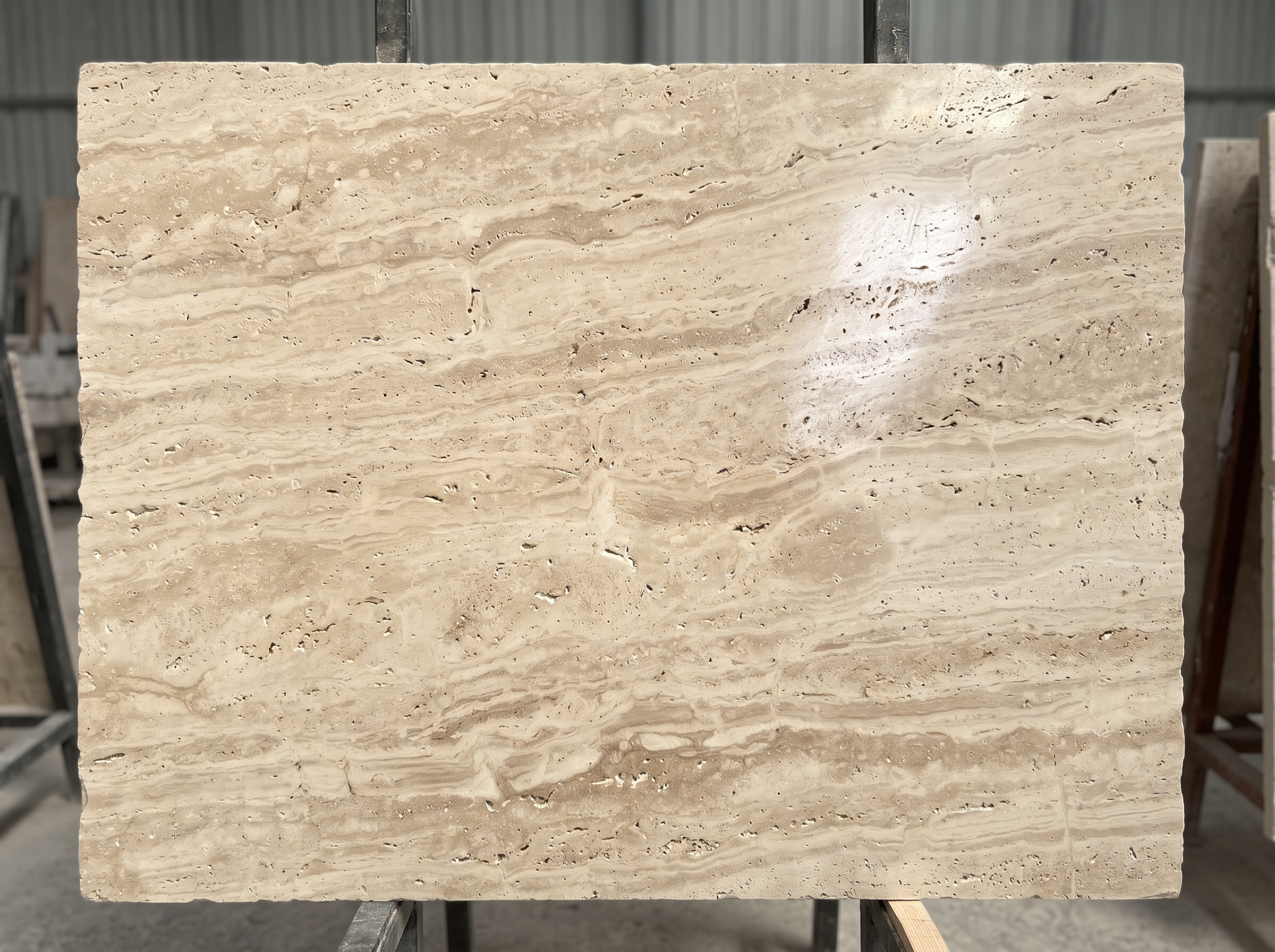
Marble is a natural stone that may develop different mineral structures, crystalline textures and microscopic voids during its formation. These structural characteristics directly influence how marble behaves when exposed to water. Marble is not completely waterproof; while some marble varieties may retain water on their surface, others can absorb water through their pores.
Whether marble absorbs water depends not only on the type of stone but also on the duration of water exposure, the surface finish and the stone's natural pore structure.
The key characteristics of marble regarding water absorption include:
-
Naturally porous structure: However, the porosity level varies from one marble variety to another.
-
Water absorption: Water may penetrate pores and microscopic openings on the surface or within the stone.
-
Variable water resistance: Mineral composition, density and microcracks can affect the stone's resistance to moisture.
-
Protection through treatment: Suitable impregnating sealers can penetrate the pores and help reduce water absorption.
Marble does not necessarily suffer damage every time it comes into contact with water. However, prolonged exposure to moisture, standing water, unsuitable cleaning products and unprotected surfaces may lead to various problems over time.
What Is the Porosity of Marble?
Porosity refers to the ratio of the total volume of voids within a material to the material's overall volume. In natural stones, these voids may exist at a microscopic level or as larger structural openings.
Marble is a metamorphic rock primarily composed of calcite or dolomite minerals. During metamorphism, minerals recrystallize and the stone's texture develops. This process may influence the marble's density, crystalline structure, microcracks and porosity.
Pores and microcracks within marble can create pathways through which water may penetrate the stone. Consequently, two marble varieties with similar appearances may exhibit different water absorption rates.
Factors affecting marble porosity
|
Factor |
Effect on marble |
|---|---|
|
Mineral composition |
Mineral composition and crystalline texture influence the stone's physical properties. |
|
Crystal size |
The size, distribution and structural relationships between crystals can affect the stone's texture. |
|
Microcracks |
Microcracks can create additional pathways for water penetration. |
|
Natural formation |
Metamorphic processes and the stone's geological history may influence its porosity. |
|
Surface finish |
Polishing, honing and other treatments can alter the surface appearance and its interaction with water. |
|
Protective treatments |
Suitable products can help reduce the rate of water absorption and the risk of staining. |
Porosity and water absorption are related concepts, but they are not identical. The total volume of pores, whether those pores are interconnected and their size all influence how water moves through the stone.
What Is the Water Absorption Rate of Marble?
The water absorption rate of marble is determined by measuring the amount of water absorbed by the stone under specific test conditions relative to its dry weight. It is an important parameter used to evaluate the physical performance of natural stone.
Water absorption is generally expressed as a percentage (%). Measured under defined laboratory conditions, this value provides an indication of how marble may behave when exposed to water.
Do All Marble Types Absorb the Same Amount of Water?
No. Different marble varieties may have different mineral compositions, crystalline structures, densities, porosity levels and microcrack characteristics. These differences directly influence their water absorption behavior.
Some marble varieties have relatively low water absorption rates, while others may absorb more water. This characteristic cannot be reliably determined based solely on the stone's color or veining.
For example, white, grey, beige or dark-colored marbles cannot be categorically classified according to their water absorption rates based on color alone. Even stones within the same color group may have significantly different physical properties.
Therefore, when purchasing marble or selecting stone for a project, it is recommended to review the relevant technical data rather than relying exclusively on visual characteristics.
Does Marble Change Color When It Absorbs Water?
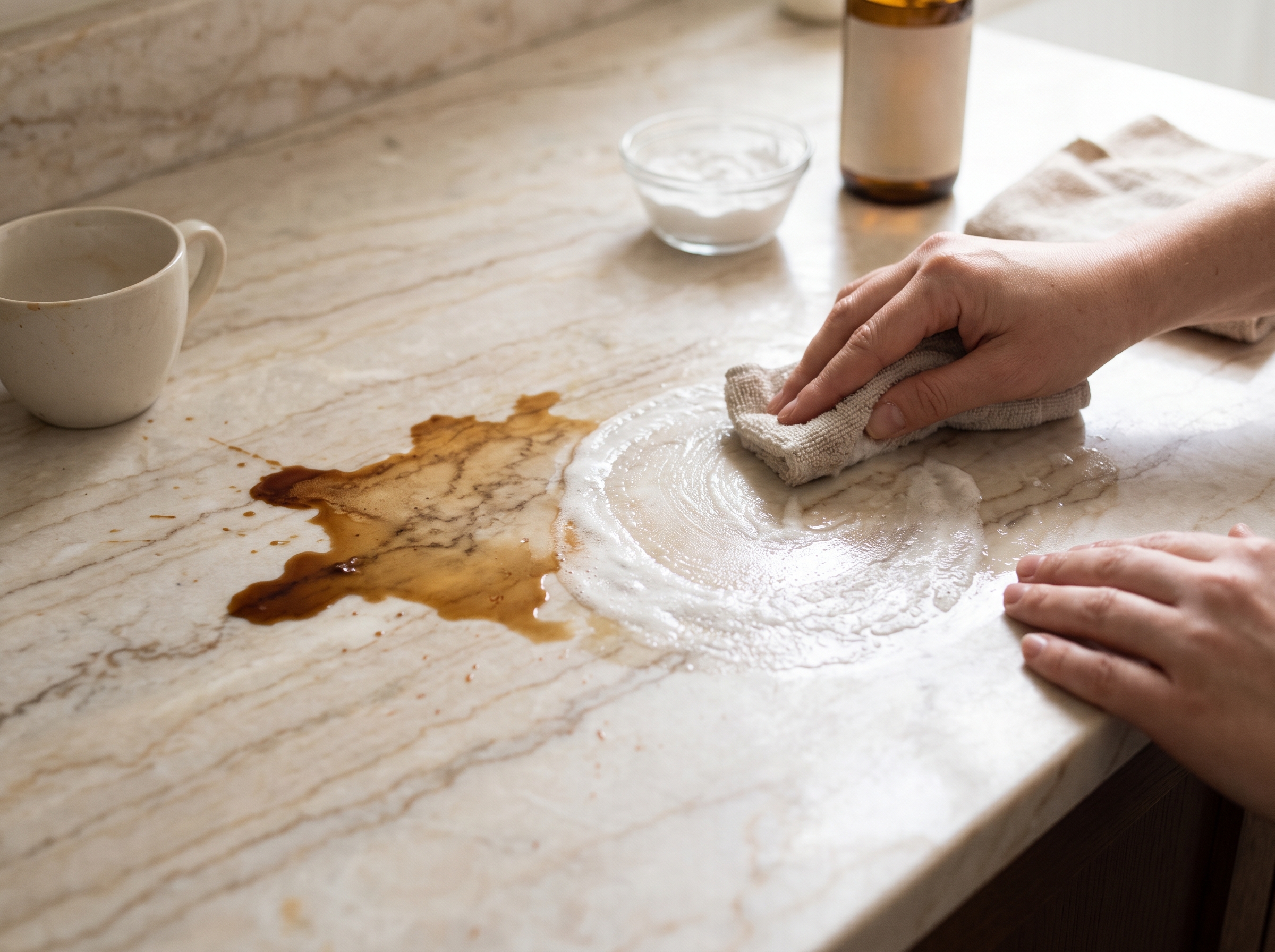
When marble absorbs water, some surfaces may temporarily change color. As water penetrates the pores, it alters the way light interacts with the surface and the stone's internal structure, potentially making the marble appear darker.
This may result in darker patches or tonal differences between wet areas and the dry parts of the marble.
Water-related discoloration may occur under the following conditions:
-
The stone has relatively high natural porosity.
-
The marble has not been treated with a suitable protective sealer.
-
The surface remains wet for an extended period.
-
Water accumulates on the stone for a prolonged time.
-
The water contains minerals or contaminants.
Temporary darkening does not necessarily indicate permanent damage. The absorbed water may evaporate over time, allowing the marble to return to its original appearance. However, minerals, dirt, chemicals or other substances carried by the water may leave permanent marks on the surface.
For this reason, preventing prolonged water accumulation and maintaining marble surfaces properly are important.
What Problems Can Occur When Marble Is Exposed to Water?
Marble can demonstrate a certain level of water resistance. However, continuous moisture exposure, incorrect maintenance and unsuitable cleaning methods may cause several problems on marble surfaces.
1. Water stains and darkening
Water absorption may cause temporary darkening on marble surfaces. This is generally associated with water penetrating the stone's pores.
The marble may return to its original appearance once the water evaporates. However, minerals or contaminants carried by the water may leave residue on the surface.
2. Limescale and mineral deposits
In areas where hard water is used, particularly bathrooms, showers, sinks and kitchens, mineral deposits may develop as water evaporates.
These deposits may create whitish marks, dull patches or other visible residue on marble surfaces. Since marble often contains calcium carbonate, using acidic cleaning products to remove limescale can also damage the stone.
3. Dullness on marble surfaces
Marble may contain carbonate minerals such as calcite or dolomite, making it sensitive to acids. Vinegar, lemon juice and acidic cleaning products may cause chemical etching on marble surfaces.
This type of damage is not necessarily caused by water itself but may result from inappropriate cleaning products used alongside water.
4. Mold and moisture-related problems
Marble itself is not an organic material that supports mold growth. However, grout, silicone sealants, adhesives and organic dirt accumulated around marble surfaces may provide suitable conditions for mold development when moisture is present.
In bathrooms and shower areas, proper ventilation, drying surfaces and regularly inspecting grout and sealants are important.
5. Freeze-thaw effects in outdoor applications
Marble used outdoors may be exposed to rain, snow and other environmental conditions. Water that penetrates the stone may freeze when temperatures fall below freezing.
Repeated freeze-thaw cycles may contribute to the development of microcracks, surface deterioration and material loss in susceptible stones or poorly designed applications.
For outdoor marble applications, freeze-thaw resistance and installation details should be evaluated alongside water absorption.
Can Marble Be Used in Bathrooms? Does Marble Absorb Water in Showers?
Marble can be used in bathrooms, shower areas, around sinks and in other wet spaces. With appropriate stone selection, proper installation, waterproofing and maintenance, marble can be an aesthetically appealing and functional material for bathroom applications.
However, marble should not be considered inherently waterproof. In areas such as showers, where the stone is regularly exposed to water, its natural water absorption characteristics must be taken into account.
What should you consider when using marble in bathrooms?
-
Waterproofing is essential: Marble cladding is not a substitute for structural waterproofing. Appropriate waterproofing systems must be installed in showers and other wet areas.
-
Choose suitable marble: The stone's water absorption, durability and surface characteristics should be appropriate for the intended application.
-
Consider the surface finish: Slip resistance should also be evaluated when selecting a surface finish for wet areas.
-
Use suitable marble sealers: Appropriate impregnating sealers may help reduce water absorption and staining.
-
Maintain the surface regularly: Standing water, soap residue and dirt should be cleaned regularly.
-
Ensure proper ventilation: Adequate bathroom ventilation helps prevent persistent moisture conditions.
Is it risky to use marble in shower areas?
Using marble in shower areas is not inherently risky. However, prolonged water exposure, improper waterproofing, inadequate drainage slopes, unsuitable grout materials and failure to consider the stone's physical characteristics may lead to installation and maintenance problems.
When installing marble in showers, several factors should be considered together, including proper slope to prevent water accumulation, waterproofing, suitable installation materials and stone selection based on the intended application.
How Can Marble Be Protected from Water?
Various protection methods can be applied to marble surfaces to help reduce water absorption and the risk of staining. These methods do not completely alter the stone's natural structure or make it entirely waterproof. Instead, they help improve its resistance to water and certain contaminants.
1. Applying marble sealers and impregnating treatments
Marble sealers are products designed to penetrate the pores of natural stone and help reduce the absorption of water and certain contaminants.
These products are commonly referred to as impregnating sealers or penetrating sealers. They penetrate the stone's pores and may help reduce water absorption and staining.
The benefits of applying a suitable marble sealer include:
-
Helps reduce water absorption.
-
Slows the penetration of certain stains into the stone.
-
Can preserve the marble's natural appearance.
-
May make routine maintenance easier.
-
Can contribute to the long-term preservation of the stone when used appropriately.
Protective treatments do not make marble completely waterproof. Their performance depends on the marble variety, application method, product characteristics and conditions of use.
2. Cleaning marble surfaces regularly
Regular cleaning helps prevent water, soap, dirt and other residues from accumulating on marble surfaces for extended periods.
When cleaning marble:
-
Use pH-neutral cleaners suitable for natural stone.
-
Avoid acidic cleaning products.
-
Do not apply vinegar or lemon juice directly to marble surfaces.
-
Avoid harsh abrasive materials.
-
Prevent standing water from remaining on the surface after cleaning.
Using appropriate cleaning products is particularly important for marble surfaces in kitchens and bathrooms, where maintaining the stone's appearance is a priority.
3. Preventing water accumulation
Prolonged water accumulation on marble surfaces may increase the risk of water absorption and staining.
To help prevent this:
-
Ensure proper slopes in shower areas.
-
Avoid leaving standing water on kitchen countertops.
-
Dry water around sinks regularly.
-
Consider drainage systems for outdoor marble applications.
4. Protecting marble surfaces periodically
The effectiveness of marble sealers may decrease over time. Usage intensity, cleaning methods, frequency of water exposure and the properties of the applied product can all influence how long the protection lasts.
Protective treatments should therefore be inspected periodically and reapplied when necessary.
The timing of reapplication should not be determined solely by a fixed calendar schedule. The stone's usage conditions and the manufacturer's recommendations should also be considered.
Does Polished or Honed Marble Absorb Less Water?
The differences between polished and honed marble are not limited to appearance. Surface treatments can affect surface roughness, light reflection and, in certain circumstances, the stone's interaction with water.
However, it would not be accurate to claim that polished marble always absorbs less water than honed marble.
|
Feature |
Polished marble |
Honed marble |
|---|---|---|
|
Appearance |
Glossy and reflective |
Matte or semi-matte |
|
Surface |
Smooth-looking and glossy |
Lower gloss, more natural appearance |
|
Water absorption |
Depends on the stone's structure and treatment |
Depends on the stone's structure and treatment |
|
Stain behavior |
Depends on the stone's structure and surface characteristics |
Depends on the stone's structure and surface characteristics |
|
Applications |
Flooring, walls, countertops and decorative spaces |
Flooring, walls, countertops and various interior applications |
Polishing creates a smoother, more reflective appearance, whereas honing produces a matte finish. However, the internal porosity of marble cannot be determined solely by its surface finish.
To assess marble's water absorption performance, technical test results should be considered alongside the surface treatment.
Is Outdoor Marble Affected by Rainwater?
Marble used outdoors is exposed to rain, snow, moisture, temperature fluctuations and sunlight. Its resistance to these conditions depends on the stone's physical properties and the details of the installation.
Rainwater may cause temporary darkening on marble surfaces. In particular, water penetrating the stone's pores may make the marble appear different until it dries.
The following factors should be considered in outdoor marble applications:
-
Selecting marble suitable for outdoor conditions.
-
Evaluating water absorption and freeze-thaw resistance.
-
Providing appropriate drainage and water discharge systems.
-
Designing surface slopes to prevent water accumulation.
-
Using suitable natural stone sealers when necessary.
-
Ensuring installation and joint details are appropriate for outdoor conditions.
Low water absorption alone is not sufficient to determine whether marble is suitable for outdoor use. Freeze-thaw resistance, mechanical properties and environmental conditions must also be taken into account.
How Is the Water Absorption Rate of Marble Tested?
The water absorption characteristics of marble can be determined through standardized laboratory testing. These tests are used to evaluate the physical properties of natural stone and compare different stone varieties from a technical perspective.
In Europe, EN 13755 defines the test method for determining water absorption of natural stone under atmospheric pressure.
During such tests, samples are prepared under specified conditions, their dry weights are determined and they are exposed to water according to the test procedure. The samples are then weighed, and the water absorption rate is calculated.
Marble's water absorption rate can be an important consideration when selecting materials for:
-
Bathroom and shower wall or floor coverings.
-
Kitchen countertops.
-
Interior flooring.
-
Outdoor flooring and facade applications.
-
Pool surrounds and other moisture-exposed areas.
-
Architectural and decorative natural stone projects.
Technical test results provide an important reference when evaluating whether marble is suitable for a particular application. However, a single test result cannot guarantee performance under every usage condition.
How to Choose Marble with a Low Water Absorption Rate?
A low water absorption rate may be an important selection criterion when choosing marble. Particularly in applications involving frequent contact with water, the stone's technical properties should be suitable for the project requirements.
When selecting marble with a relatively low water absorption rate, consider the following:
-
Review the technical data. Obtain information about the marble's water absorption rate, density and other physical properties.
-
Define the intended application. Indoor, outdoor, bathroom, kitchen and facade applications may have different requirements.
-
Choose the appropriate surface finish. Evaluate whether polished, honed or other finishes are suitable for the intended use.
-
Consider waterproofing and installation details. The installation system is just as important as the stone's physical characteristics.
-
Evaluate protective treatments. Consider a natural stone sealer suitable for the stone and its usage conditions.
When selecting marble, its technical characteristics, intended application and maintenance requirements should be evaluated together rather than focusing exclusively on appearance.
Frequently Asked Questions (FAQ)
Is marble completely waterproof?
No. Marble may be porous due to its natural structure and can absorb water. Its water absorption rate varies depending on the marble variety, mineral composition, porosity and surface characteristics.
Does marble darken when it absorbs water?
Yes. Marble may temporarily darken when it absorbs water. Water penetrating the pores can alter how light interacts with the stone. As the water evaporates, the marble may return to its original appearance.
Does marble sealer prevent water penetration?
Marble sealers can help reduce water absorption and the risk of staining. However, most impregnating sealers do not make marble completely waterproof. Their performance depends on the stone's structure, application method and usage conditions.
Can marble be used in bathrooms?
Yes. Marble can be used in bathrooms and shower areas. However, proper stone selection, waterproofing, installation, drainage, maintenance and protective treatments are important.
Can water stains form on marble kitchen countertops?
Yes. Water absorption may cause temporary darkening on marble countertops, while minerals in the water may leave residue. Regular cleaning and suitable protective treatments can help reduce these risks.
Is marble damaged by rain?
Marble may absorb rainwater and experience temporary discoloration. In outdoor applications, freeze-thaw cycles, drainage and other environmental conditions should also be evaluated.
Which cleaning products should be used on marble?
pH-neutral cleaners specifically suitable for natural stone are recommended. Vinegar, lemon juice and other acidic products may cause chemical etching on marble surfaces.
How can the water absorption rate of marble be determined?
The water absorption rate of marble can be determined through laboratory testing. Technical product documents and test reports can be used to review the stone's water absorption characteristics.
Discover the Natural Characteristics and Technical Properties of Marble
Marble is a valued natural stone used in architectural projects thanks to its geological formation, mineral composition, distinctive textures and diverse color variations. Although water absorption is an important factor in determining its suitability for different applications, appropriate stone selection, proper installation and regular maintenance can help marble remain a durable and elegant material for years to come.
At Biser Marble, we invite you to explore the distinctive characteristics of natural marble, different surface finishes and natural stone solutions for architectural projects.
Explore our natural marble products and discover stone options suitable for your project.