Crema Marfil Marble: Characteristics, Uses, Price and How to Choose the Right Stone
Crema Marfil marble is one of the most recognizable cream-colored natural stones in the international stone market. Its warm beige background, subtle veining, and versatile appearance have made it a popular choice for residential interiors, hotels, commercial buildings, flooring, wall cladding, bathrooms, staircases, and other architectural applications.
For architects, interior designers, contractors, developers, distributors, and natural stone buyers, understanding the characteristics of Crema Marfil marble is important before selecting it for a project.
Its appearance can vary considerably depending on the quarry, block, grade, and processing. Therefore, buyers should evaluate not only the color of a sample but also the consistency, veining, technical characteristics, available formats, and intended application.
This guide explains what Crema Marfil marble is, where it comes from, its characteristics, common applications, slab and tile options, price factors, maintenance requirements, and how it compares with other beige marbles.
What Is Crema Marfil Marble?
Crema Marfil is a cream-to-beige colored natural stone traditionally associated with quarries in the Alicante region of Spain.
The stone is recognized for its warm cream background, which can range from relatively light beige to deeper honey and creamy tones. Depending on the specific quarry and extraction area, the material can also display variations in veining, fossils, mineral markings, and natural patterns.
This natural variation is one of the defining characteristics of natural stone.
Crema Marfil has been used extensively in architectural and interior design projects because its neutral color can complement many different design styles.
It can be combined with:
-
Natural wood
-
White materials
-
Dark metals
-
Brass
-
Glass
-
Neutral fabrics
-
Dark stone
-
Contemporary furniture
This versatility has helped make Crema Marfil a well-known material among architects, designers, fabricators, and stone distributors.
Where Does Crema Marfil Marble Come From?
Crema Marfil is primarily associated with the Alicante province of Spain, particularly the marble-producing areas around Pinoso and nearby locations.
The geological characteristics of the region have contributed to the development of several commercially important cream and beige natural stones.
It is important to note that "Crema Marfil" is not simply a generic name for every beige marble.
The term is strongly associated with a specific Spanish marble and its established commercial identity.
For international buyers, this distinction is important because many beige natural stones from different countries can have similar colors while having completely different geological origins, technical properties, patterns, and commercial names.
What Does Crema Marfil Marble Look Like?
The most recognizable characteristic of Crema Marfil is its warm cream-beige background.
However, the appearance of individual slabs can vary.
Depending on the material, buyers may see:
-
Light cream backgrounds
-
Warm beige tones
-
Honey-colored areas
-
Fine veins
-
Stronger veins
-
Fossil structures
-
Mineral markings
-
Natural movement
-
Subtle tonal variation
Because natural stone is formed through geological processes rather than manufactured to a uniform color, variation between blocks and slabs should be expected.
For projects requiring visual consistency, it is therefore advisable to review the actual material intended for production.
Crema Marfil Marble Characteristics
Crema Marfil is valued primarily for its aesthetic versatility, but technical characteristics are equally important when selecting it for a construction or interior project.
Depending on the specific material and source, buyers should consider:
Color
The stone generally has a warm cream or beige appearance.
Veining
Veining can range from subtle and fine to more visible natural patterns.
Texture
The visual texture depends on the individual block and finishing process.
Surface Finish
Crema Marfil can be processed with different surface finishes depending on the application.
Common finishes include:
-
Polished
-
Honed
-
Brushed
-
Tumbled
-
Sandblasted
The appropriate finish depends on the intended use and required appearance.
Natural Variation
Variations in color, veins, mineral structures, and fossils are normal characteristics of natural stone.
This should be considered when calculating quantities and approving materials for a project.
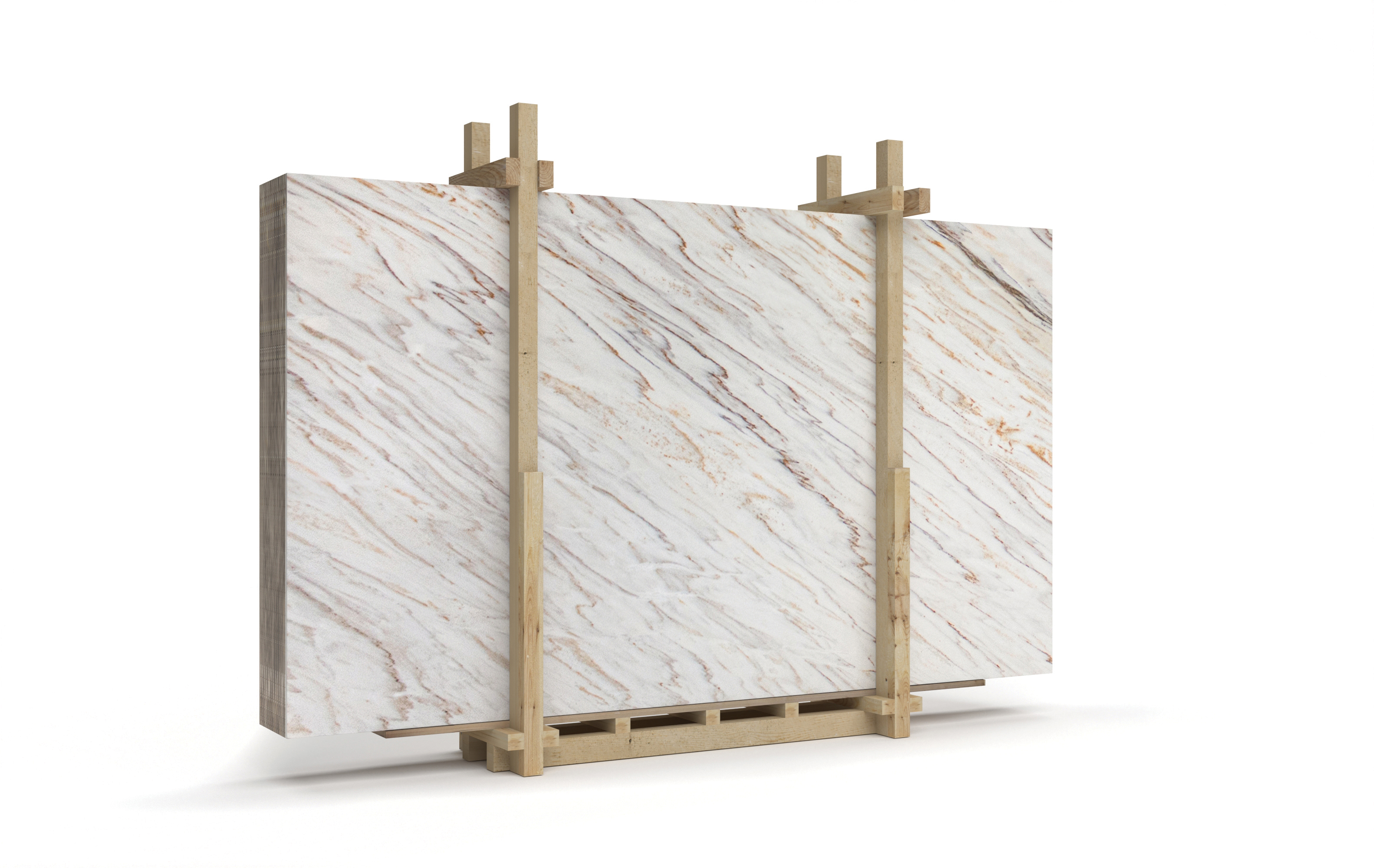
Crema Marfil Marble Slabs
Crema Marfil marble slabs are widely used for architectural and interior applications where larger continuous surfaces are required.
Slabs can be fabricated for:
-
Kitchen countertops
-
Bathroom vanities
-
Wall panels
-
Flooring
-
Reception desks
-
Hotel interiors
-
Commercial interiors
-
Decorative surfaces
Large-format slabs allow designers to showcase the natural pattern of the stone while reducing the number of visible joints.
For heavily veined or visually active materials, slab selection is particularly important.
Buyers should request current slab photographs and, for large projects, consider selecting the slabs according to a layout plan.
Crema Marfil Marble Tiles
Crema Marfil marble tiles are another common format.
Tiles can be produced in different dimensions and finishes depending on the manufacturer and project requirements.
Typical applications include:
-
Residential flooring
-
Hotel flooring
-
Bathroom walls
-
Bathroom floors
-
Interior wall cladding
-
Decorative areas
-
Commercial spaces
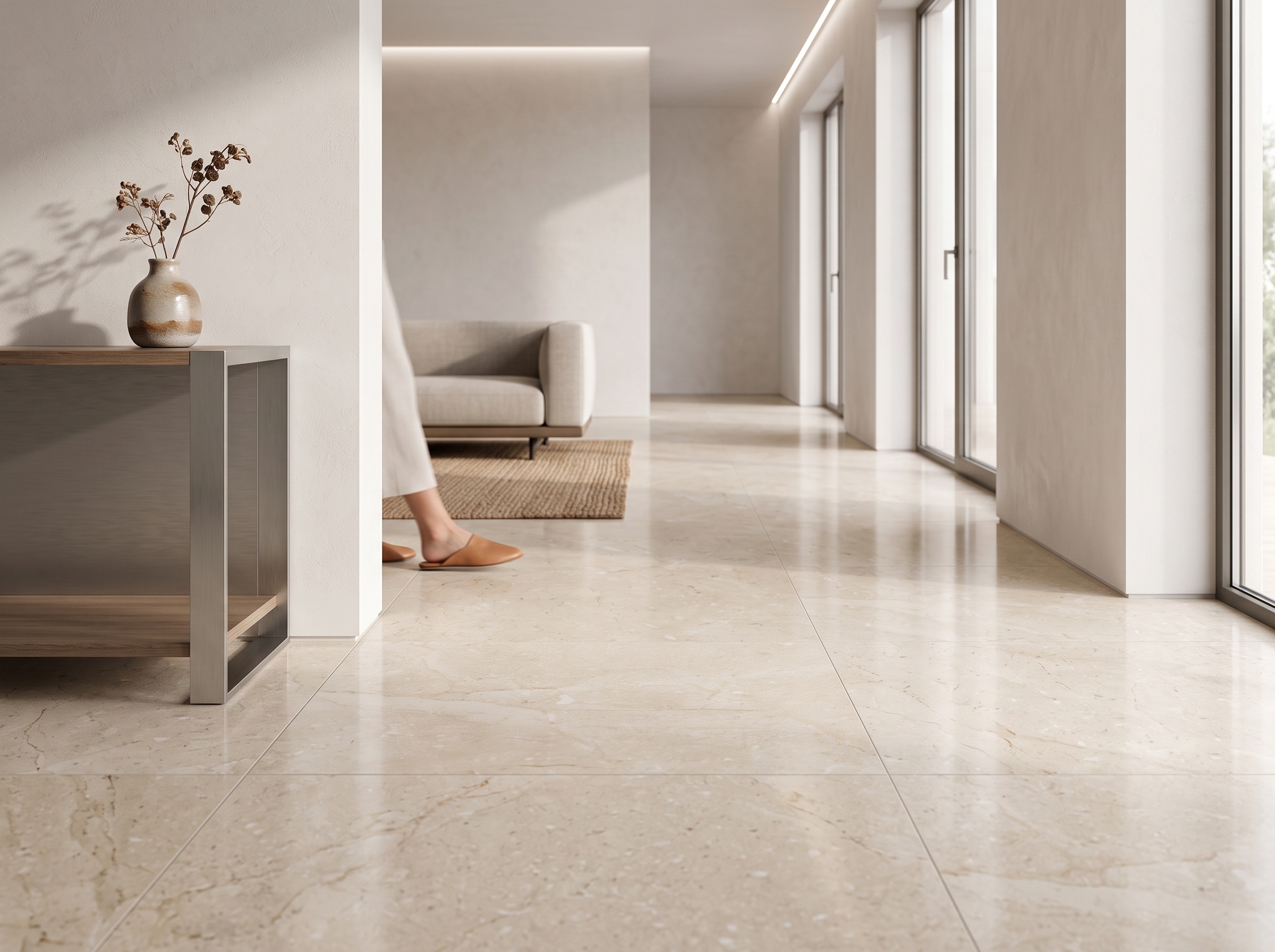
The warm neutral color of Crema Marfil makes it particularly suitable for large flooring areas because it can create a visually warm and cohesive interior.
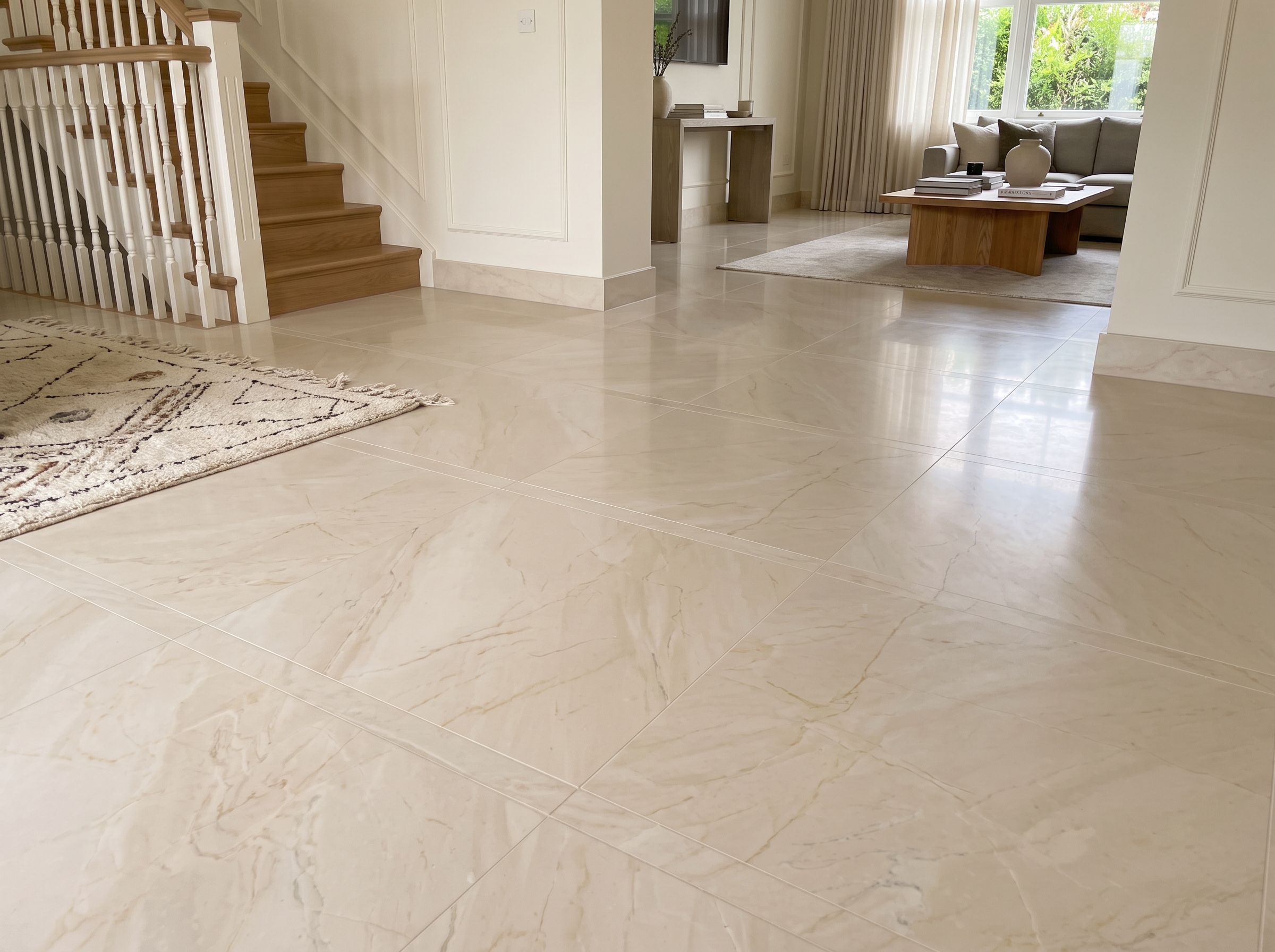
Crema Marfil Marble Flooring
One of the best-known applications of Crema Marfil is flooring.
Its neutral cream-beige color can make interiors appear:
-
Warm
-
Bright
-
Spacious
-
Elegant
-
Timeless
Crema Marfil flooring can work with both traditional and contemporary interiors.
For high-traffic commercial environments, however, the stone should be selected according to the project's technical requirements and expected traffic level.
The appropriate finish and maintenance program should also be established before installation.
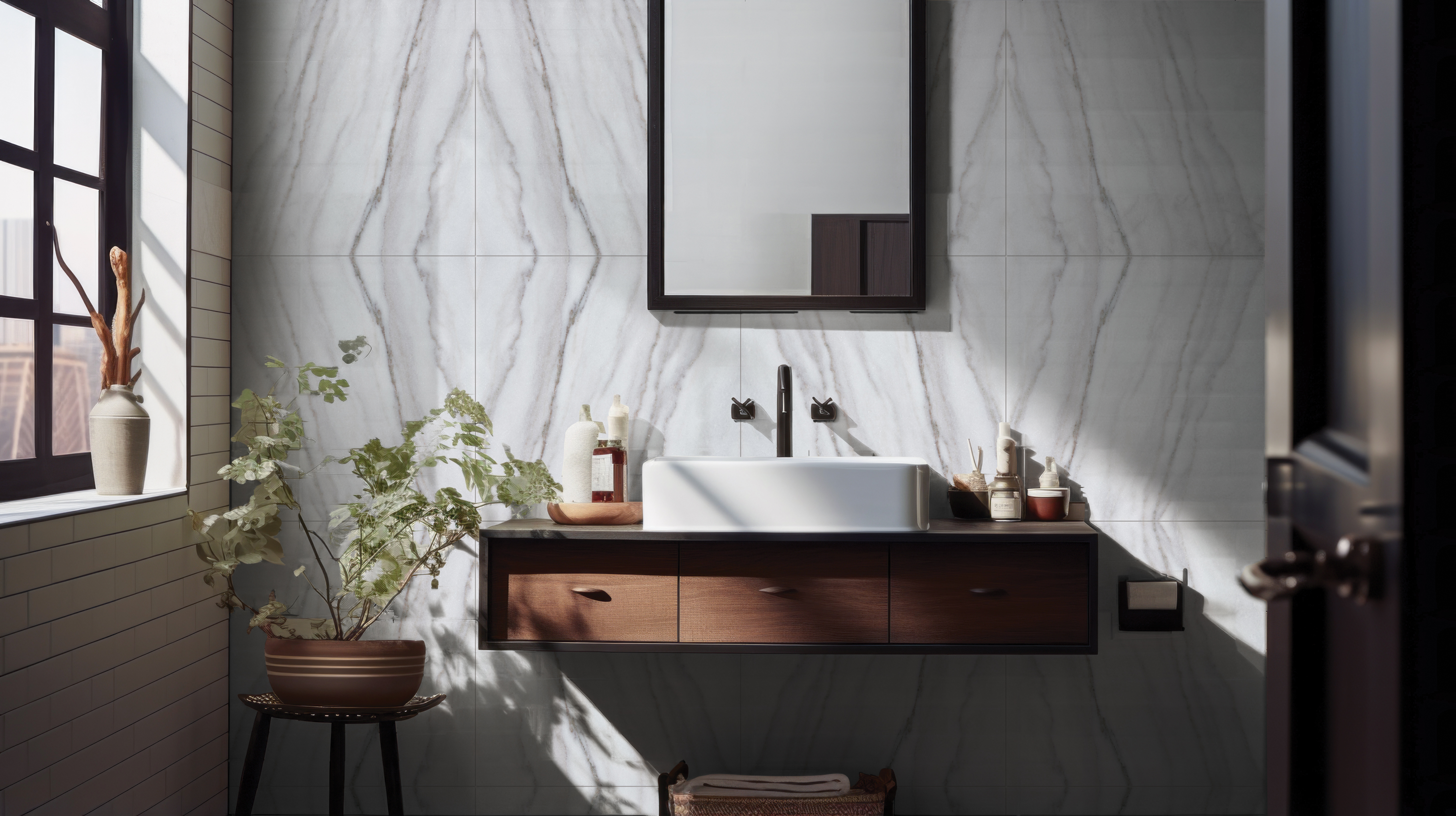
Crema Marfil Marble for Bathrooms
Crema Marfil is frequently considered for bathroom applications because its warm neutral color works well with a variety of fixtures and materials.
It can be used for:
-
Bathroom walls
-
Floors
-
Vanity tops
-
Shower surrounds
-
Bathtub surrounds
-
Decorative wall panels
It can be combined particularly well with white sanitaryware, wood cabinetry, brushed metals, and glass.
For wet areas, the surface finish and installation method should be selected according to the specific application.
Crema Marfil Marble Countertops
Crema Marfil marble countertops can create a warm and classic appearance in kitchens and bathrooms.
However, marble is a natural stone and should be selected with an understanding of its characteristics.
For countertop applications, buyers should consider:
-
Surface finish
-
Staining potential
-
Sealing requirements
-
Heat exposure
-
Cleaning products
-
Edge profile
-
Thickness
-
Fabrication method
Marble countertops require appropriate care to preserve their appearance over time.
For projects where resistance to staining and scratching is a primary concern, the designer or buyer may also compare marble with alternative natural or engineered stone materials.
Crema Marfil for Hotels and Commercial Projects
The combination of a neutral color and natural stone appearance makes Crema Marfil suitable for hospitality and commercial interiors.
Potential applications include:
-
Hotel lobbies
-
Reception areas
-
Corridors
-
Guest bathrooms
-
Restaurants
-
Retail interiors
-
Office entrances
-
Feature walls
-
Staircases
For large commercial projects, consistency of material supply becomes particularly important.
The buyer should confirm whether sufficient blocks or slabs are available to complete the entire project.
Crema Marfil Marble for Wall Cladding
Crema Marfil can also be used as an interior wall-cladding material.
Large-format slabs or cut-to-size panels can create a clean architectural appearance while allowing the natural movement of the stone to become part of the design.
Wall applications can include:
-
Hotel feature walls
-
Residential interiors
-
Reception areas
-
Fireplace surrounds
-
Commercial spaces
-
Luxury retail interiors
The installation system should be selected according to the substrate, panel dimensions, weight, location, and applicable construction requirements.
Crema Marfil vs Beige Marble
One of the most common questions is whether Crema Marfil is simply another name for beige marble.
The answer is no.
"Beige marble" is a broad descriptive category covering many different stones with beige or cream backgrounds.
Crema Marfil refers to a specific commercially established marble associated with Spain.
Two beige marbles can look similar in a photograph while having significant differences in:
-
Geological origin
-
Mineral composition
-
Veining
-
Water absorption
-
Strength
-
Density
-
Porosity
-
Availability
-
Price
-
Market recognition
Therefore, buyers should always identify the exact stone rather than purchasing based only on a color description.
Crema Marfil vs Other Turkish Beige Marbles
Turkey is also an important source of beige and cream-colored natural stones.
However, Turkish beige marble should not automatically be marketed as Crema Marfil.
For international projects, it is better to distinguish stones according to their actual commercial and geological identity.
Turkish beige marbles can provide alternative options for buyers seeking:
-
Warm neutral colors
-
Large quantities
-
Different vein structures
-
Alternative price levels
-
Project-specific materials
The best comparison should consider the actual slab or block, technical specifications, quantity, finish, and total delivered cost.
How Much Does Crema Marfil Marble Cost?
The Crema Marfil marble price can vary significantly depending on the material and purchasing format.
There is no single global price because the final cost can depend on:
-
Grade
-
Quarry
-
Block quality
-
Slab quality
-
Thickness
-
Surface finish
-
Dimensions
-
Processing
-
Quantity
-
Packaging
-
Shipping
-
Destination
-
Supplier
-
Market conditions
A premium selection with consistent color and attractive veining can command a higher price than a commercial-grade material.
Similarly, purchasing blocks, slabs, tiles, or cut-to-size products results in different pricing structures.
For an accurate quotation, buyers should provide detailed specifications rather than requesting a general "Crema Marfil price."
Crema Marfil Marble Maintenance
Like other natural marbles, Crema Marfil requires appropriate care.
Maintenance generally includes:
Regular Cleaning
Use a suitable pH-neutral stone cleaner and avoid aggressive acidic products.
Avoid Acidic Cleaners
Products containing strong acids can damage marble surfaces.
Materials such as vinegar and certain acidic cleaning products should not be used as general marble cleaners.
Sealing
Depending on the application and the stone's absorption characteristics, sealing may be recommended.
Prompt Spill Removal
Spills should be cleaned promptly, especially substances that may stain natural stone.
Professional Maintenance
High-traffic commercial applications may require periodic professional cleaning and maintenance.
The maintenance program should always be adapted to the specific stone, finish, installation environment, and manufacturer's recommendations.
How to Choose Crema Marfil Marble for a Project
Selecting the right material requires more than looking at a small sample.
1. Define the Application
First determine whether the marble will be used for:
-
Flooring
-
Walls
-
Countertops
-
Bathrooms
-
Stairs
-
Furniture
-
Hotel interiors
-
Commercial projects
2. Select the Grade
Determine the required visual quality and acceptable natural variation.
3. Review Actual Slabs
For important projects, review the actual slabs whenever possible.
4. Confirm Technical Specifications
Depending on the application, request relevant technical data such as:
-
Water absorption
-
Density
-
Flexural strength
-
Compressive strength
-
Abrasion resistance where relevant
5. Confirm Thickness and Dimensions
Clearly specify:
-
Thickness
-
Slab dimensions
-
Tile dimensions
-
Cut-to-size dimensions
-
Tolerances
6. Check Availability
For large projects, confirm that sufficient material is available from the same source and quality level.
7. Consider the Total Cost
Evaluate not only the stone price but also:
Material + processing + packaging + inland transportation + freight + insurance + customs/import costs + destination delivery
This provides a more realistic comparison.
How to Buy Crema Marfil Marble from a Supplier
International buyers should establish clear specifications before requesting quotations.
A professional inquiry can include:
Stone: Crema Marfil Marble
Product: Slab / Tile / Cut-to-Size
Thickness: Required thickness
Finish: Polished / Honed / Other
Quantity: Required quantity
Dimensions: Required dimensions
Destination: Country / Port
Incoterm: FOB / CIF / DAP / Other
Application: Residential / Hotel / Commercial / Other
Providing this information allows suppliers to prepare more accurate commercial offers.
Crema Marfil Marble for International Projects
International projects often require much more than simply supplying stone.
A professional natural stone supplier should be able to coordinate:
-
Material selection
-
Production
-
Quality control
-
Packaging
-
Container loading
-
Export documentation
-
Freight coordination
-
Delivery planning
For large projects, communication between the supplier, architect, contractor, fabricator, and buyer is particularly important.
The earlier the material is selected and approved, the easier it becomes to manage production and delivery.
What Should You Ask a Crema Marfil Marble Supplier?
Before placing an order, international buyers should ask:
-
What is the exact origin of the material?
-
Which quarry produces the stone?
-
What grade is being offered?
-
Can you provide current slab photographs?
-
What thicknesses are available?
-
Which finishes are available?
-
What are the technical specifications?
-
Is the required quantity currently available?
-
What is the production lead time?
-
What packaging method is used?
-
Which Incoterms are available?
-
What is the minimum order quantity?
-
Can you provide samples?
-
Can you supply cut-to-size products?
-
What export documents are provided?
These questions can help buyers compare suppliers more effectively.
Crema Marfil Marble Buyer Checklist
Before purchasing, use the following checklist:
-
Confirm the exact stone name
-
Confirm country and quarry of origin
-
Review actual material
-
Approve color and veining
-
Confirm grade
-
Confirm slab/tile dimensions
-
Confirm thickness
-
Confirm surface finish
-
Request technical specifications
-
Confirm available quantity
-
Confirm production lead time
-
Confirm packaging
-
Confirm export documentation
-
Agree on Incoterm
-
Calculate total landed cost
-
Approve material before mass production
Alternatives to Crema Marfil Marble
Crema Marfil is not the only option for projects looking for warm beige or cream-colored natural stone.
Depending on the desired appearance and project requirements, buyers can also consider:
-
Turkish beige marble
-
Cream-colored limestone
-
Light travertine
-
Other Spanish marbles
-
Italian beige marble
-
Other natural stones with warm neutral tones
The best alternative depends on the project's aesthetic requirements, technical specifications, budget, availability, and destination.
For international buyers, comparing actual slabs rather than only product names is usually the most reliable approach.
Biser Marble: Turkish Natural Stone for International Buyers
For buyers looking for alternatives to Spanish cream and beige marbles, Biser Marble supplies Turkish natural stone for international projects.
Biser Marble operates a marble quarry in Torbalı, İzmir, Türkiye, and offers marble blocks, slabs, and cut-to-size products.
Its portfolio includes distinctive Turkish marble varieties such as:
-
Idilliaco Perla – a white stone characterized by brown veining, available in cross-cut and vein-cut options.
-
Atlas Grey – a grey natural stone suitable for contemporary architectural applications.
-
Atlas Dark Grey – a darker grey stone for projects seeking a stronger visual character.
-
Nile Nuvola – a grey and yellow mixed stone that can be particularly suitable for bookmatch applications.
For buyers considering Crema Marfil alternatives, comparing these materials based on color, pattern, technical specifications, availability, processing options, and delivered cost can help identify the most suitable stone for a project.
Frequently Asked Questions About Crema Marfil Marble
Is Crema Marfil real marble?
Yes. Crema Marfil is a natural marble associated with the Alicante region of Spain.
What color is Crema Marfil marble?
Crema Marfil generally has a warm cream-to-beige background, although the exact tone and natural pattern can vary between blocks and quarry areas.
Where does Crema Marfil marble come from?
Crema Marfil is traditionally associated with marble-producing areas in Alicante, Spain.
Is Crema Marfil good for flooring?
It can be suitable for interior flooring when the specific material, finish, installation system, and expected traffic are appropriate for the application.
Can Crema Marfil be used for countertops?
Yes, Crema Marfil can be fabricated into countertops. However, buyers should consider marble's maintenance, sealing, staining, scratching, and etching characteristics before selecting it for kitchen applications.
Is Crema Marfil expensive?
Its price varies according to grade, quality, thickness, finish, processing, quantity, supplier, and destination. There is no single standard global price.
What is the difference between Crema Marfil and beige marble?
Crema Marfil is a specific commercially recognized marble associated with Spain, while beige marble is a broad category that includes many different natural stones.
Can Crema Marfil be used in bathrooms?
Yes. It can be used for bathroom floors, walls, vanity tops, shower surrounds, and other interior applications when the appropriate finish and installation method are selected.
Can Crema Marfil be used outdoors?
Suitability for exterior applications depends on the specific material, local climate, freeze-thaw conditions, water absorption, finish, installation system, and project requirements. Technical data should be reviewed before specifying it for exterior use.
What are good alternatives to Crema Marfil?
Depending on the desired appearance, alternatives may include Turkish beige marbles, other Spanish marbles, Italian beige stones, limestone, and travertine.
Conclusion
Crema Marfil marble has established a strong position in international architecture and interior design because of its warm cream-beige appearance and versatility.
Its applications range from flooring and wall cladding to bathrooms, countertops, hotels, residential interiors, and commercial projects.
However, selecting the right Crema Marfil material requires more than choosing a color from a catalogue.
Buyers should evaluate:
-
Origin
-
Quarry
-
Grade
-
Color
-
Veining
-
Slab quality
-
Technical properties
-
Thickness
-
Finish
-
Availability
-
Production capacity
-
Packaging
-
Logistics
-
Total delivered cost
For buyers who are considering Crema Marfil alternatives, Turkish marble can also provide a broad range of cream, beige, white, and grey natural stone options for international projects.
The best purchasing decision comes from comparing actual materials, technical requirements, availability, and total project cost rather than relying only on the commercial name of the stone.