Carrara Marble: Types, Characteristics, History, Uses and Complete Guide
Carrara marble is one of the world's most recognized natural stones. Quarried in the Carrara area of Tuscany, Italy, this natural marble is known for its white to light-gray background, characteristic gray veining, fine crystalline structure and long history in architecture and sculpture.
For centuries, Carrara marble has been used in monumental architecture, interior design, sculpture, luxury residences, hotels and commercial projects. Its historical association with Roman architecture and Renaissance sculpture has also made it one of the most recognizable names in the natural stone industry.
However, Carrara marble is not a single uniform stone. Marble quarried in the Carrara region can vary considerably in background color, veining, crystal structure, block quality and commercial classification. Names such as Bianco Carrara, Statuario, Venato and other Carrara-area marble varieties are used to describe different characteristics and selections.
This guide explains what Carrara marble is, where it comes from, how it is formed, its history, different types, characteristics, applications, maintenance requirements and how it compares with other famous Italian marbles such as Calacatta and Statuario.
What Is Carrara Marble?
Carrara marble is a natural metamorphic stone quarried in and around Carrara in the Tuscany region of northern Italy.
Geologically, marble forms when limestone is subjected to heat and pressure over long periods of geological time. During this metamorphic process, the original mineral structure of the limestone recrystallizes and forms marble.
Carrara marble is predominantly composed of calcite, which contributes to its characteristic crystalline appearance and its ability to be polished.
The stone's appearance can vary depending on its geological formation and mineral composition.
Different Carrara marble blocks may show differences in:
- Background whiteness
- Gray veining
- Vein density
- Crystal structure
- Color variation
- Pattern movement
- Block quality
This is one of the fundamental characteristics of natural stone.
Two slabs from the same quarry may look similar, but they will rarely be completely identical.
For architects, designers and professional stone buyers, this means that the name Carrara marble should not be the only consideration when selecting material. Block quality, slab selection, technical properties and visual consistency are equally important.
Where Does Carrara Marble Come From?
Carrara marble comes from the Carrara area of Tuscany, Italy, particularly from the marble-producing areas of the Apuan Alps.
The region has been associated with marble quarrying for thousands of years. According to Visit Tuscany, marble extraction in the area dates back to the Roman period and has remained an important part of the region's cultural and economic identity.
The Apuan Alps contain extensive marble formations that have been quarried for centuries.
Today, Carrara is internationally recognized as one of the world's most important historical marble-producing regions.
The connection between the city of Carrara and marble is so strong that the material has become part of the region's identity, architecture, craftsmanship and international trade.
The History of Carrara Marble
The history of Carrara marble extends back thousands of years.
During the Roman period, marble from the Carrara region was transported and used in architecture, monuments and sculpture.
Over time, the stone became increasingly important throughout Europe.
Its reputation reached another level during the Renaissance, when Italian artists and sculptors used Carrara marble for some of their most important works.
Michelangelo is particularly associated with Carrara marble. His famous sculptures, including David and Pietà, are among the best-known works connected with the Carrara marble tradition. Carrara marble was also used by other major sculptors, including Antonio Canova.
This historical connection helped establish Carrara marble not simply as a construction material, but as a material associated with art, craftsmanship and architectural prestige.
How Is Carrara Marble Formed?
Understanding how Carrara marble forms helps explain many of its physical characteristics.
The geological process begins with limestone.
Limestone is primarily composed of calcium carbonate. When geological forces expose limestone to elevated temperatures and pressures, its mineral structure changes through metamorphism.
The resulting rock becomes marble.
In Carrara marble, calcite is the dominant mineral. Geological studies of Carrara marble have identified a fine and relatively homogeneous crystalline structure with calcite as the principal component.
This crystalline structure contributes to several important characteristics, including:
- Polishability
- Light reflection
- Workability
- Surface appearance
- Texture
The geological history of the stone also influences the formation of its characteristic gray veins and other visual features.
What Does Carrara Marble Look Like?
When people hear the term Carrara marble, they typically imagine a white or light-gray background with soft gray veining.
However, Carrara marble is not visually identical across all quarries, blocks or commercial selections.
Some varieties have a relatively uniform white background, while others feature more pronounced gray veins.
According to Carrara Marble Tour, Carrara-area marble can be divided into several commercial and visual categories, including white varieties and more strongly veined gray marble groups.
This natural variation is one of the reasons Carrara marble remains popular among architects and interior designers.
A relatively quiet slab can work well in minimalist interiors, while a strongly veined selection can become the main visual element of a luxury interior.
Main Types of Carrara Marble
Carrara marble encompasses several different commercial varieties and selections.
Understanding these differences is particularly important when purchasing stone for an architectural project.
Bianco Carrara
Bianco Carrara is one of the best-known marble groups associated with the Carrara region.
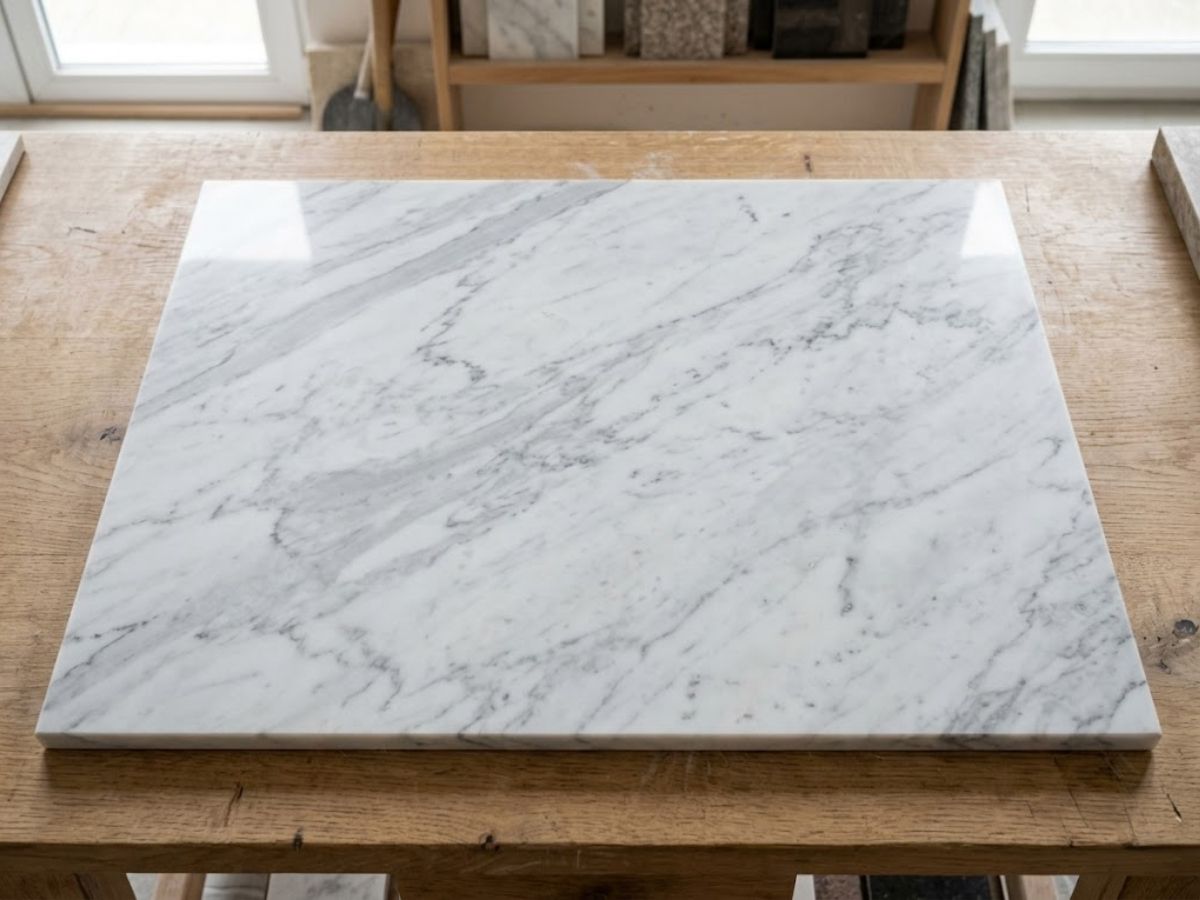
It generally features a white to light-gray background with gray veining.
Depending on the specific selection, the veins can range from very subtle to more pronounced.
Bianco Carrara can be used for:
- Flooring
- Wall cladding
- Bathroom surfaces
- Kitchen applications
- Staircases
- Decorative surfaces
- Residential interiors
Its relatively neutral color palette makes it suitable for both classic and contemporary architecture.
Statuario Marble
Statuario is another highly recognized white marble associated with the Carrara area.
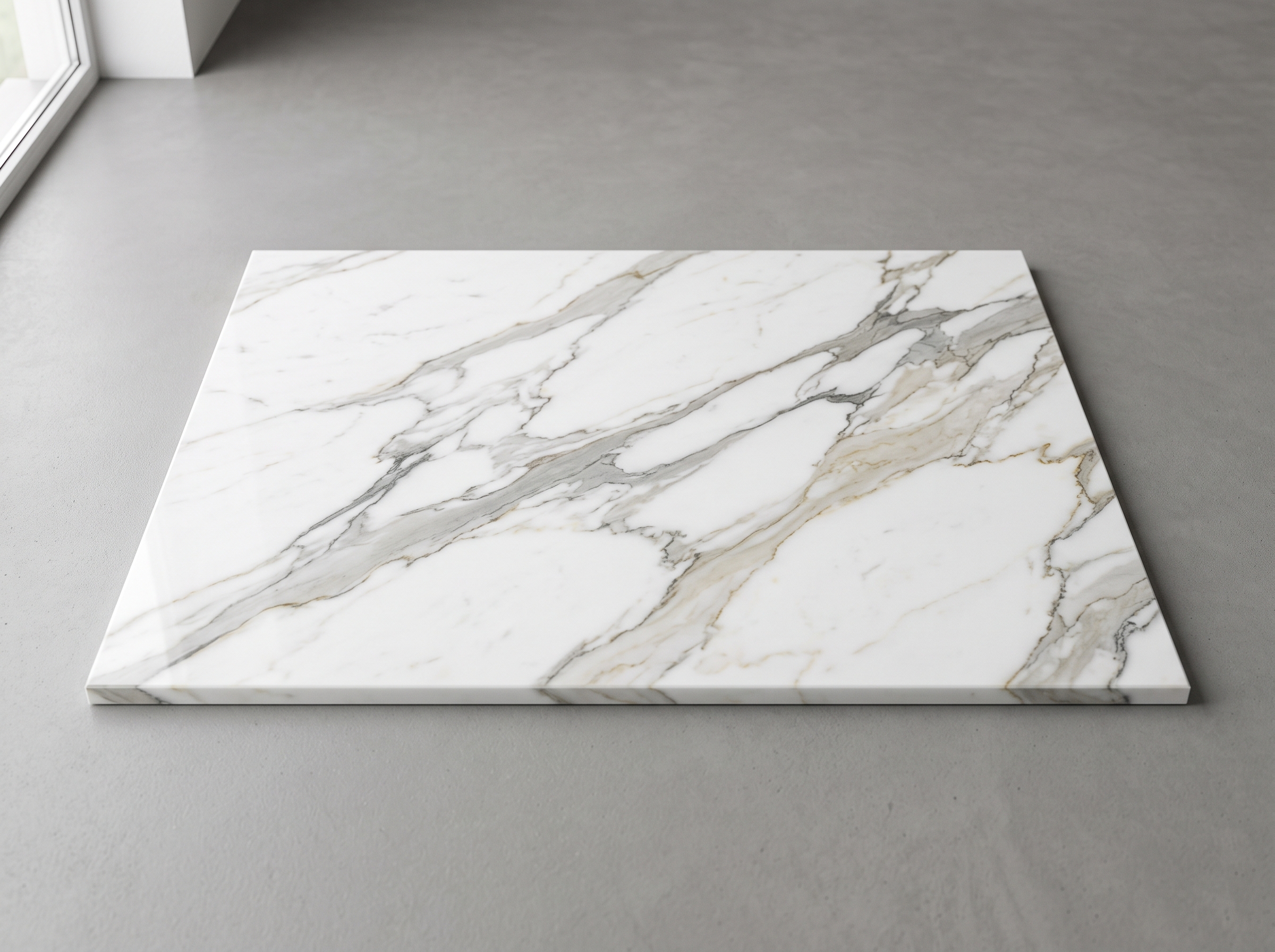
It is generally characterized by a lighter background and more distinctive veining than many standard Carrara selections.
Statuario has historically been associated with sculpture and high-end architectural applications.
However, it is important to understand that commercial marble names do not always represent a single standardized geological classification.
Therefore, when purchasing Statuario or Carrara marble, buyers should evaluate the actual block, slab, origin, selection and technical characteristics rather than relying solely on the commercial name.
Carrara Venato
The term Venato is associated with more visibly veined Carrara marble selections.
The direction, intensity and movement of the veins can vary significantly from one block to another.
This variation can become especially important in large architectural projects.
For example, if the design requires continuous veining or bookmatched slabs, the block must be selected specifically for that purpose.
Arabescato Marble
Arabescato is associated with more dynamic and decorative veining patterns found among marble varieties from the Carrara region.
Compared with more uniform white marble, Arabescato can create a stronger visual statement.
It can be particularly effective for:
- Feature walls
- Luxury bathrooms
- Hotel interiors
- Reception areas
- Decorative panels
- Bookmatched installations
Because the veining can be highly directional, slab selection is particularly important.
Carrara Marble vs Calacatta Marble
Carrara marble vs Calacatta is one of the most common comparisons made by people researching Italian white marble.
Although both are strongly associated with the Carrara area, they should not simply be treated as identical materials.
In general, Carrara marble is commonly associated with softer gray veining and a white-to-gray background, while Calacatta varieties are often recognized for stronger, more dramatic veining.
However, marble terminology can be complicated.
Commercial names are influenced by quarry location, appearance, historical terminology and industry practices. Carrara Marble Tour, for example, categorizes different marble varieties based on their visual and commercial characteristics.
Therefore, professional buyers should look beyond the name and evaluate:
- Quarry origin
- Block quality
- Background color
- Vein structure
- Mineral composition
- Technical test results
- Slab consistency
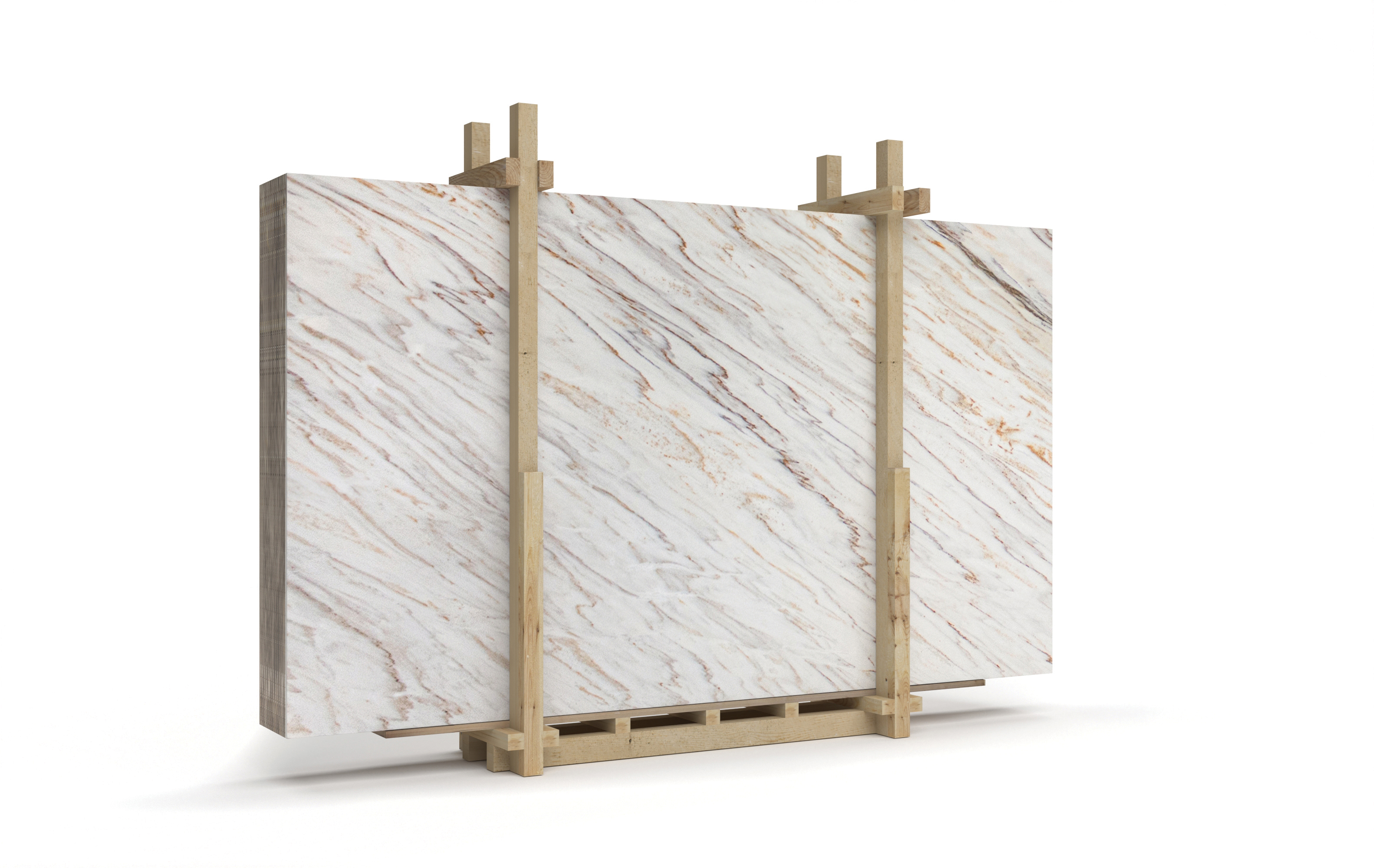
A sample alone may also not represent an entire block.
For large projects, reviewing actual slabs or block photographs is highly recommended.
Carrara Marble vs Statuario
Carrara marble and Statuario are often compared because both belong to the world of Italian white marble.
Statuario is generally associated with a brighter background and more distinctive veining, while the Carrara category covers a broader range of white and gray marble selections.
The distinction can become particularly important in premium projects where the exact visual appearance of the stone is a major part of the architectural concept.
For this reason, architects and procurement teams should always request:
- High-resolution slab photographs
- Physical samples
- Block information
- Available quantity
- Technical data
- Surface finish information
before approving a material for a large project.
Where Is Carrara Marble Used?
Carrara marble has an extremely wide range of applications.
Its combination of historical prestige, neutral color and workability makes it suitable for both decorative and architectural purposes.
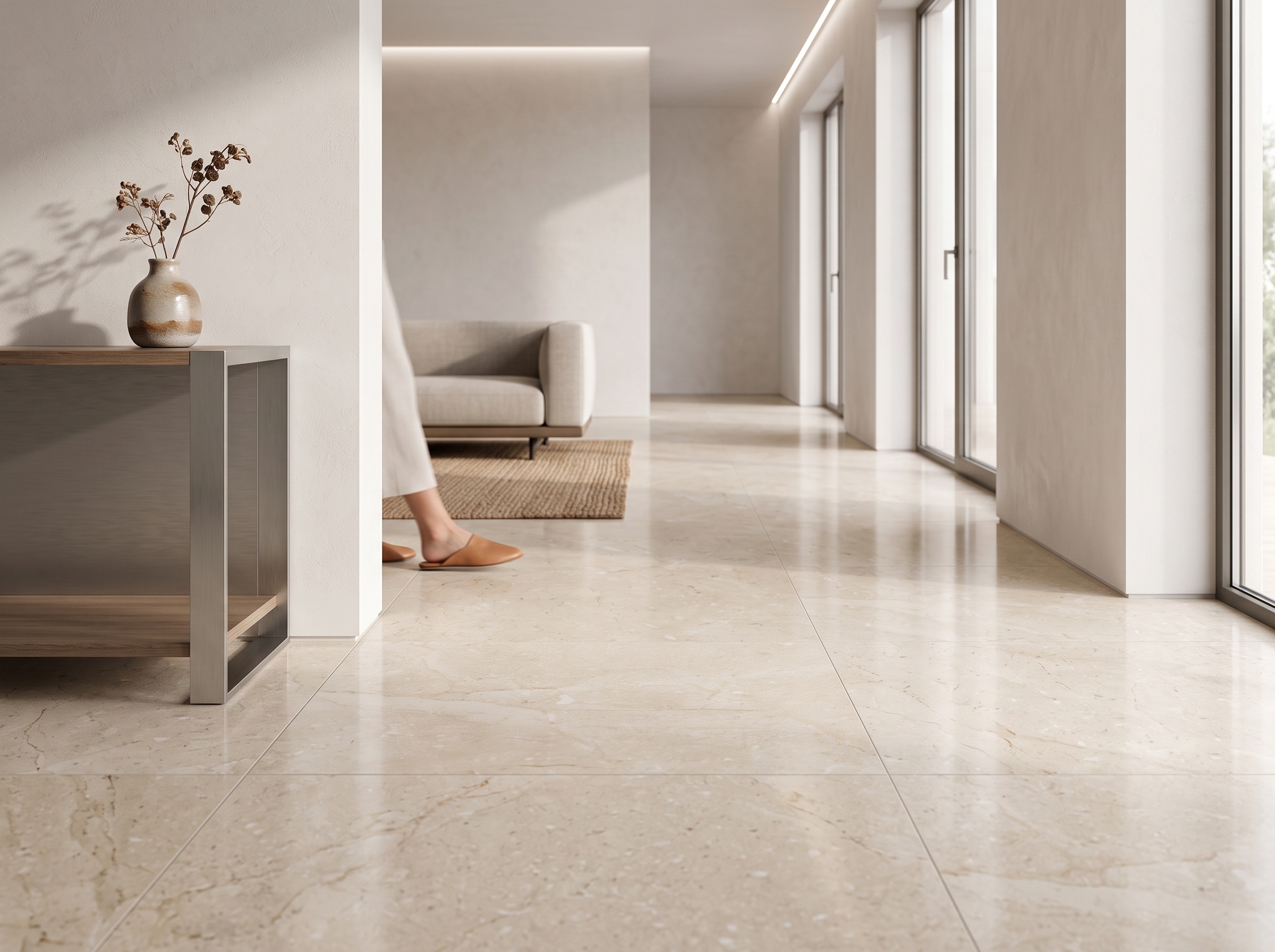
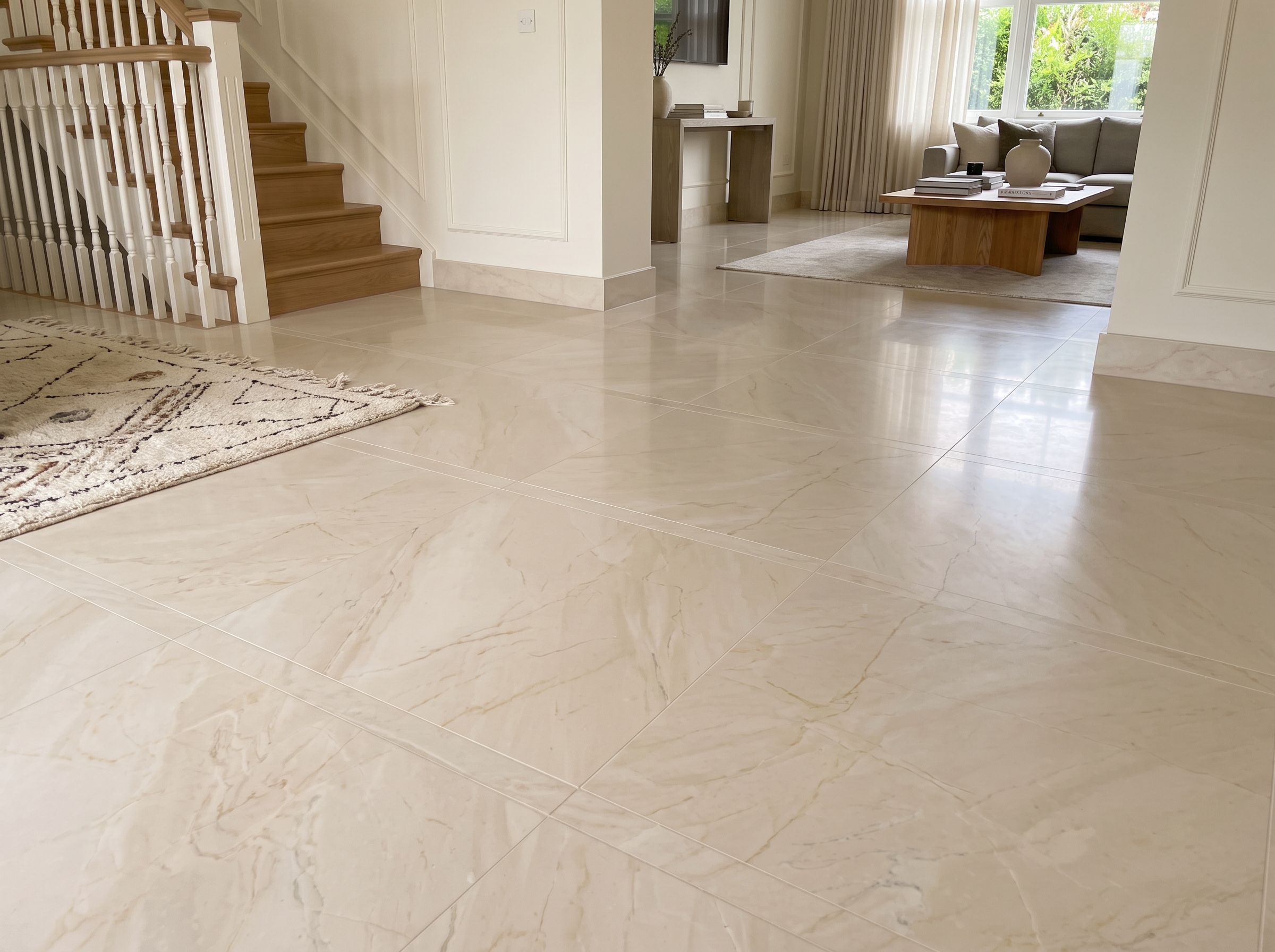
Flooring
Carrara marble can be used for interior flooring in:
- Luxury residences
- Hotels
- Villas
- High-end commercial buildings
- Lobby areas
- Private developments
Large-format slabs or tiles can create a visually continuous surface.
Wall Cladding
Carrara marble is frequently used for interior wall applications.
Its light color can make interiors feel brighter and more spacious.
It can also be used as a feature material where the natural veining becomes part of the architectural design.
Bathrooms
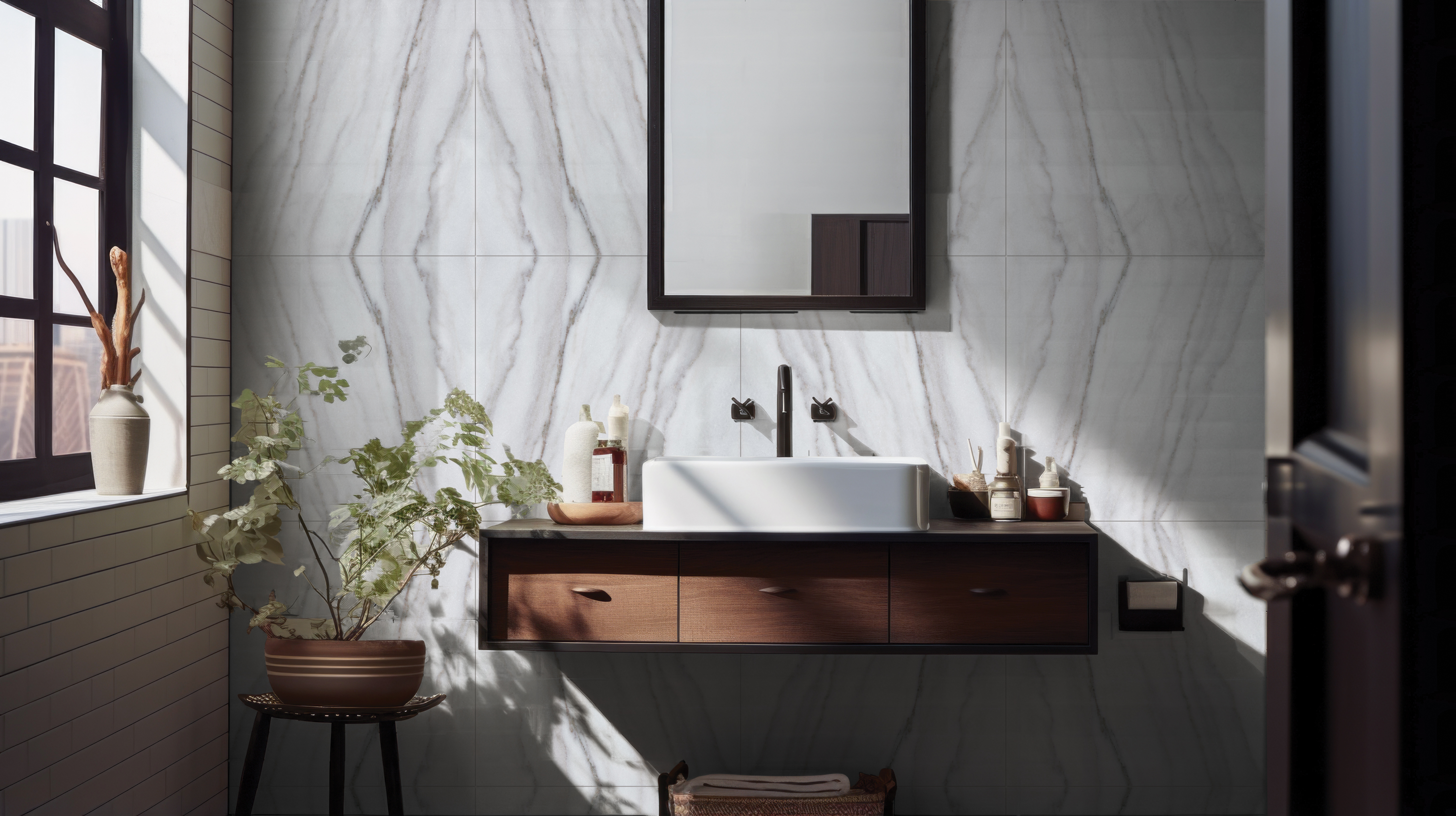
Bathrooms are one of the most popular applications for white marble.
Carrara marble can be used for:
- Vanity tops
- Shower walls
- Bathroom walls
- Flooring
- Bathtub surrounds
- Decorative panels
Its white and gray color palette works particularly well with contemporary interior design.
Carrara Marble in Kitchens
Carrara marble can be used in kitchens for:
- Countertops
- Kitchen islands
- Backsplashes
- Decorative surfaces
However, kitchen applications require appropriate maintenance.
Because marble is predominantly calcite-based, acidic substances such as lemon juice and vinegar can react with the surface and create etching.
This does not necessarily mean that Carrara marble should not be used in kitchens.
Instead, users should understand the material's characteristics and follow appropriate maintenance procedures.
For homeowners or projects where maximum scratch and acid resistance is the priority, other natural stones may be more practical.
For projects where natural veining and visual character are the primary objectives, Carrara marble remains an attractive option.
Carrara Marble in Sculpture
Sculpture is one of the applications most strongly associated with Carrara marble.
Its fine crystalline structure and workability have made it an important material for sculptors throughout history.
The stone can be carefully carved and polished to achieve highly detailed forms.
This is one reason Carrara marble became so closely associated with Renaissance sculpture.
Its connection with Michelangelo continues to contribute to its cultural significance today.
Is Carrara Marble Durable?
Carrara marble is a durable natural stone, but durability should not be confused with hardness.
Compared with granite, marble is generally softer and can be more susceptible to:
- Scratching
- Acid etching
- Surface wear
- Staining if improperly maintained
Its performance therefore depends heavily on the application.
A properly selected and maintained Carrara marble surface can last for decades.
However, a material suitable for a bathroom wall may not necessarily be the ideal choice for a heavily trafficked commercial floor.
This is why natural stone selection should always be application-specific.
Carrara Marble Maintenance
Proper maintenance is essential for preserving the appearance of Carrara marble.
Avoid Acidic Cleaners
Acidic substances can react with calcite and create dull spots on polished marble.
Avoid using vinegar, lemon-based cleaners or aggressive acidic products on marble surfaces.
Use pH-Neutral Cleaners
A cleaner specifically formulated for natural stone is generally a safer option for routine maintenance.
Clean Spills Quickly
Coffee, wine, oil and other staining substances should be removed as soon as possible.
Consider Sealing
Depending on the application and stone characteristics, an appropriate sealer can help reduce the risk of staining.
Choose the Right Surface Finish
Polished and honed marble surfaces behave differently and should be selected according to the intended application.
Polished vs Honed Carrara Marble
Surface finishing has a significant effect on the appearance of Carrara marble.
Polished Carrara Marble
A polished surface has a glossy appearance and reflects more light.
The contrast between the white background and gray veining can appear stronger on a polished surface.
Polished Carrara marble is commonly selected for:
- Luxury interiors
- Feature walls
- Hotel lobbies
- High-end bathrooms
- Decorative surfaces
Honed Carrara Marble
Honed marble has a softer, matte appearance.
It provides a more understated and contemporary aesthetic.
Honed Carrara marble can work particularly well in:
- Modern interiors
- Minimalist bathrooms
- Residential flooring
- Contemporary commercial spaces
The best finish depends on the project's design concept and maintenance requirements.
Why Is Carrara Marble So Popular?
Carrara marble's popularity is the result of several factors.
Historical significance
It has been used for centuries in architecture and sculpture.
Distinctive appearance
Its white and gray color palette works with many architectural styles.
Natural variation
Every block and slab has its own characteristics.
Workability
Its crystalline structure makes it suitable for detailed fabrication.
Luxury association
Carrara marble has become strongly associated with premium architecture and design.
Global recognition
The name Carrara has become internationally recognized within the natural stone industry.
What Should You Check Before Buying Carrara Marble?
Professional buyers should evaluate much more than the name of the stone.
Important criteria include:
| Factor | Why It Matters |
|---|---|
| Quarry origin | Confirms material source |
| Block quality | Determines slab yield and appearance |
| Selection | Controls color and veining |
| Block size | Influences large-format production |
| Vein direction | Important for design and bookmatching |
| Slab quality | Determines final appearance |
| Thickness | Important for fabrication and installation |
| Surface finish | Influences appearance and performance |
| Technical data | Confirms project suitability |
| Supply capacity | Important for large projects |
For international B2B purchases, professional buyers should request physical samples, technical documentation, slab photographs and detailed information about the available blocks.
Is Carrara Marble Suitable for Large Projects?
Yes, but project requirements should be assessed before material approval.
For hotels, residential developments, commercial buildings and other large-scale projects, the quality of the first shipment is not enough.
The supplier must also be capable of maintaining appropriate selection and supply continuity.
Before approving Carrara marble for a large project, procurement teams should ask:
- Is the material available from the same quarry?
- Are sufficient blocks available?
- Can the same selection be maintained?
- Is the slab thickness consistent?
- Is the vein pattern suitable for the design?
- Can the supplier meet the required volume?
- What is the production lead time?
- How is quality controlled?
These questions are relevant not only to Carrara marble but to every natural stone project.
Carrara Marble and Turkish Marble: Which Is Better?
Carrara marble's international reputation does not mean that Italian marble is automatically superior to Turkish marble.
Turkey is one of the world's important natural stone-producing countries and offers a wide range of marble colors, patterns and geological characteristics.
When comparing Italian and Turkish marble, the correct approach is not to evaluate the material based solely on country of origin.
Instead, buyers should compare:
- Stone characteristics
- Block quality
- Color
- Veining
- Selection
- Technical performance
- Available quantity
- Lead time
- Price
- Supplier reliability
A project that requires a white Italian marble aesthetic may benefit from Carrara marble. Another project may achieve a stronger visual result with a Turkish gray, white, beige or veined marble.
Therefore, the better question is not: "Which marble is the best?"
It is: "Which marble is best suited to this project?"
Frequently Asked Questions About Carrara Marble
What is Carrara marble?
Carrara marble is a natural metamorphic stone quarried in the Carrara area of Tuscany, Italy. It is generally recognized by its white to light-gray background and gray veining.
Where does Carrara marble come from?
Carrara marble comes from the Carrara area and the Apuan Alps in Tuscany, Italy. The region has been associated with marble quarrying since ancient times.
Why is Carrara marble white?
Its predominantly calcite-based mineral composition contributes to its characteristic white appearance. Geological and mineralogical variations can also influence the color and veining.
Is Carrara marble expensive?
Carrara marble prices vary significantly depending on block quality, selection, whiteness, veining, slab size, thickness, surface finish, availability and supplier.
Is Carrara marble the same as Calacatta?
No. Carrara and Calacatta are different commercial marble groups, although both are strongly associated with the Carrara region. Their appearance and commercial characteristics can differ considerably.
Is Carrara marble good for kitchens?
Yes, Carrara marble can be used in kitchens. However, because marble is sensitive to acids and scratching, appropriate maintenance and realistic expectations are important.
Is Carrara marble suitable for bathrooms?
Yes. Carrara marble is widely suited to bathroom walls, vanity tops, floors and decorative surfaces when properly selected and maintained.
Can Carrara marble be used outdoors?
It can be used in certain outdoor applications, but climate, freeze-thaw conditions, water absorption, surface finish and technical test results should be evaluated before specification.
Is Carrara marble durable?
Carrara marble can be highly durable when correctly selected and maintained. However, it is generally softer and more acid-sensitive than granite.
Conclusion: Why Carrara Marble Remains Important
Carrara marble is much more than a white natural stone.
It represents thousands of years of quarrying, craftsmanship, architecture and sculpture. From Roman buildings to Renaissance masterpieces and contemporary luxury interiors, Carrara marble has maintained a unique position within the world of natural stone.
Its white-to-gray color palette, natural veining, workability and historical significance have made it one of the most recognizable marble types in the world.
However, choosing natural stone should never be based solely on reputation.
The best marble is not necessarily the most famous marble.
The best marble is the material that meets the project's aesthetic, technical, budgetary and supply requirements.