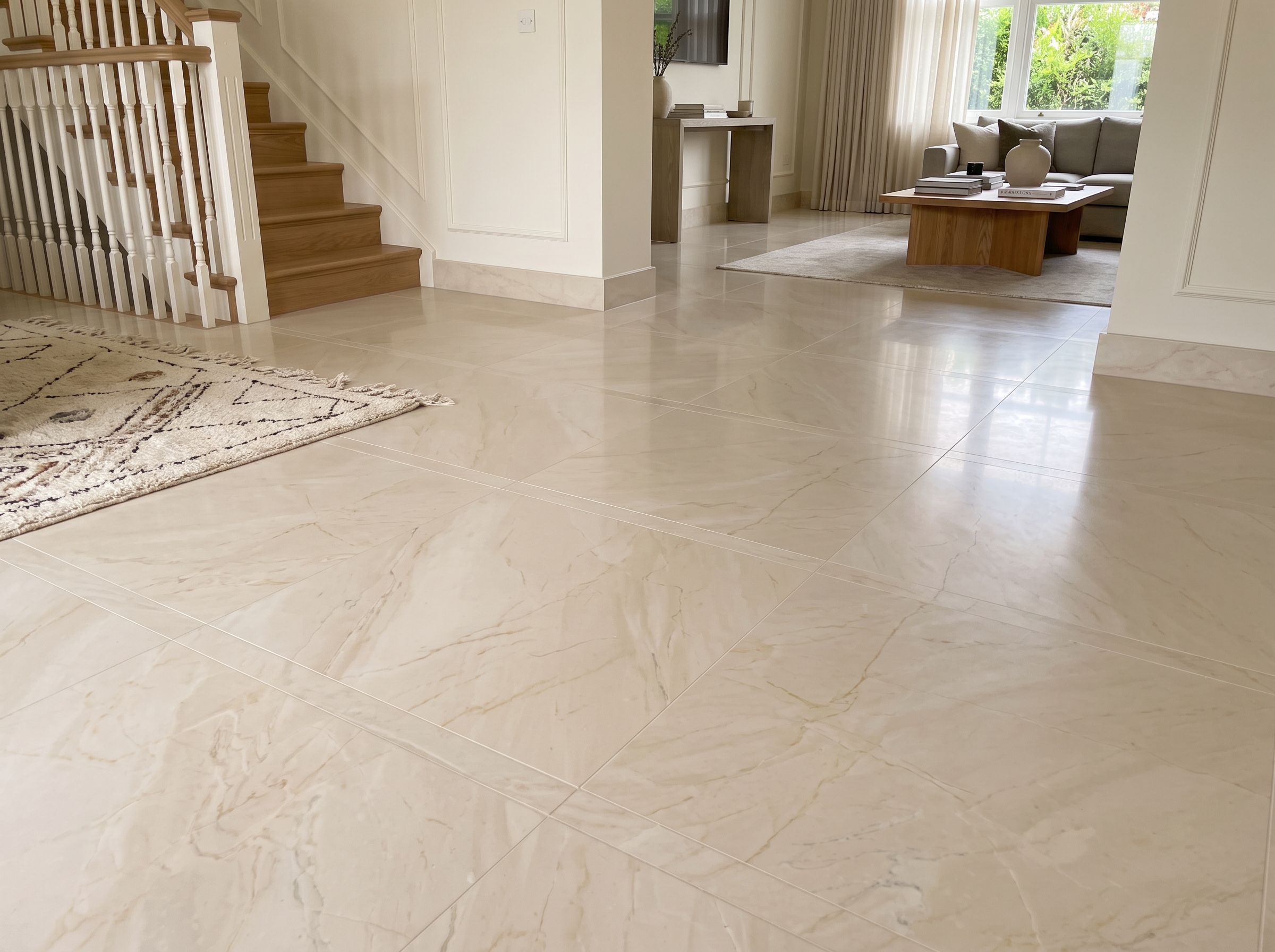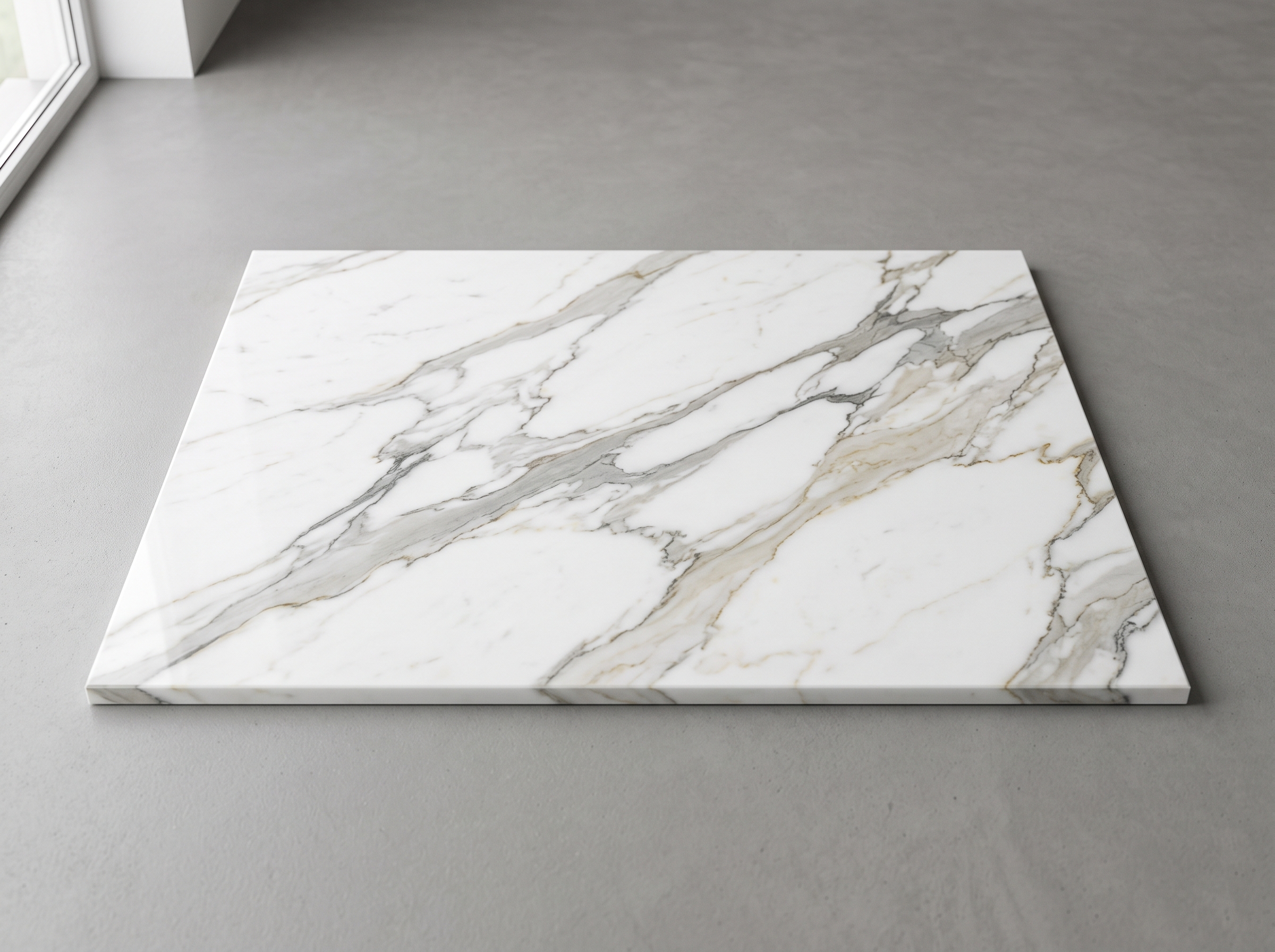
Calacatta Marble: Complete Guide to Types, Characteristics, Applications and Buying Guide
Calacatta marble is one of the world's most recognizable luxury natural stones, known for its bright white background and bold, expressive veining. Frequently selected for high-end kitchens, luxury bathrooms, hotel interiors, feature walls and architectural projects, Calacatta marble combines the natural character of Italian marble with a distinctive visual impact that is difficult to reproduce with engineered materials.
But Calacatta is not simply a white marble with grey veins. The name covers a range of marble varieties with significant differences in background colour, veining, origin, availability and market value. Understanding these differences is important for architects, interior designers, contractors, importers and marble buyers who need to select the right material for a project.
In this comprehensive guide, we explain what Calacatta marble is, where it comes from, how to identify it, the most popular Calacatta marble types, how it compares with Carrara and Statuario, where it is used, how much it can cost, and what buyers should consider when sourcing Calacatta marble slabs.
What Is Calacatta Marble?
Calacatta marble is a natural stone traditionally associated with the Apuan Alps in Tuscany, Italy, particularly the marble-producing areas around Carrara. It is a metamorphic stone formed from limestone under heat and pressure over geological periods.
Its most recognizable characteristic is the combination of a bright white or warm-white background with prominent, irregular veining. Depending on the variety, the veins may appear grey, dark grey, gold, beige, brown or violet.
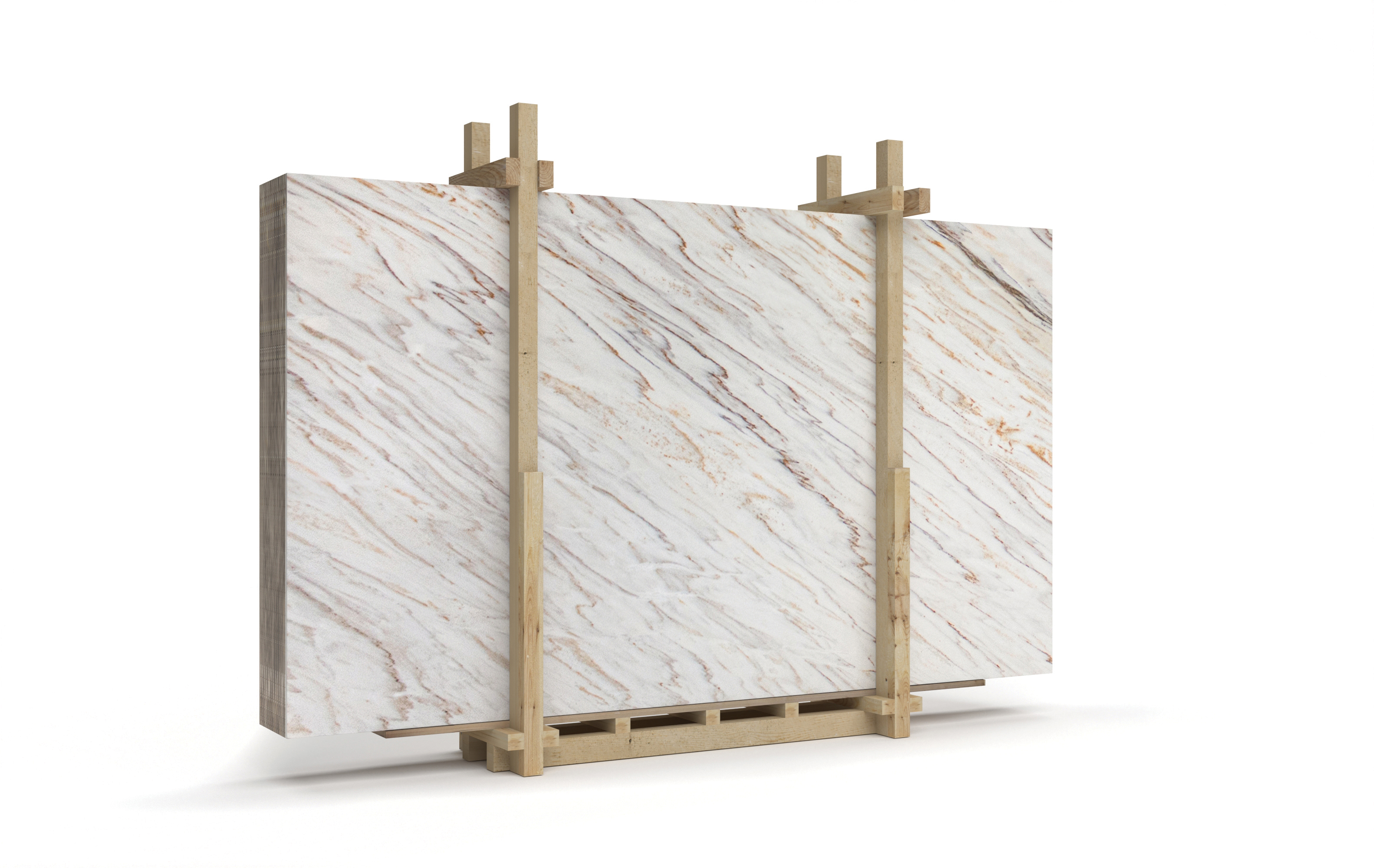
Unlike more uniformly patterned white marbles, Calacatta is often valued for the individuality of each block and slab. Veining can vary considerably from one block to another, making slab selection particularly important for premium architectural projects.
The main visual characteristics of Calacatta marble include:
-
Bright white to warm-white background
-
Bold and irregular veining
-
Grey, gold, beige, brown or violet vein colours
-
Natural variation between blocks and slabs
-
Premium positioning in the natural stone market
-
Strong suitability for statement architectural surfaces
This natural variation is one of the reasons designers often specify Calacatta marble for projects where the stone itself is intended to become a focal point.
Where Does Calacatta Marble Come From?
Calacatta marble is associated with the Apuan Alps of Tuscany, the same broader Italian marble region famous for Carrara marble.
The geographical relationship between Calacatta and Carrara is one of the main reasons the two materials are frequently confused. They are both Italian white marbles, but they are not interchangeable materials.
The broader Carrara marble district contains numerous quarry areas and marble varieties. Calacatta is generally associated with more restricted quarry zones and specific geological formations that produce its characteristic background and veining.
This distinction is particularly important when buying natural stone internationally.
A buyer should not rely only on the commercial name "Calacatta". Instead, the material should be evaluated according to:
-
Quarry or source
-
Block identification
-
Slab photographs
-
Background colour
-
Veining pattern
-
Thickness
-
Surface finish
-
Quality and grade
-
Available quantity
-
Lot consistency
For large commercial projects, traceability and consistency can be just as important as the name of the marble.
What Does Calacatta Marble Look Like?
The visual identity of Calacatta marble is primarily determined by the contrast between its background and veining.
The background is generally much brighter and cleaner than the typical grey-white appearance associated with many Carrara marbles. The veins can be thick, sweeping, irregular or highly contrasting.
Some slabs have relatively restrained grey veining, while others contain dramatic gold or darker veins extending across large areas of the slab.
This variation makes Calacatta especially attractive for:
-
Kitchen islands
-
Luxury countertops
-
Bathroom vanities
-
Hotel lobbies
-
Feature walls
-
Fireplace surrounds
-
Reception desks
-
Dining tables
-
High-end residential interiors
-
Commercial hospitality projects
One of the biggest advantages of natural Calacatta marble is that every slab can have a slightly different visual composition.
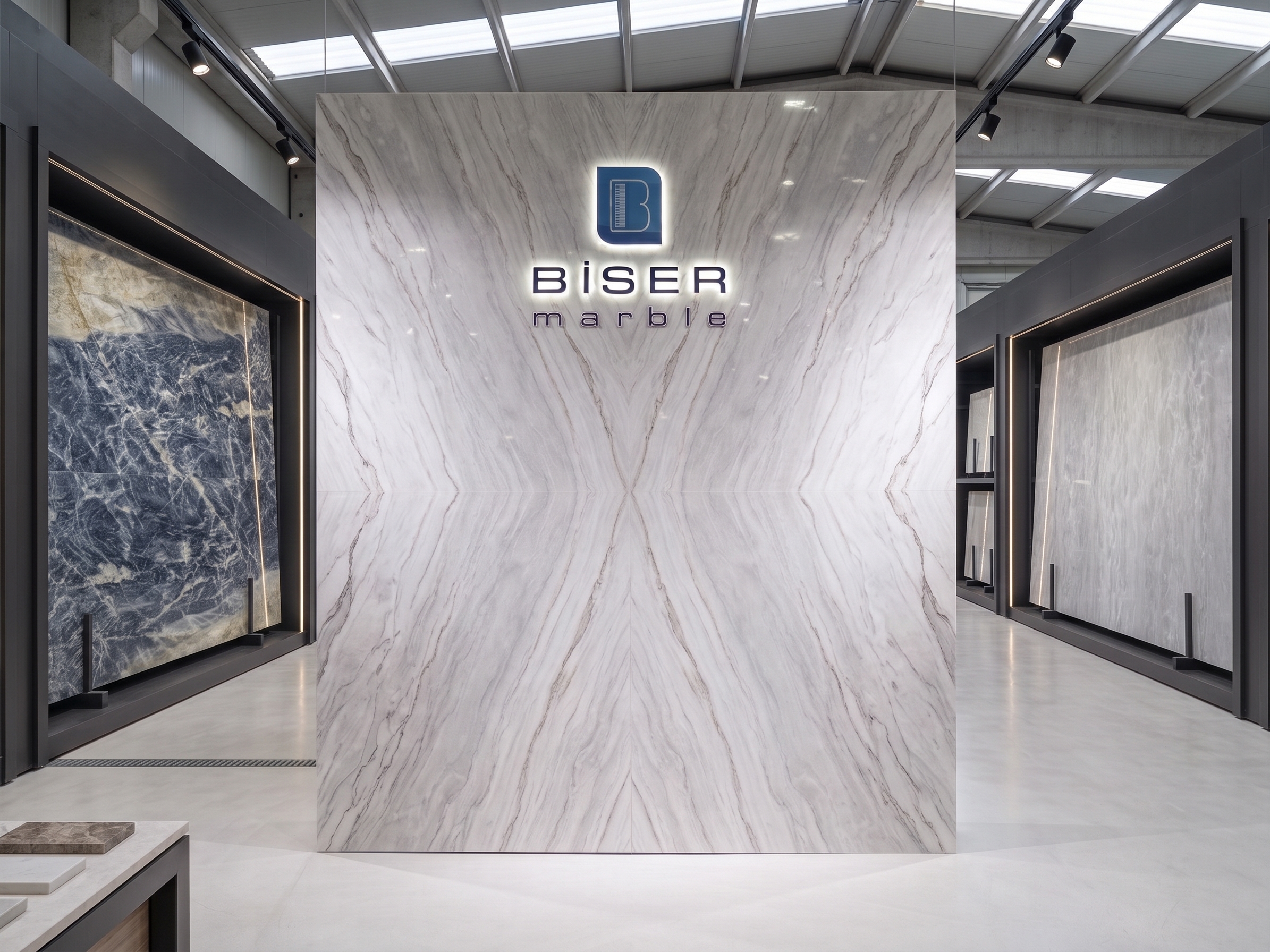
For projects requiring bookmatching, this characteristic becomes particularly important. Carefully selected consecutive slabs can create mirrored or continuous vein patterns across large walls, islands and feature surfaces.
Calacatta Marble Types
"Calacatta" should not be considered a single uniform product. There are numerous commercially recognized varieties and names used in the international natural stone market.
The appearance and market value of each type can differ significantly.
Calacatta Gold Marble
Calacatta Gold marble, sometimes referred to as Calacatta Oro, is one of the most recognizable Calacatta varieties.
It generally features a bright white background with warm gold, beige or grey veining. The combination of white and warm-toned veins makes it particularly popular in luxury interior design.
Typical applications include:
-
Luxury kitchen countertops
-
Kitchen islands
-
Bathroom vanities
-
Hotel interiors
-
Feature walls
-
Reception areas
-
Fireplace surrounds
The strength of Calacatta Gold is its ability to create a premium appearance without relying on additional decorative elements.
Calacatta Oro Marble
Calacatta Oro is commonly associated with Calacatta marble featuring distinctive golden or warm-coloured veining.
The word "Oro" means "gold" in Italian and reflects the characteristic warm tones found in the stone.
Depending on the quarry and commercial classification, the appearance of Calacatta Oro can vary considerably. For this reason, professional buyers should always request actual slab photographs and technical information rather than selecting the material solely from a catalogue name.
Calacatta Viola Marble
Calacatta Viola is known for its particularly distinctive violet, burgundy, purple or wine-coloured veining combined with a white background.
It has become increasingly popular in contemporary luxury interiors because the colour movement is significantly different from conventional grey-veined white marble.
Calacatta Viola can be particularly effective in:
-
Luxury bathrooms
-
Boutique hotels
-
Statement furniture
-
Bar counters
-
Feature walls
-
High-end retail interiors
-
Designer kitchens
Its stronger colour variation makes slab selection and layout planning especially important.
Calacatta Borghini
Calacatta Borghini is another highly regarded variety associated with the Calacatta family.
It is generally recognized for a bright background and strong grey or warm-toned veining. The exact appearance can vary depending on the specific block and quarry source.
For premium projects, the visual quality of an individual block can have a major effect on the final value of the material.
Calacatta Marble vs Carrara Marble
One of the most common questions in natural stone sourcing is:
What is the difference between Calacatta and Carrara marble?
Although both are Italian marbles from the Apuan Alps region, their visual characteristics and commercial positioning are different.
| Feature | Calacatta Marble | Carrara Marble |
|---|---|---|
| Background | Bright white to warm white | White to grey-white |
| Veining | Bold and dramatic | Fine and softer |
| Vein colour | Grey, gold, beige, brown or violet | Mainly grey |
| Visual character | High contrast and expressive | Subtle and classic |
| Availability | More limited for premium varieties | Generally more widely available |
| Market positioning | Premium / luxury | Broad range from commercial to premium |
| Typical use | Statement surfaces | Versatile architectural applications |
Calacatta is generally selected when the designer wants the marble to make a strong visual statement.
Carrara, by contrast, is often preferred when the objective is a softer, more understated appearance.
Neither stone is universally "better". The right selection depends on the design concept, project requirements, budget and availability.
Calacatta Marble vs Statuario
Calacatta and Statuario are also frequently confused.
Both can feature bright white backgrounds and strong veining. However, their visual character can be different.
Calacatta is often recognized for more dramatic, irregular and expressive veining, including warm gold or beige tones in certain varieties.
Statuario is typically associated with a bright white background and pronounced grey veining.
For architects and designers, the most reliable approach is to evaluate actual slabs rather than relying solely on commercial names.
This is particularly important because natural stone names can be used differently across international markets.
Why Is Calacatta Marble So Popular?
The popularity of Calacatta marble is closely related to the growing demand for natural materials in luxury architecture and interior design.
Several characteristics make it particularly attractive.
1. Strong visual impact
Calacatta can become the focal point of an interior without requiring additional decoration.
2. Natural uniqueness
Unlike manufactured surfaces, natural marble contains geological variation. Each block and slab can have a unique vein structure.
3. Luxury positioning
Calacatta has become strongly associated with premium residential, hospitality and commercial interiors.
4. Design flexibility
Despite its luxury image, Calacatta can work with different interior styles, from classic and traditional to minimalist and contemporary.
5. Bookmatching possibilities
Large-format slabs with strong veining can be arranged to create symmetrical or continuous patterns.
Calacatta Marble Applications
Calacatta marble is used in many architectural and interior applications.
Calacatta Marble Countertops
Calacatta marble countertops are particularly popular in luxury residential and hospitality projects.
The bright background can make kitchens and bathrooms appear spacious, while the strong veining provides a natural focal point.
Common applications include:
-
Kitchen countertops
-
Kitchen islands
-
Bathroom countertops
-
Vanity tops
-
Bar counters
-
Reception counters
For countertop projects, fabricators should consider slab dimensions, vein direction, cut-outs and the desired visual continuity before production.
Calacatta Marble Kitchen Islands
Large kitchen islands are among the most visually effective applications for Calacatta marble.
A large uninterrupted surface allows the natural vein structure to become a major design element.
For waterfall islands, bookmatched layouts and large-format applications, selecting the right slabs before fabrication is particularly important.
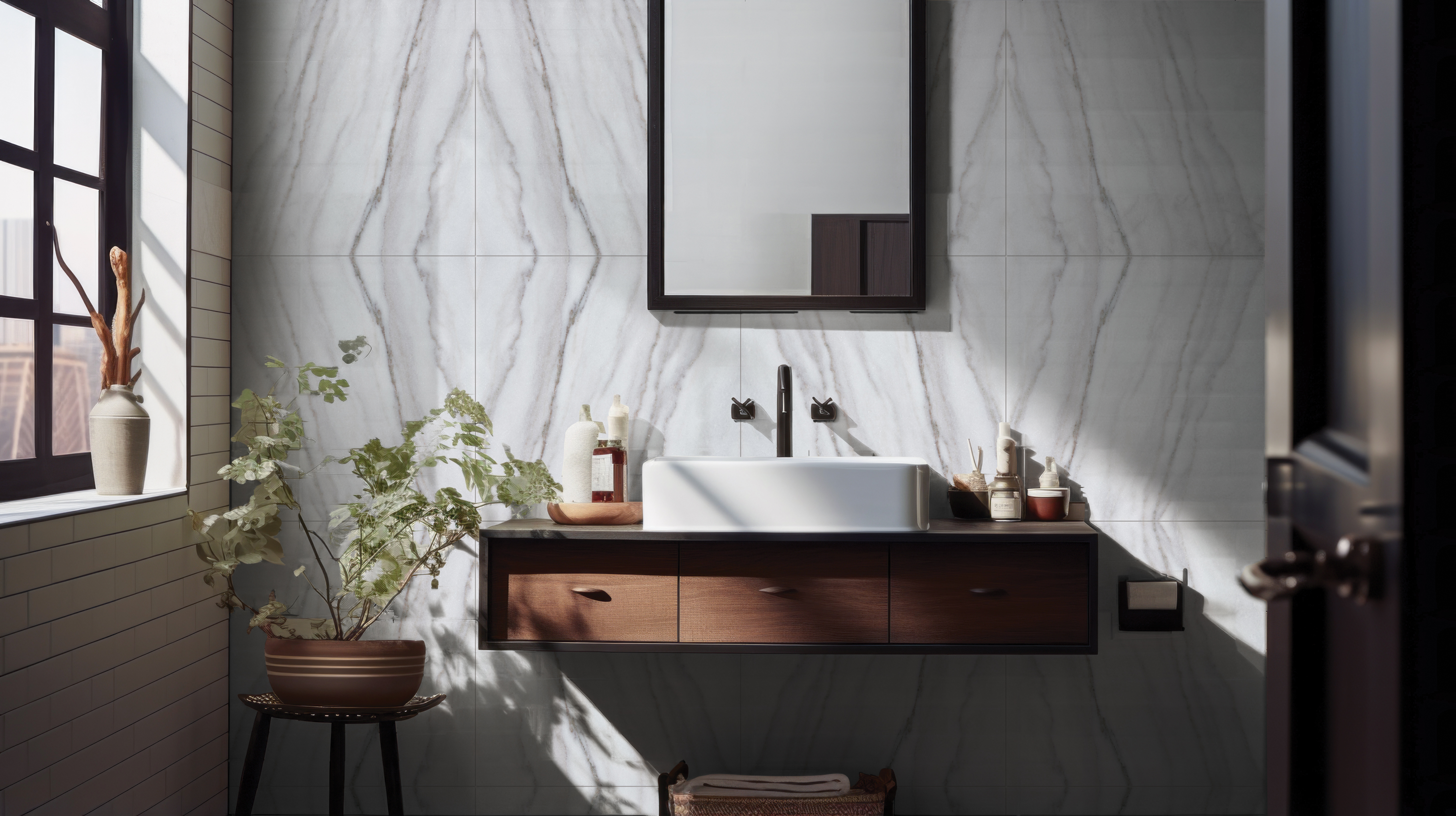
Calacatta Marble Bathroom
Calacatta marble is also widely used in luxury bathrooms.
Applications include:
-
Bathroom walls
-
Shower walls
-
Vanity tops
-
Floor surfaces
-
Bathtub surrounds
-
Feature walls
-
Decorative panels
The combination of white background and expressive veining can create a clean yet luxurious bathroom environment.
Calacatta Marble Feature Walls
Feature walls allow designers to use the natural pattern of the stone at a much larger scale.
Bookmatched Calacatta slabs can create a symmetrical composition that becomes the central visual element of a hotel lobby, entrance or luxury residence.
Hospitality and Commercial Interiors
Hotels, restaurants, luxury retail stores and office interiors often use Calacatta as a premium architectural material.
Typical applications include:
-
Hotel reception areas
-
Lobby walls
-
Restaurant counters
-
Bar fronts
-
Elevator surrounds
-
Retail interiors
-
Executive offices
Calacatta Marble Finishes
The surface finish significantly affects how Calacatta marble looks.
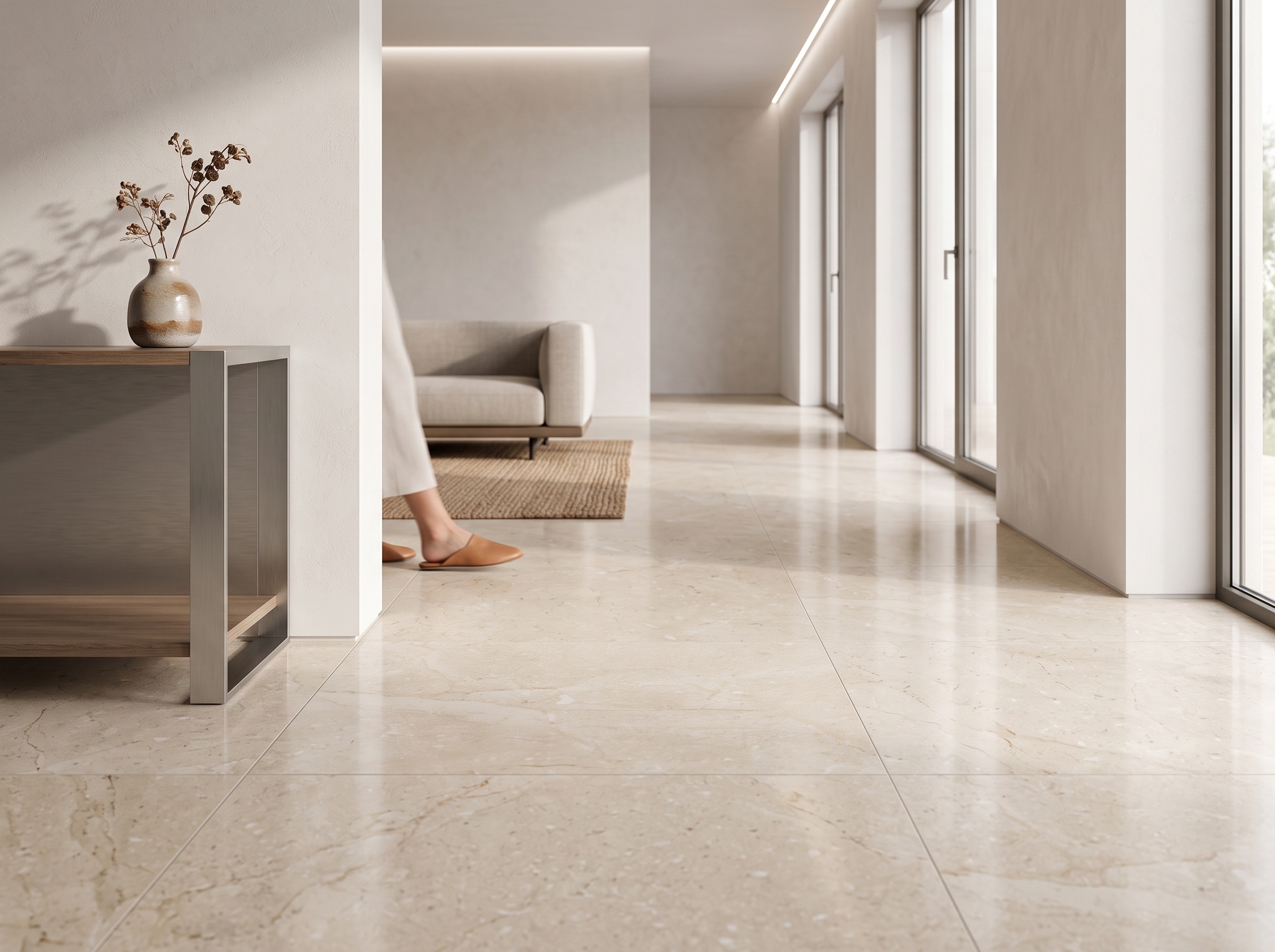
Polished Calacatta Marble
A polished finish enhances the brightness of the background and increases the visual contrast of the veins.
It is frequently selected for:
-
Countertops
-
Feature walls
-
Hotel interiors
-
Vanity tops
-
Luxury residential applications
Honed Calacatta Marble
A honed finish provides a softer, matte appearance.
It can be suitable for interiors where designers want a more natural and understated surface.
Other Finishes
Depending on the project and material characteristics, other finishes may include leathered, brushed or specialty finishes.
The appropriate finish should be selected according to both the desired aesthetic and the intended application.
Calacatta Marble Price: What Determines the Cost?
There is no single global price for Calacatta marble.
The price can vary significantly depending on the specific material.
Important factors include:
-
Quarry origin
-
Marble variety
-
Block quality
-
Background whiteness
-
Veining quality
-
Vein density
-
Colour of the veins
-
Slab size
-
Slab thickness
-
Surface finish
-
Selection grade
-
Availability
-
Quantity required
-
Processing
-
Packaging
-
Transportation
-
Project requirements
A premium Calacatta block with a clean white background and highly desirable veining can command a substantially different price from a lower-grade material marketed under a similar name.
For this reason, comparing suppliers solely on price per square metre can be misleading.
A professional comparison should consider the complete specification of the material.
How to Choose Calacatta Marble for a Project
Before purchasing Calacatta marble, buyers should establish a clear material specification.
1. Define the desired appearance
Specify:
-
Background colour
-
Veining intensity
-
Vein colour
-
Preferred movement
-
Acceptable variation
2. Confirm slab dimensions
Large projects require careful planning of slab dimensions and cutting layouts.
3. Request actual slab photographs
Catalogue images are useful for initial selection, but actual slab photographs provide much more reliable information.
For international buyers, photographs should ideally be taken under consistent lighting conditions.
4. Check thickness
Common marble slab thicknesses include 1 cm, 1.2 cm, 2 cm and 3 cm, depending on the product and intended application.
5. Evaluate the entire lot
For larger projects, evaluating only one slab may not be sufficient.
The complete lot should be reviewed to understand:
-
Colour consistency
-
Vein movement
-
Slab sequence
-
Available quantity
-
Potential cutting yield
6. Plan the cutting pattern
This is particularly important for:
-
Waterfall islands
-
Large feature walls
-
Bookmatching
-
Complex countertops
-
Large-format bathroom applications
Good planning can reduce material waste and improve the final visual result.
Is Calacatta Marble Suitable for Kitchen Countertops?
Yes, Calacatta marble can be used for kitchen countertops, but buyers should understand the characteristics of natural marble before selecting it.
Marble is a relatively soft natural stone compared with many alternative countertop materials. It can be affected by acids and may develop etching or staining if it is not properly maintained.
For kitchen applications, professional fabrication and appropriate sealing are therefore important.
Users should avoid treating marble as a completely maintenance-free surface.
For high-end projects, the natural ageing of marble can also be considered part of its character. The final decision should be based on the client's expectations regarding appearance, maintenance and long-term use.
How to Maintain Calacatta Marble
Proper maintenance helps preserve the appearance of Calacatta marble.
General care recommendations include:
-
Clean the surface with a pH-neutral stone cleaner.
-
Avoid acidic cleaning products.
-
Avoid abrasive cleaners.
-
Wipe spills promptly.
-
Use appropriate sealers where recommended.
-
Use cutting boards and protective mats on kitchen surfaces.
-
Follow the fabricator's maintenance recommendations.
Acidic substances such as lemon juice, vinegar and certain cleaning products can react with calcite-based marble and cause etching.
For this reason, maintenance requirements should be communicated to the end user before installation.
Natural Calacatta Marble vs Calacatta-Look Materials
The popularity of Calacatta has led to many engineered products being designed to imitate its appearance.
These include:
-
Engineered quartz
-
Porcelain slabs
-
Sintered stone
-
Ceramic surfaces
These products can reproduce the general appearance of white marble with bold veining, but they are not natural Calacatta marble.
Natural Calacatta has geological variation, depth and individual veining that cannot be perfectly standardized.
For architects and buyers who specifically require natural stone, the material specification should clearly state that genuine natural marble is required.
What Should B2B Buyers Ask a Calacatta Marble Supplier?
International buyers, importers and project contractors should ask suppliers for more than a simple price quotation.
A professional Calacatta marble inquiry should include:
-
Marble variety
-
Quarry/source
-
Block or lot information
-
Slab thickness
-
Slab dimensions
-
Surface finish
-
Available quantity
-
Grade or selection
-
Slab photographs
-
Packing details
-
Loading information
-
Delivery terms
-
Lead time
-
Export documentation
For large projects, buyers should also request high-resolution photographs or videos of the actual available slabs.
This reduces the risk of receiving a material that looks significantly different from the original reference image.
Calacatta Marble for International Projects
For international architectural projects, logistics and material consistency are particularly important.
A reliable supplier should be able to provide clear information about:
-
Available production capacity
-
Slab or block availability
-
Packaging
-
Loading
-
Export documentation
-
Delivery schedule
-
Material specifications
When sourcing natural stone internationally, buyers should also distinguish between stock material and project-specific production.
If a project requires a large quantity of visually consistent slabs, reserving material from the same block or compatible lots can be an important part of procurement planning.
Why Work With an Experienced Marble Supplier?
Choosing a marble supplier is not only about finding the lowest price.
For architects, contractors, distributors and importers, a reliable supplier should understand both the technical and commercial aspects of natural stone.
Important supplier capabilities include:
-
Consistent material selection
-
Accurate product information
-
Professional slab photography
-
Export experience
-
Secure packaging
-
Reliable loading procedures
-
Clear commercial documentation
-
Communication throughout the order process
For international buyers, these factors can have a significant impact on the success of a project.
Calacatta Marble Buying Checklist
Before confirming an order, buyers can use the following checklist:
-
Confirm the exact Calacatta variety.
-
Confirm the material's origin and source.
-
Review actual slab photographs.
-
Confirm slab thickness.
-
Confirm slab dimensions.
-
Review background colour and veining.
-
Confirm the required quantity.
-
Check slab sequence for bookmatching projects.
-
Confirm surface finish.
-
Discuss packaging requirements.
-
Confirm delivery terms.
-
Review lead time.
-
Confirm export documentation.
-
Approve the final material selection before production or loading.
Frequently Asked Questions About Calacatta Marble
Is Calacatta marble real marble?
Yes. Calacatta is a natural marble associated with the Apuan Alps marble-producing region of Tuscany, Italy.
Is Calacatta marble expensive?
Calacatta is generally positioned in the premium segment of the natural marble market. However, the actual price depends on the variety, block quality, veining, background colour, slab dimensions, thickness, finish, availability and quantity.
What is the difference between Calacatta and Carrara marble?
Calacatta generally has a brighter white background and stronger, more dramatic veining, while Carrara commonly has a softer grey-white background and finer grey veining. Both are associated with the Apuan Alps region of Italy.
What is Calacatta Gold marble?
Calacatta Gold is a Calacatta variety characterized by a bright white background with gold, beige, warm grey or brownish veining.
What is Calacatta Oro?
Calacatta Oro is a commercial name associated with Calacatta marble featuring prominent golden or warm-coloured veins.
What is Calacatta Viola?
Calacatta Viola is a distinctive variety recognized for violet, purple, burgundy or wine-coloured veining against a light background.
Is Calacatta marble good for countertops?
Yes. Calacatta is widely used for premium kitchen countertops, islands, bathroom vanities and other interior surfaces. However, as with other calcite-based marbles, it requires appropriate care and maintenance.
Can Calacatta marble be used in bathrooms?
Yes. Calacatta is widely used for bathroom walls, floors, vanity tops, shower surrounds and decorative feature surfaces.
Is every Calacatta slab the same?
No. Natural marble varies from block to block and slab to slab. Veining, background colour and movement can differ considerably.
Can Calacatta marble be bookmatched?
Yes. Strongly veined Calacatta slabs are often selected for bookmatched walls, kitchen islands and other statement applications. Careful slab sequencing is essential to achieve the desired pattern.
How do you identify Calacatta marble?
The most recognizable characteristics are a bright white or warm-white background and relatively bold, expressive veining. However, the commercial naming of natural stone can vary, so professional buyers should verify the material's source and actual slab appearance.
Calacatta Marble: A Premium Natural Stone for Architectural Projects
Calacatta marble continues to occupy an important position in luxury architecture and interior design because of its combination of bright backgrounds, expressive natural veining and geological uniqueness.
From Calacatta Gold and Calacatta Oro to Calacatta Viola and other premium varieties, each material can offer a different visual character. The right selection depends on the project's design requirements, available quantity, budget and desired level of natural variation.
For architects, interior designers, contractors, importers and distributors, the most important step is to evaluate the actual material rather than relying only on the commercial name.