Bookmatched Marble Wall Designs: Architectural Applications and Design Ideas
Natural marble is one of the most distinctive materials used in architecture and interior design. Its unique veining, colour variations and mineral patterns give spaces a sense of depth and character. One of the most striking ways to showcase these natural features is through bookmatched marble design.
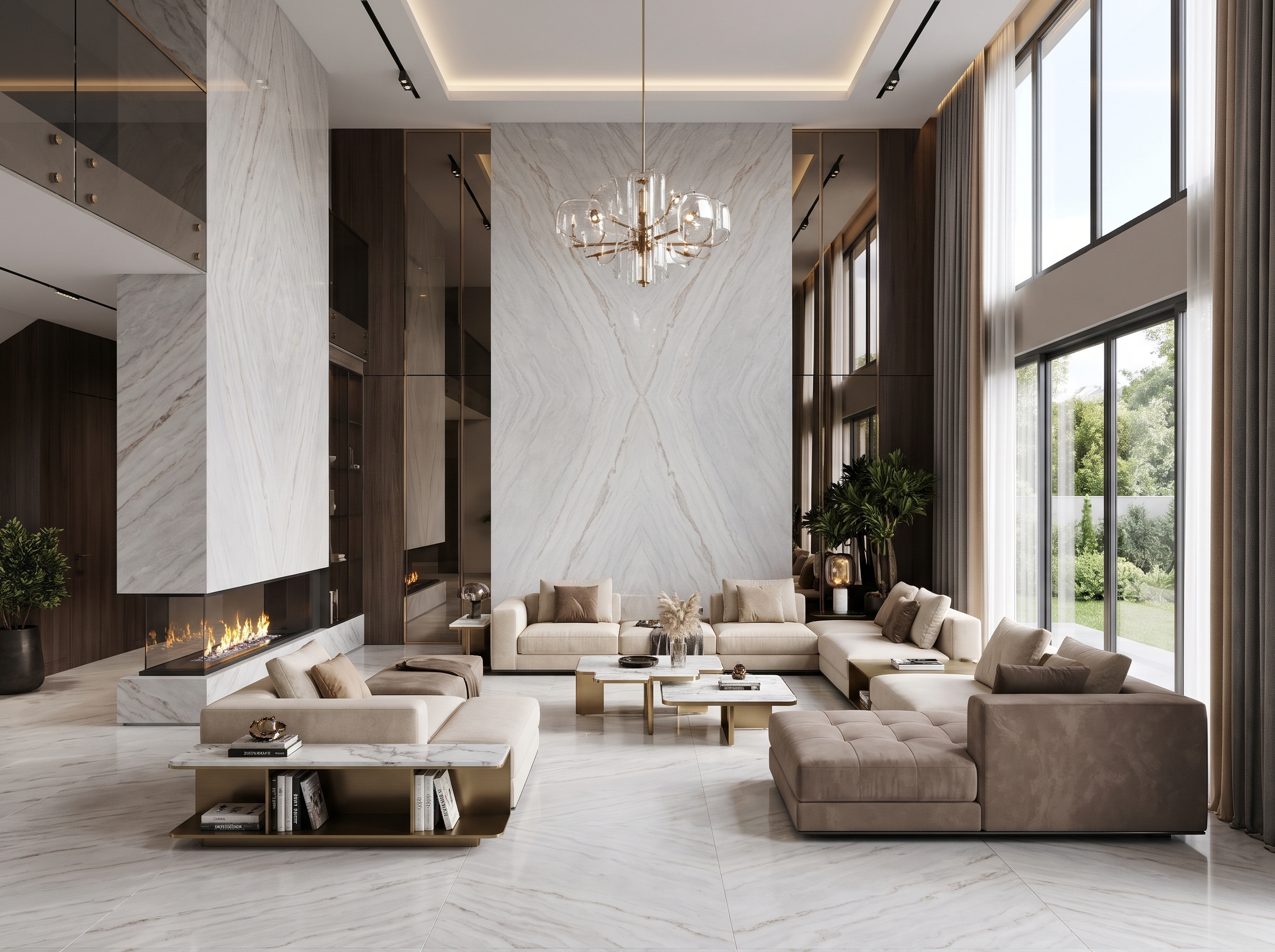
Bookmatching involves arranging consecutive marble slabs in a mirrored pattern, creating a symmetrical composition across a shared joint. This technique is particularly popular in hotel lobbies, luxury residences, restaurants, reception areas and spacious living rooms, where natural stone can become a central design feature.
With careful marble selection, slab sequencing and installation planning, an ordinary wall can be transformed into one of the most distinctive elements of an architectural interior.
In this guide, we explore what bookmatched marble is, how the pattern is created, where it can be used and what architects and designers should consider when planning a bookmatched marble wall.
What Is Bookmatched Marble?
Bookmatching is a natural stone arrangement in which consecutive slabs are positioned as mirror images of one another, resembling the pages of an open book.
When a marble block is cut into consecutive slabs, each surface retains a visual relationship with the adjacent one. By reversing the orientation of selected slabs and placing them side by side, their natural veining can create a mirrored composition.
The purpose of bookmatching is not to alter the natural pattern of marble, but to display its existing veining in a symmetrical arrangement.
Marble with pronounced, directional and contrasting veins can produce particularly striking results. The density of the veins, colour transitions and cutting direction all influence the final composition.
How Is Bookmatched Marble Created?
Creating a successful bookmatched pattern involves more than simply placing two marble slabs next to each other. The process begins with selecting a suitable marble block and continues through several planning and fabrication stages.
1. Selecting the Right Marble Block
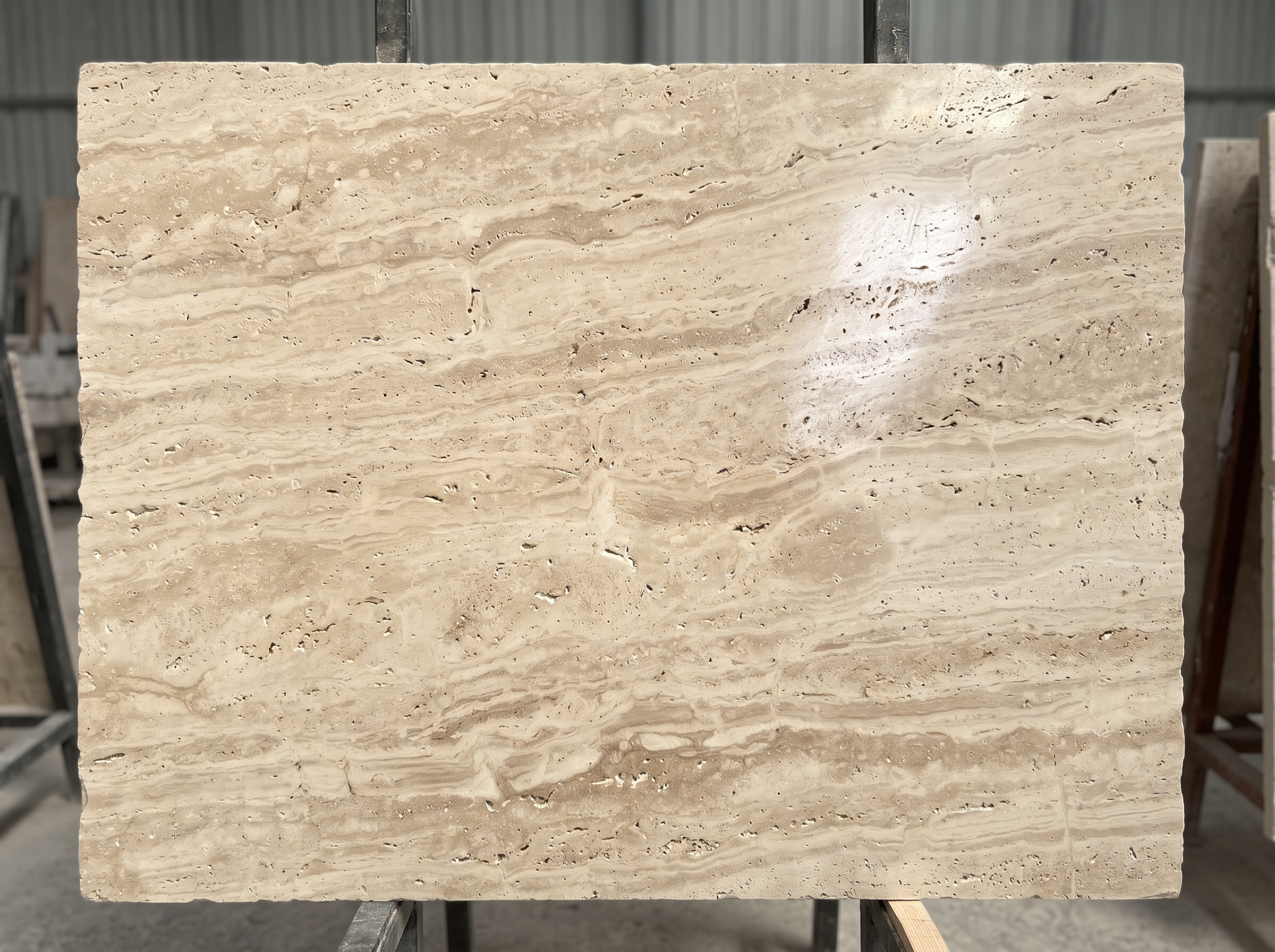
The first step is to identify a marble block with a vein structure suitable for bookmatching. Blocks with distinctive veins, colour variations and natural patterns can offer more possibilities for creating a visually striking composition.
Not every marble block produces the same bookmatch effect. Its mineral composition, vein direction, colour distribution and natural formation all influence the final appearance.
2. Producing Consecutive Slabs
The selected block is cut into consecutive slabs. To achieve a genuine bookmatched effect, the slabs should come from the same block and follow an appropriate cutting sequence.
Consecutive slabs share a natural relationship in their veining. However, perfect alignment at every point should not be expected. Marble is a natural material, and minor variations in its patterns are part of its character.
3. Arranging the Slabs as Mirror Images
In a bookmatched arrangement, consecutive slabs are positioned so that their veins reflect one another. This creates a symmetrical composition around the central joint.
The visual result depends on the correct sequence and orientation of the slabs. For this reason, slab selection and arrangement should be planned before cutting and installation.
4. Preparing the Design and Cutting Layout
The wall dimensions are measured and a layout is prepared to determine how the slabs will be positioned. Wall height and width, doors, windows, electrical outlets, lighting fixtures and joint locations should all be considered.
The design should establish which parts of the slabs will be used, where the central axis will sit and in which direction the pattern will develop.
5. Dry Layout and Final Inspection
Before cutting or installation, arranging the slabs side by side on a suitable surface allows the pattern to be checked in advance. This process helps evaluate vein alignment, colour transitions and slab sequencing before the material is fixed in place.
For large projects, numbering the slabs and preparing an installation sequence can also make the on-site process more efficient.
Types of Bookmatched Marble Designs
Bookmatching can be achieved using different numbers of slabs and various layout arrangements. The appropriate configuration depends on the dimensions of the architectural space and the desired visual effect.
1. Two-Slab Bookmatch
This is the most common bookmatching arrangement. Two consecutive marble slabs are positioned as mirror images of one another.
The central joint becomes the focal point of the design, with the veins spreading outward in a symmetrical pattern.
Two-slab bookmatching is particularly suitable for fireplace surrounds, bedroom feature walls, TV walls and reception areas.
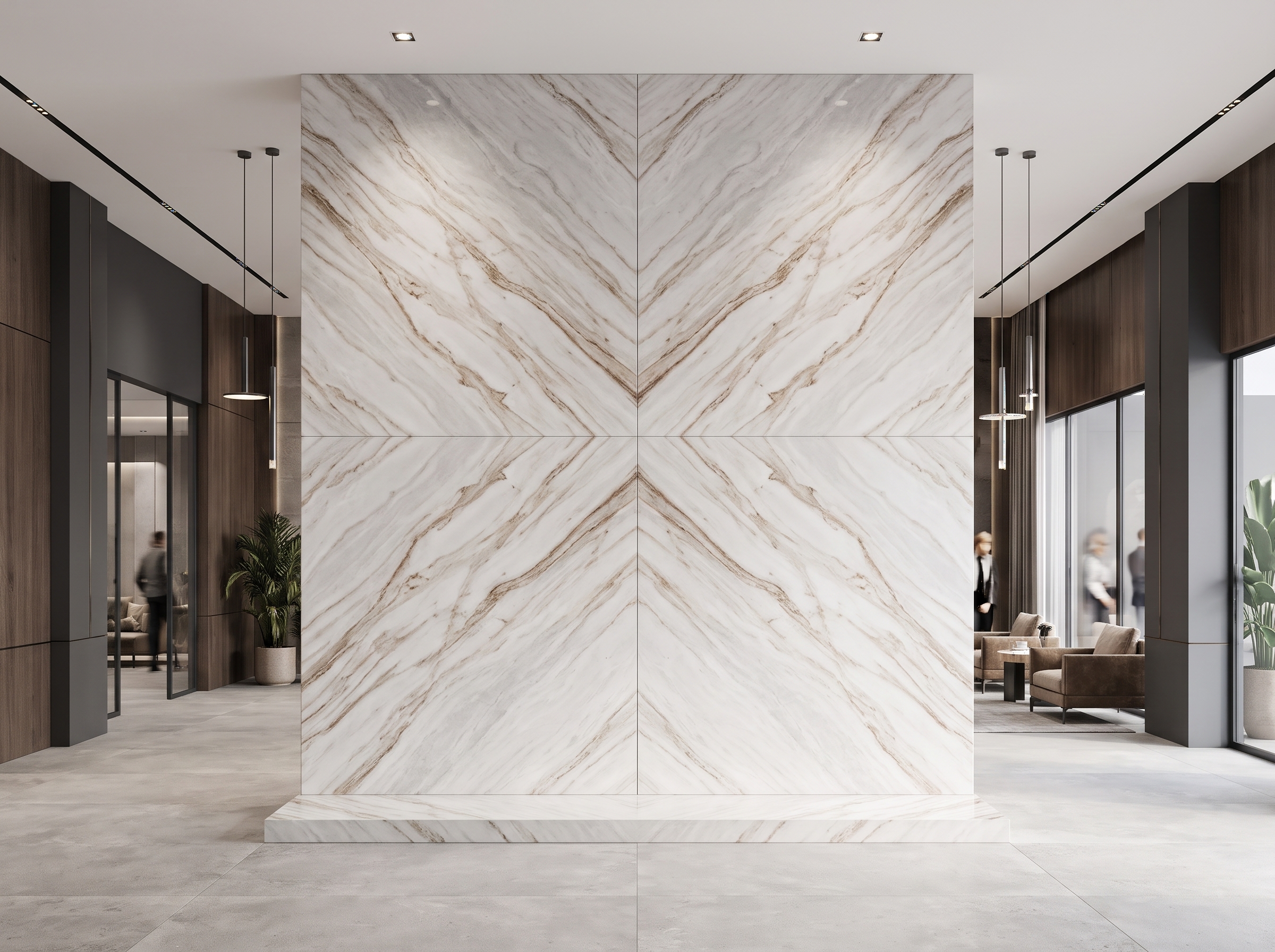
2. Quad Match
Quad matching uses four marble slabs arranged symmetrically along both horizontal and vertical axes. The four sections can create a central pattern resembling a butterfly or diamond.
This arrangement is often used on large feature walls where a more extensive and visually striking composition is desired.
3. Vertical Bookmatch
In vertical bookmatching, slabs are arranged to create a mirrored pattern along a vertical axis. The veins extend from the centre towards the upper and lower parts of the composition.
This layout can be particularly effective in high-ceilinged spaces, hotel lobbies and large entrance areas.
4. Horizontal Bookmatch
Horizontal bookmatching creates a symmetrical composition that extends across the width of a wall.
It can be used in wide reception areas, restaurant interiors and long corridors where the design benefits from a horizontal visual emphasis.
Architectural Applications of Bookmatched Marble Walls
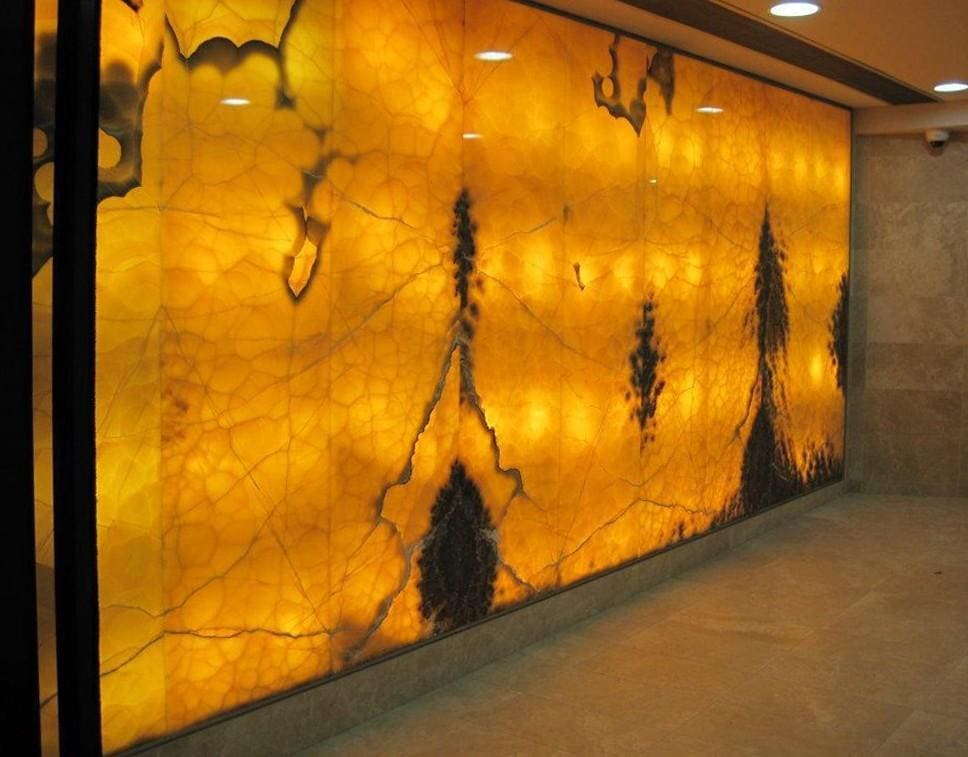
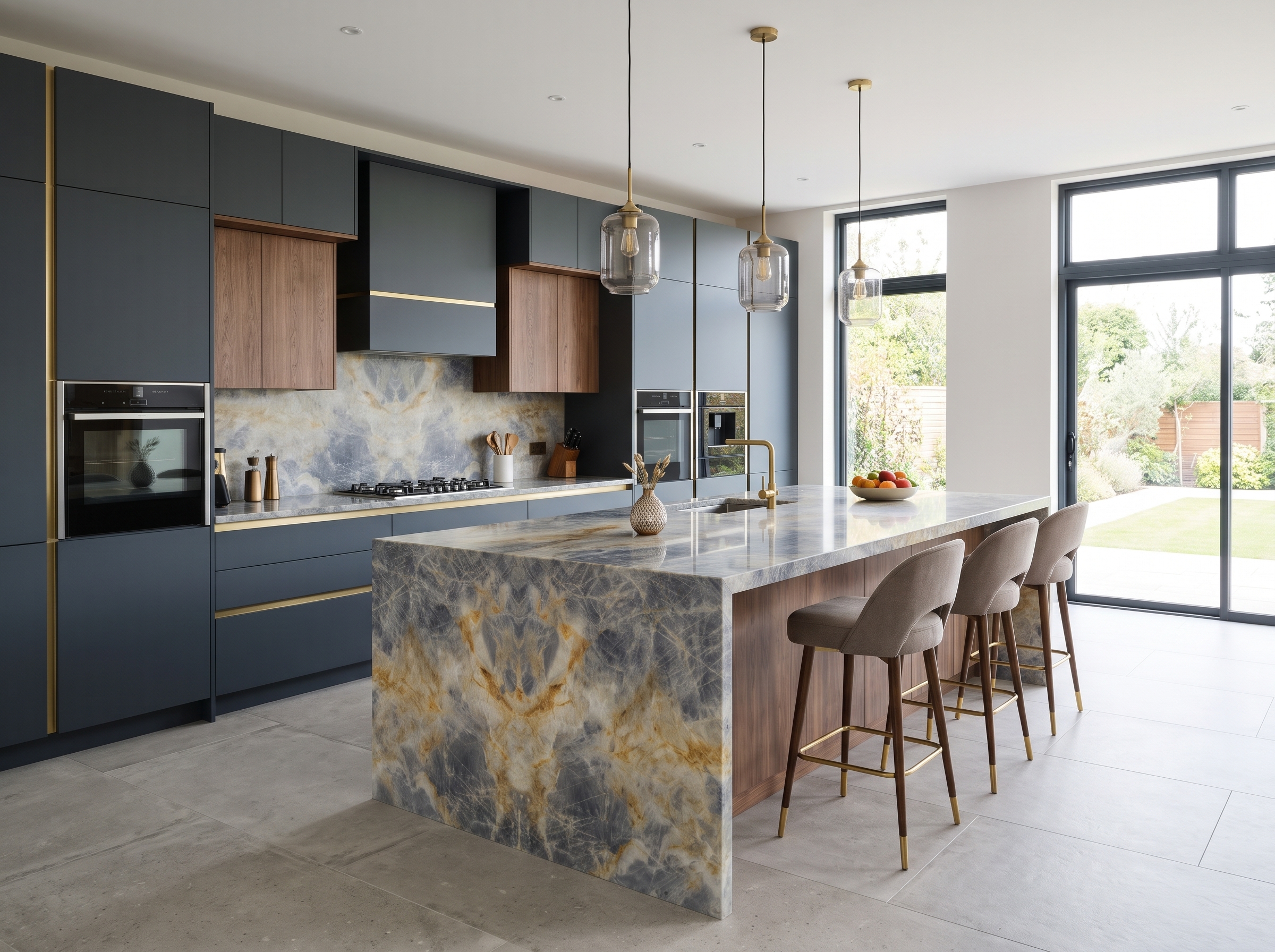
Bookmatched marble is often selected for architectural surfaces where the natural veining is intended to attract attention and create a focal point.
Hotel Lobbies and Reception Areas
Hotel lobbies are among the first spaces guests experience. The materials used in entrance and reception areas therefore play an important role in defining the building's overall identity.
A bookmatched marble wall behind a reception desk or near the main entrance can create a strong visual feature. Large-scale veining becomes particularly noticeable across wide and tall surfaces.
Combined with carefully planned lighting, metal details and understated furniture, bookmatched marble can become the centrepiece of a sophisticated lobby design.
Living Rooms and TV Feature Walls
One of the most popular residential applications of bookmatched marble is the living room feature wall.
Symmetrically arranged slabs behind a television unit can transform an ordinary wall into a decorative architectural surface. Marble in white, grey or beige tones can work particularly well with wooden furniture and metal accents.
Electrical equipment, cable routes and shelving systems should be planned in advance to avoid unnecessary interruptions to the natural pattern.
Marble Fireplace Walls
Fireplace surrounds provide an excellent opportunity to showcase the natural movement of bookmatched marble.
The mirrored veins spreading from the central joint can turn the fireplace into a distinctive architectural focal point. Dark marble can create a dramatic appearance, while light marble with grey veining can offer a more understated atmosphere.
For fireplace applications, the selected stone's suitability for the expected temperature conditions and the installation system should be evaluated separately.
Restaurant and Café Interiors
In restaurants and cafés, bookmatched marble can be used behind bars, on feature walls, near entrances or in selected seating areas.
In larger commercial interiors, natural stone patterns can contribute significantly to the visual identity of the space. Combined with wood, brass, glass and decorative lighting, bookmatched marble can complement a variety of interior styles.
Bathrooms and Spa Areas
Bookmatched marble can be incorporated into bathroom designs on vanity walls, around bathtubs and across selected wall surfaces.
Its symmetrical veining adds visual interest to minimalist bathrooms while highlighting the natural character of the stone. Light-coloured marble can be paired with wooden vanity units and warm lighting for a calm and elegant atmosphere.
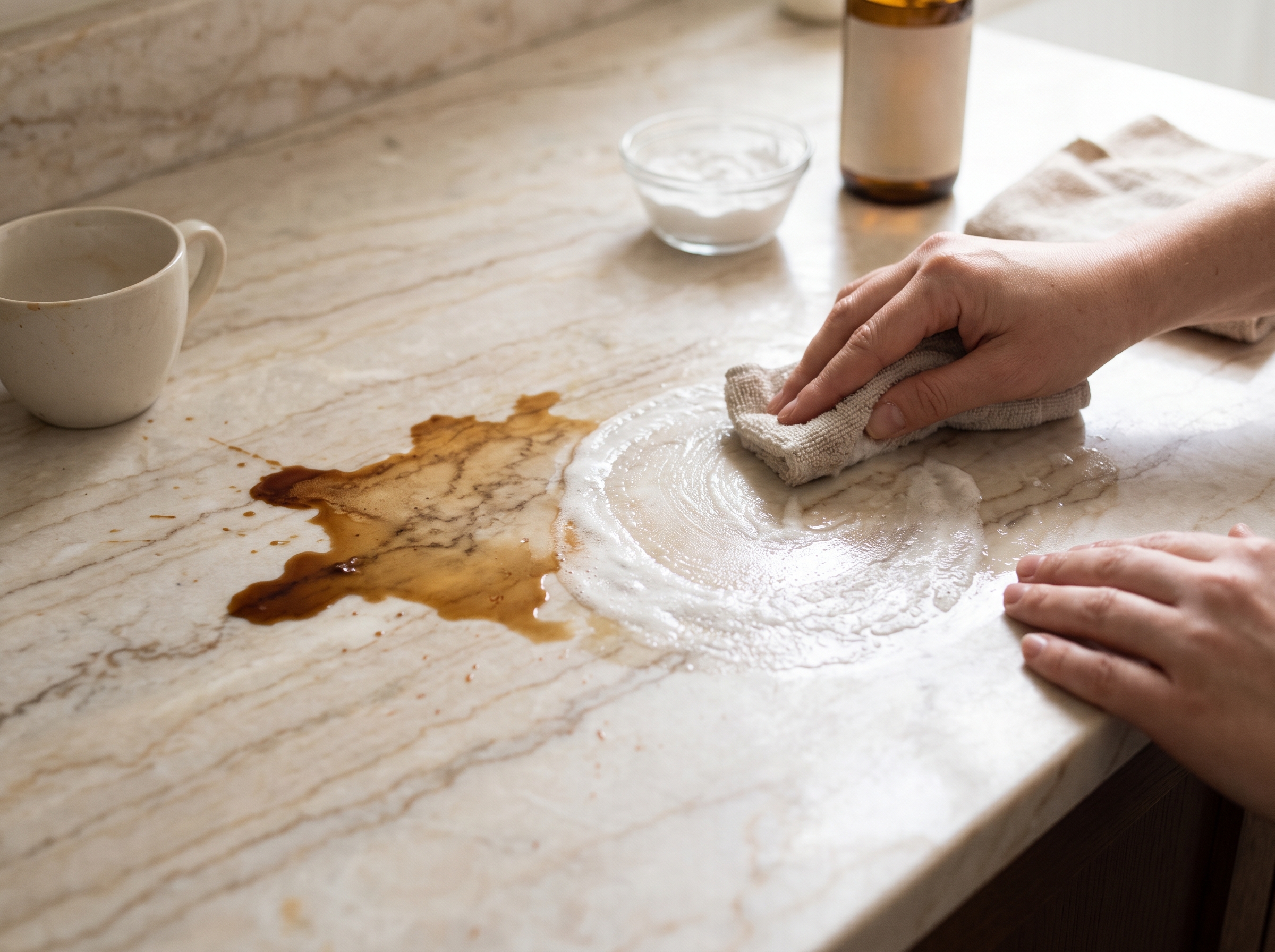
For shower areas and other surfaces exposed to regular moisture, water absorption, surface finish, maintenance requirements and slip resistance should be considered.
Staircases and Wide Corridors
Bookmatched marble can also enhance large staircase walls and long corridors. Its symmetrical patterns can create visual continuity and give transitional spaces a stronger architectural identity.
Which Types of Marble Are Suitable for Bookmatching?
When selecting marble for bookmatching, colour is only one consideration. The structure and direction of the veining are equally important.
The following marble varieties may be considered for bookmatched applications depending on the characteristics of the actual slabs:
| Marble type | General appearance | Design effect |
|---|---|---|
| Arabescato | White background with distinctive grey veining | Strong and dynamic symmetry |
| Calacatta | Light background with broad grey or golden veins | Dramatic and eye-catching |
| Statuario | White background with prominent grey veins | Elegant and contrasting |
| Milas Lilac | White background with purple-toned veining | Distinctive and decorative |
| Black marble varieties | Dark background with lighter veins | Dramatic and bold |
| Grey marble varieties | Natural veining in different shades of grey | Modern and balanced |
The actual slab pattern is more important than the commercial name of the marble. Different blocks of the same stone can have variations in colour, vein density and pattern direction. Therefore, the actual slabs intended for a project should be inspected before approval.
What Is the Difference Between Bookmatch and Vein Match?
Bookmatch and vein match are two different methods of arranging natural stone slabs according to their pattern relationships.
Bookmatching places two consecutive slabs as mirror images of each other. The veins reflect across the central joint, creating a symmetrical composition.
Vein matching arranges slabs so that the veining appears to continue from one piece to the next. Instead of creating symmetry, the aim is to achieve a more continuous visual flow.
| Feature | Bookmatch | Vein Match |
|---|---|---|
| Arrangement | Mirrored pattern | Continuous veining |
| Visual effect | Symmetrical | Flowing and continuous |
| Central axis | Usually prominent | No mirror axis |
| Application | Feature walls and decorative surfaces | Large continuous surfaces |
| Design character | Dramatic and distinctive | Natural and flowing |
Both methods highlight the natural patterns of marble. The choice depends on the architectural concept and the intended visual effect.
Important Considerations for Bookmatched Marble Wall Design
Bookmatched marble requires more detailed planning than conventional marble wall cladding.
Slab Selection and Sequencing
To achieve the intended bookmatch effect, the slabs should be selected from consecutive cuts of the same block. Similar-looking slabs from different blocks cannot guarantee a genuine mirrored pattern.
Actual slab photographs and, where possible, physical inspection should therefore be part of the material selection process.
Wall Dimensions and the Central Axis
The exact dimensions of the wall should be established before fabrication. The central axis may need to align with the geometric centre of the wall, a fireplace, a reception desk or another architectural feature.
An incorrectly positioned centre line can make the final composition appear unbalanced.
Joint and Seam Details
The joints between marble slabs are among the most important elements of a bookmatched design. Their positions and widths directly influence how the veins meet.
Joint planning should therefore be completed before cutting and installation begin.
Natural Variations in Veining
Marble develops different mineral structures and vein patterns through natural geological processes. As a result, perfect mathematical symmetry cannot always be achieved.
Small differences in vein alignment or colour transitions are part of the natural character of the stone.
Cutting and Material Waste
Bookmatching requires slabs to be used in a specific sequence and orientation to maintain the intended pattern. This can involve more detailed cutting plans and greater material waste than standard wall cladding.
Material quantities should therefore be calculated not only according to the wall's square metre area, but also according to slab dimensions and the proposed pattern layout.
Installation and Support Systems
When installing large marble slabs on walls, factors such as stone thickness, weight, wall substrate, mechanical fixing requirements and adhesive systems must be considered.
For tall walls and large-format panels, the appropriate support system should be determined through a technical assessment based on the project conditions. Installation should be carried out by teams experienced in natural stone applications.
Advantages of Bookmatched Marble Walls
Bookmatched marble designs offer several advantages by highlighting the natural characteristics of stone:
-
Distinctive patterns: Every marble block has its own natural veining, making each composition unique.
-
Strong focal points: Large wall surfaces can become visually striking architectural features.
-
Natural symmetry: The mirrored arrangement creates a balanced visual effect.
-
Versatile design applications: Bookmatched marble can complement modern, classic, minimalist and luxury interiors.
-
Enhanced natural character: Colour transitions and natural veining become more prominent.
Frequently Asked Questions About Bookmatched Marble
What does bookmatched marble mean?
Bookmatched marble refers to a decorative stone arrangement in which consecutive slabs cut from the same block are positioned as mirror images of each other.
Can every type of marble be bookmatched?
Different types of marble can potentially be used for bookmatching, but the visual result depends on the stone's veining, cutting direction and the relationship between consecutive slabs. Marble with pronounced and directional veins generally creates more noticeable patterns.
What is the difference between bookmatched marble and standard marble cladding?
In standard marble cladding, slabs are generally arranged according to dimensions and overall colour coordination. In bookmatching, the main objective is to create a mirrored pattern through the natural veining of the slabs.
Are bookmatched marble walls expensive?
The cost depends on the marble variety, slab dimensions, vein structure, fabrication requirements, material waste and installation conditions. Since bookmatching requires careful slab selection and detailed layout planning, it can be more expensive than standard marble cladding.
How many slabs are needed for a bookmatched marble wall?
The simplest arrangement requires two slabs. Larger walls can use four or more slabs to create broader symmetrical compositions. The exact quantity depends on wall dimensions, slab sizes and the selected layout.
Can bookmatched marble be used in bathrooms?
Yes. It can be used on vanity walls, around bathtubs and on suitable wall surfaces. However, the stone's physical properties, surface finish and maintenance requirements should be considered in areas exposed to regular moisture.
What is the difference between bookmatch and vein match?
Bookmatching arranges slabs as mirror images, while vein matching aims to create a continuous flow of veining from one slab to the next.
Conclusion: Giving Architectural Spaces a Distinctive Character with Natural Marble
Bookmatched marble wall designs transform the natural veining of stone into an integral part of architectural design. By arranging consecutive slabs as mirror images, this technique creates symmetrical, distinctive and visually engaging surfaces.
From hotel lobbies and residential living rooms to restaurants and bespoke bathroom interiors, bookmatching can deliver impressive results when supported by careful slab selection and professional installation planning.
Biser Marble offers natural stone options for architects, designers and project professionals looking to incorporate the distinctive colours, veining and textures of marble into architectural projects.